


Views: 258 Author: HELLOKNIFE LTD Publish Time: 2026-10-09 Origin: Site


Content Menu
● Cheese Spreader Knife vs Jam Spreader Knife: Quick Comparison
● What Is a Cheese Spreader Knife?
>> A Cheese Spreader Is Not the Same as a Soft-Cheese Slicing Knife
● What Is a Jam Spreader Knife?
>> Jam Spreaders and Brunch Spreaders Can Overlap
● Can You Use a Cheese Spreader for Jam?
● Blade Design: What Actually Changes Performance?
>> Blade Thickness and Flexibility
>> Edge Finish and Handle Clearance
● Materials, Cleaning, and Food-Contact Requirements
>> Match the Handle to the Intended Care Routine
>> Specify Compliance for the Destination Market
● An OEM Sample-Testing Method for Cheese and Jam Spreaders
>> Step 1: Define Representative Foods and Containers
>> Step 2: Repeat the Same Serving Tasks
>> Step 3: Record Results Against Agreed Criteria
● One Multipurpose Spreader or Two Specialized Products?
>> Choose a Multipurpose Spreader for a Broad Serving Role
>> Choose Separate Designs When the Tasks Differ
● Building a Better Private-Label Spreader Brief with HELLOKNIFE LTD
>> 1. What is the main difference between a cheese spreader knife and a jam spreader knife?
>> 2. Can a jam spreader be used for cream cheese?
>> 3. Does a cheese spreader need a sharp edge?
>> 4. Is a longer spreader always better for jam?
>> 5. Are stainless-steel spreaders dishwasher-safe?
>> 6. What should OEM buyers approve before mass production?
At HELLOKNIFE LTD, we manufacture customized cheese knives, cheese boards, and steak knives for international brands, wholesalers, and manufacturers. When comparing a cheese spreader knife vs jam spreader knife, our starting point is simple: choose the tool around the food, serving setting, and customer—not just the product name.
The key difference is usually design emphasis rather than an absolute separation. A cheese spreader commonly prioritizes scooping and distributing soft cheese. A jam spreader may prioritize reaching into jars and spreading preserves across bread. Many designs can handle both.
For private-label buyers, this overlap creates an opportunity. A well-specified multipurpose spreader can serve several retail categories, while a specialized design can address a clearer customer need. This guide explains the practical differences and how to turn them into a stronger OEM product brief.
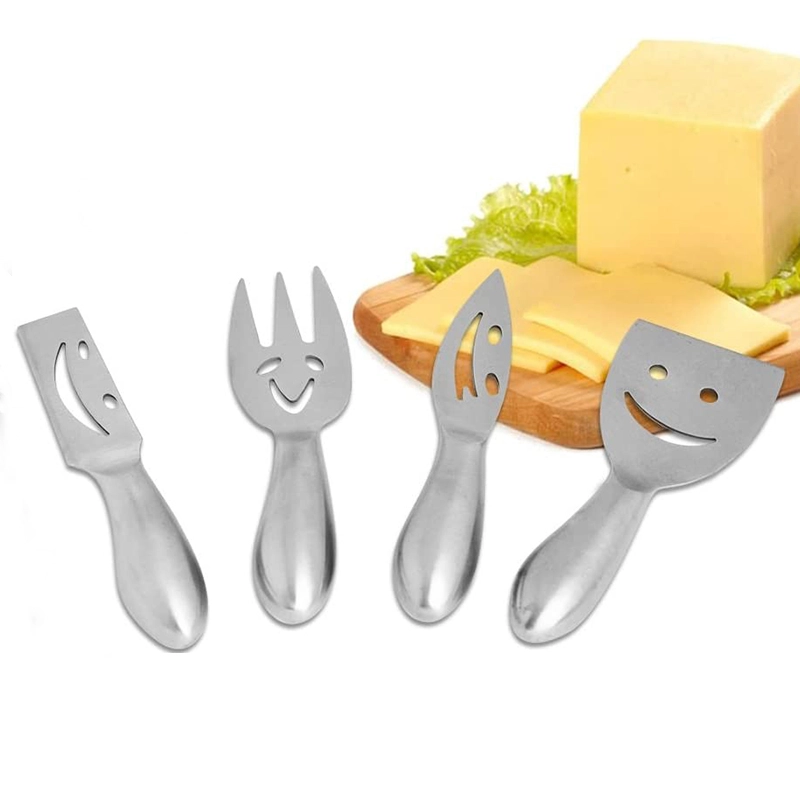
Product names alone do not reliably describe blade dimensions, sharpness, or performance. Compare the actual construction before deciding which spreader belongs in your range.
| Feature | Cheese spreader knife | Jam spreader knife |
|---|---|---|
| Main application | Scooping and spreading soft cheeses | Retrieving and spreading jam or preserves |
| Common design emphasis | Broad spreading surface and controlled handling | Jar access, reach, and smooth spreading |
| Blade profile | Often short, broad, and rounded | May be longer or narrower; designs vary |
| Edge | Frequently blunt or minimally sharpened | Often blunt; brunch models may include serrations |
| Typical serving context | Cheese boards, crackers, appetizers | Breakfast tables, toast, sandwiches |
| Main selection question | Does it scoop and spread without crushing the base? | Does it reach the jar and distribute preserves easily? |
| Cross-use potential | Can often spread jam and butter | Can often spread cream cheese and other soft foods |
These are common design tendencies, not universal specifications. A long brunch spreader and a compact cheese-board spreader may perform differently even when both are marketed as multipurpose utensils.
A cheese spreader knife is primarily a serving tool for soft, spreadable foods. It normally uses its blade surface to lift, portion, and distribute food rather than make precise slices.
Suitable applications include:
- Cream cheese on bagels.
- Fresh goat cheese on crackers.
- Mascarpone on toast.
- Soft cheese spreads on appetizer bread.
- Pâté or similar spreadable accompaniments.
A broad blade provides space to carry a portion. A rounded tip supports spreading without requiring a pointed cutting profile. However, comfort and control depend on the complete design, including handle shape and blade thickness.
This distinction matters when building a cheese knife set.
A soft-cheese slicing knife may use a thin or perforated blade to reduce sticking while cutting Brie or similar cheeses. A spreader is designed mainly to scoop and smear spreadable cheese.
Neither tool should automatically replace a hard-cheese knife. If the intended food requires substantial cutting force, specify an appropriate cutting tool instead of strengthening a spreader and assuming it will perform the same job.
A jam spreader knife transfers preserves from a container to bread, toast, or another serving surface.
Its usefulness depends partly on the container. A compact spreader may work well with a shallow jam dish but struggle inside a tall jar. A longer blade offers greater reach, provided its width fits through the opening.
Jam also varies in consistency. Smooth jelly, thick preserves, and marmalade containing peel do not behave identically. Testing only one product can conceal handling problems.
Some brunch knives combine a spreading surface with a serrated section for cutting bread or bagels. Others use a completely blunt blade.
A rounded tip does not mean the entire utensil is blunt. For product descriptions and packaging, explain whether the tool spreads only or also includes a cutting edge.
This helps customers choose accurately and prevents a multipurpose breakfast knife from being mistaken for a simple serving spreader.
Yes. A clean cheese spreader can often spread jam effectively, especially when serving from a shallow dish or wide-mouth container.
The reverse is also true: many jam spreaders work well with cream cheese and other soft spreads.
Before choosing one utensil for both applications, check:
1. Jar access: Can the blade reach the bottom and corners?
2. Portion control: Does it carry an appropriate amount?
3. Spreading control: Can it distribute food without tearing the bread?
4. Handling: Does the grip remain comfortable during repeated use?
5. Cleaning: Are joints and decorative details easy to clean?
For serving cheese and jam together, provide separate utensils when practical. This avoids mixing flavors and transferring food residues between dishes. Where allergens are a concern, use appropriate cleaning and separation procedures rather than assuming a quick wipe is sufficient.
From our OEM perspective, "cheese" and "jam" are starting labels. The more useful discussion concerns geometry.
A wider blade offers more surface for carrying and spreading food. However, excessive width can make a utensil awkward inside a narrow jar.
Greater length can improve reach, but it also changes leverage and handling. Evaluate both container access and spreading comfort instead of treating a longer blade as an automatic upgrade.
A blade needs enough stiffness for its intended food. Some flexibility may assist spreading, but excessive flex can make scooping feel uncertain.
Cold, firm cream cheese presents a different challenge from loose jam. Buyers should define the expected food condition before approving thickness.
Avoid vague specifications such as "strong but flexible." Describe the intended task and agree on an evaluation method.
A spreading edge should suit the intended use and feel properly finished. Inspect edges, tips, and handle transitions for roughness or burrs.
Handle geometry also affects whether fingers contact the food, serving board, or jar rim. An offset handle may improve clearance in some applications, but actual samples should establish whether that benefit matters.
Stainless steel is widely used for spreader blades, but the material name alone does not establish suitability.
Ask the supplier to identify the blade grade, handle material, coatings, adhesives, and other relevant components. Evaluate the finished utensil, not merely the steel description.
Wood can support a warm, traditional presentation. Polymer and all-metal handles can suit other visual and maintenance priorities.
Cleaning instructions must reflect the specific construction. Do not assume every stainless-steel spreader is dishwasher-safe when its handle, finish, or assembly may require different care.
If dishwasher suitability is an important selling point, agree on a relevant test and approval requirement before production.
For EU sales, food-contact products fall within a legal framework that includes Regulation (EC) No 1935/2004. Its principles address harmful migration and unacceptable changes to food composition, taste, or odor.
Other applicable requirements depend on materials and the destination market.
An OEM buyer should request documentation relevant to the actual product configuration. A generic "food-grade" claim or an unrelated report is not a substitute for a properly scoped compliance assessment.
A useful comparison needs more than attractive photographs. We recommend a task-based evaluation before approving the production sample.
The following is a proposed buyer-testing framework, not a claim that a particular HELLOKNIFE product has already passed these tests.
Select foods that reflect the intended retail application:
- Soft cream cheese.
- A firmer cheese spread at the intended serving temperature.
- Smooth jam or jelly.
- Preserves containing fruit pieces.
- Soft bread and fragile crackers.
- A shallow dish and a representative jar.
Record temperature and container dimensions so repeat evaluations remain comparable.
For each candidate, scoop a portion, transfer it, spread it, and return to the container.
Observe:
- Difficulty reaching the food.
- Unwanted bending.
- Bread tearing or cracker breakage.
- Food left on the blade.
- Handle discomfort.
- Difficulty cleaning joints.
Keep portion size and technique reasonably consistent. Otherwise, apparent design differences may simply reflect different handling.
Use a simple rating scale with written definitions. For example, "jar access" should describe whether the utensil reaches the intended area without the handle contacting the contents.
Retain photographs, evaluator notes, and an approved reference sample.
This creates a clearer basis for production inspection and gives your marketing team evidence for specific claims.
The right answer depends on how your customer uses and buys the product.
A shared design may suit breakfast gift sets, everyday tableware, or compact entertaining collections.
Potential benefits include simpler assortment planning and a clearer "one tool, several soft spreads" message. However, confirm that the compromise works in both a jar and on a serving board.
Do not position a multipurpose spreader as suitable for every cheese type.
A compact cheese-board spreader and a longer jar-reaching spreader may justify separate products when their applications genuinely differ.
For example, consider two hypothetical briefs:
- A cheese-board gift set prioritizing compact proportions and cracker handling.
- A breakfast collection prioritizing jar reach and bread spreading.
These are illustrative development scenarios, not customer case studies. Their purpose is to show why the same blade should not be selected solely to simplify purchasing.
*[Suggested image: Photograph both proposed profiles at the same scale, with blade length, width, and handle clearance labeled.]*
HELLOKNIFE LTD provides OEM manufacturing for international buyers developing cheese knives, cheese boards, steak knives, and related collections.
To discuss a custom cheese spreader or jam spreader, prepare a brief covering:
| Specification area | Information to provide |
|---|---|
| Intended application | Cheese board, breakfast service, hospitality, or gift set |
| Food and container | Spread consistency, serving temperature, jar dimensions |
| Blade design | Length, width, thickness, tip, and edge requirements |
| Materials | Blade grade, handle construction, finish preferences |
| Branding | Logo placement and artwork |
| Packaging | Retail box, set arrangement, care instructions |
| Quality approval | Reference sample, inspection criteria, required testing |
| Commercial requirements | Destination market, quantity, budget, delivery expectations |
Our recommendation is to settle the functional brief before finalizing decoration. An attractive handle cannot compensate for poor jar access or an uncomfortable spreading angle.
Contact HELLOKNIFE LTD at sales@helloknife.com with your application, reference images, target market, and estimated order quantity to discuss your OEM requirements.
The difference is usually design emphasis. Cheese spreaders often prioritize scooping soft cheese and serving on boards. Jam spreaders may prioritize container reach. Many products can perform both tasks.
Yes, provided the blade is sufficiently comfortable and stable for the cheese's consistency. Test firmer cream cheese if customers are likely to use it directly from refrigeration.
Usually not for spreading soft cheese. A cutting edge may serve additional tasks, but slicing firm cheese requires a tool designed for that purpose.
No. Length can improve reach, but blade width, jar opening, and handling also matter. Evaluate the complete utensil with representative containers.
Not automatically. Dishwasher suitability depends on the complete product, including the handle, coating, adhesive, and assembly. Follow verified care instructions.
Approve dimensions, materials, finish, functional performance, branding, packaging, care instructions, and relevant compliance documentation. Keep a reference sample and written acceptance criteria.

The sources below support the company background, product-category explanations, and regulatory discussion. The comparison framework, testing method, and hypothetical development briefs are editorial recommendations, not published test results or customer testimonials.
1. HELLOKNIFE LTD — [Official website]. Company positioning, product categories, OEM/ODM services, and published contact information. [helloknife]
2. HELLOKNIFE LTD — [About Us]. Manufacturer background and international customer focus. [helloknife]
3. Opinel USA — [Cheese Knives Guide: Shapes, Uses, What Actually Matters]. Distinction between cheese spreaders and soft-cheese slicing knives, with examples of spreadable foods. [opinel-usa]
4. Opinel USA — [Brunch Spreading Knife]. Manufacturer example combining jar-reaching length, a rounded spreading tip, and a micro-serrated section. [opinel-usa]
5. WÜSTHOF — [Gourmet 5" Spreader]. Manufacturer example of a spreader intended for butter, jam, and other condiments. [wusthof]
6. European Union — [Regulation (EC) No 1935/2004]. Primary legal source for general food-contact requirements, including Article 3. [eur-lex.europa]
7. European Commission — [Food Contact Materials]. Overview of the EU framework, good manufacturing practice, and material-specific requirements. [food.ec.europa]
8. Google Search Central — [Creating Helpful, Reliable, People-First Content]. Editorial basis for useful explanations, transparent expertise, and avoiding unsupported experience claims; this guidance does not guarantee rankings. [developers.google]
Hot Tags: China, Global, OEM, private label, manufacturers, factory, suppliers, manufacturing company


