

Views: 290 Author: Site Editor Publish Time: 2026-02-26 Origin: Site


Content Menu
● Why Choose a Stainless Steel Cheese Knife Set
>> Key Advantages of Stainless Steel
● Common Types in a Stainless Steel Cheese Knife Set
>> Hard Cheese Knife or Parmesan Knife
>> Cheese Plane
>> Cheese Fork
>> Balanced Weight and Construction
>> Blade Finish and Non-Stick Features
● How to Use Each Knife in a Stainless Steel Cheese Knife Set
>> Using the Soft Cheese Knife
>> Using the Medium-Hard Cheese Knife
>> Using the Hard Cheese or Parmesan Knife
>> Using the Cheese Spreader and Fork
● Building a Beautiful Cheese Board with Your Stainless Steel Set
>> Choosing Cheeses and Pairings
>> Arranging Knives on the Board
● Care and Maintenance of a Stainless Steel Cheese Knife Set
● Stainless Steel Cheese Knife Set as a Gift
>> Ideal Occasions for Gifting
● Sustainable and Long-Term Value
>> Matching with Other Serveware
● Simple Video Ideas to Practice Your Skills
>> Practice Clips You Can Record
>> Sharing and Learning from Others
● Frequently Asked Questions about Stainless Steel Cheese Knife Sets
>> 1. Do I really need multiple cheese knives, or is one enough?
>> 2. Are stainless steel cheese knives safe to clean in the dishwasher?
>> 3. How often should I sharpen my stainless steel cheese knives?
>> 4. Which cheeses should I cut with a Parmesan or hard cheese knife?
>> 5. What is the best way to store a stainless steel cheese knife set?
>> 6. Can I use my stainless steel cheese knives for other foods?
A stainless steel cheese knife set is more than a group of tools; it is the foundation of a beautiful and functional cheese board. In this guide, you will learn how to choose, use, and care for a stainless steel cheese knife set so every cheese-serving moment feels professional and effortless.
Stainless steel remains one of the most popular materials for cheese knives because it combines durability with an elegant appearance. A well-made stainless steel set can last for years while keeping its sharp edges and polished look.
Stainless steel cheese knives resist rust and corrosion when properly cared for, which is especially important when working with moist or acidic cheeses and accompaniments. They also tend to maintain their shine over time, so they look attractive on both casual snack trays and formal cheese boards.
Stainless steel blades can be manufactured very precisely, allowing for thin, sharp edges suitable for cutting everything from soft Brie to hard aged Parmesan. Many sets also feature ergonomic stainless handles that offer a secure, comfortable grip without feeling too heavy.
Most stainless steel cheese knife sets do not include just one universal knife; instead, they offer several specialized tools. Understanding each tool helps you get cleaner slices and better texture from every cheese you serve.
A soft cheese knife is designed for creamy cheeses like Brie, Camembert, goat cheese, and similar varieties. Its blade is usually thin and may include holes or cutouts along the surface to reduce sticking, allowing the cheese to fall away more easily after each cut.
Some soft cheese knives have a slightly offset handle, which lifts your knuckles above the board and keeps the blade level as you slice. This design helps you cut neat wedges without crushing the soft interior.
A medium-hard cheese knife is suited for cheeses such as Cheddar, Gouda, Emmental, and Monterey Jack. The blade is typically broader and sturdier than a soft cheese knife, with enough rigidity to press through denser textures without bending.
Many medium-hard cheese knives feature a forked tip. This forked end is useful for lifting and serving the pieces you just cut, making it easy to transfer slices from board to plate without switching tools.
A hard cheese knife, sometimes called a Parmesan knife, is meant for extra-firm and aged cheeses. Instead of slicing, you often use it to chip or break the cheese into rustic nuggets, which reveals more surface area and intensifies flavor.
The blade is often short with a pointed, sturdy tip, allowing you to insert the point into the cheese and twist gently to break off small chunks. This technique works beautifully on cheeses like Parmigiano Reggiano, Grana Padano, and aged Manchego.
Some stainless steel cheese knife sets include a small cleaver. This tool has a wide, rectangular blade and is designed for cutting firm and semi-hard cheeses into straight blocks or cubes.
Because of its shape, the cleaver can double as a small serving spatula. After slicing, you can slide the broad blade under the pieces and move them neatly onto a plate or directly into a guest's hand.
A cheese plane is a flat, shovel-shaped tool with a thin slot and sharp front edge. It is perfect for shaving thin slices from semi-soft to semi-hard cheeses like Havarti, Gouda, and Edam.
By drawing the plane across the surface of a wedge, you produce smooth, uniform slices that look beautiful on a sandwich or cheese platter. The stainless steel construction helps the cheese slide cleanly over the surface.
A cheese spreader is a small knife with a rounded, blunt blade designed for spreading soft or whipped cheeses. It works well with cream cheese, flavored cheese spreads, and soft blue cheeses.
The smooth, non-serrated edge prevents tearing delicate crackers or bread. A stainless steel spreader feels solid in hand but gentle on your serving surfaces.
A cheese fork is a two-pronged tool often included in multi-piece sets. Its main role is to hold a block of cheese steady while another knife cuts, or to spear cubes and chunks for serving.
The slim prongs slide easily into many cheese textures without causing large cracks, making it easier to present tidy portions.
When you shop for a stainless steel cheese knife set, small design details make a big difference in comfort and performance. Paying attention to handle shape, blade thickness, and finish will help you choose a set that feels great to use and looks impressive on the table.
Look for handles that fit naturally in your hand, with smooth contours and no sharp edges. An ergonomic handle allows secure grip and reduces fatigue if you are preparing multiple boards or hosting a long event.
Full stainless steel handles can be hollow inside to reduce weight, making the knives easier to maneuver. Some sets add subtle texturing or a brushed finish to improve traction without sacrificing elegance.
A well-balanced cheese knife feels neither blade-heavy nor handle-heavy. This balance helps you keep control as you slice or chip cheeses of different densities.
One-piece stainless steel construction, where the blade and handle are forged or stamped from a single piece, often increases strength and reduces points where moisture can seep in. This design can also make cleaning easier, since there are fewer seams where food can get trapped.
Some stainless steel cheese knives have a polished mirror finish, while others use a matte or brushed finish. Both can look attractive; the choice often comes down to style and how they match your other serveware.
Non-stick features include perforations, hollow-ground sides, or specialized patterns on the blade surface that reduce contact with the cheese. These designs help prevent slices from clinging to the knife, especially useful with soft and semi-soft cheeses.
Knowing how to use each knife correctly will make your cheese boards more appealing and your cutting process smoother. The goal is to preserve the structure of the cheese while creating tidy, bite-sized pieces.
For soft rounds like Brie, cut from the center outward in wedge shapes, similar to slicing a cake. Gently draw the blade through the cheese with minimal downward pressure, letting the sharp edge do most of the work.
When serving very creamy cheeses, wipe the blade with a damp cloth between cuts. This quick step keeps the edges clean and prevents the cheese from smearing across the rind.
For blocks of Cheddar or Gouda, start by cutting the cheese into thick slabs, then further divide those slabs into smaller rectangles or triangles. Use the full length of the blade to make smooth, continuous cuts.
After slicing, use the forked tip to pick up pieces and arrange them on the board. This method keeps your fingers clean and reduces direct contact with the cheese.
To serve aged hard cheeses, position the tip of the Parmesan knife on the surface and apply gentle downward pressure while twisting. The cheese will naturally break into uneven chunks.
The irregular shapes capture more texture and crystalline crunch, which many guests find appealing. Arrange these pieces in a small pile near the original wedge for a rustic presentation.
Place the cleaver near the edge of a firm cheese block and push straight down to create even cubes or rectangular pieces. For very dense cheeses, a gentle rocking motion can help drive the blade through.
Because the blade is broad, you can use it to scoop and transfer the freshly cut pieces directly to another section of the board or to a plate.
Hold the cheese plane at a slight angle and draw it across the exposed surface of the cheese in one smooth motion. A thin slice will fold up onto the surface of the plane as you move.
Layer these delicate slices in a fan or spiral shape on your board. This technique looks especially attractive for semi-hard cheeses with colorful rinds.
Use the cheese spreader to apply soft cheeses to bread, crackers, or vegetable slices. The rounded tip makes it easy to swirl or shape the cheese for a neat, appetizing look.
The cheese fork is ideal for serving pre-cut cubes or picking up crumbly pieces without crushing them. Keep the fork near the harder cheeses so guests can easily help themselves.
A stainless steel cheese knife set shines most when paired with a thoughtfully arranged cheese board. Presentation matters just as much as flavor, and the right tools allow you to cut and serve in ways that highlight the character of each cheese.
Try to include a variety of textures and milk types. For example, you might serve a soft Brie, a semi-soft washed rind cheese, a firm Cheddar, and a hard aged Parmesan on the same board.
Add accompaniments that complement the cheeses, such as grapes, figs, nuts, olives, charcuterie, and crusty bread or crackers. Use your stainless steel knives to cut portions in advance while leaving enough uncut cheese for guests to slice themselves.
Place each knife near the cheese it is meant to cut so guests intuitively know which tool to use. A soft cheese knife should sit next to the creamy cheeses, while the hard cheese knife or Parmesan knife belongs near the densest wedges.
If your set includes multiple knives and a fork, space them around the board to prevent crowding. This layout also keeps handles from overlapping and makes everything more comfortable to reach.
- How to cut a whole wheel of Brie with a soft cheese knife.
- How to chip Parmesan into rustic chunks with a hard cheese knife.
- How to shave thin slices with a stainless steel cheese plane.
- How to safely handle and clean your stainless steel cheese knife set.
You can also record your own cheese board assembly process, highlighting how each knife is used. This is especially useful if you run a food-related social media account or enjoy teaching friends and family about entertaining.
Proper care keeps your stainless steel cheese knife set looking new and performing at its best. Simple habits after each use can prevent stains, dullness, and long-term damage.
Most stainless steel cheese knives can be washed by hand with warm water and mild dish soap. Rinse thoroughly to remove all cheese residue and detergent, then dry immediately with a soft cloth.
Even if some sets are labeled dishwasher safe, handwashing is often gentler and helps maintain the finish. Avoid abrasive scrubbers or harsh chemicals, which can scratch or dull the stainless steel surface.
Store your cheese knife set in a dedicated box, drawer organizer, or knife block designed for small tools. Keeping each knife separated reduces the risk of blades rubbing against one another and creating scratches.
If your set came in a gift box or presentation case, that container can double as long-term storage. Make sure the knives are completely dry before putting them away to avoid trapped moisture.
While cheese knives generally do not need sharpening as often as chef's knives, their edges can still dull over time. For serrated or specialty blades, professional sharpening services are often the safest choice.
Plain-edged cheese knives can sometimes be maintained with a fine honing rod or whetstone. Use light pressure and consistent angles to preserve the original edge geometry.
A stainless steel cheese knife set makes a thoughtful gift for anyone who enjoys entertaining, cooking, or wine and cheese nights. It is both practical and stylish, and it suits a wide range of tastes.
Consider giving a cheese knife set for housewarmings, weddings, anniversaries, birthdays, or holiday celebrations. Pairing the set with a favorite cheese or a bottle of wine creates an instant themed gift.
For friends who already have basic kitchen tools, a dedicated cheese set feels unique and luxurious. The stainless steel finish is neutral enough to match many décor styles, from modern minimalist to rustic farmhouse.
Some sets include space on the handles or storage box for engraving initials, a date, or a short message. Personalized engraving adds sentimental value and makes the gift feel specially chosen.
You can also assemble a small cheese starter kit by adding a wooden or slate board, a selection of cheeses, and a printed guide on pairings. Present everything together for a complete experience.
Investing in a quality stainless steel cheese knife set is also an environmentally conscious choice. Durable tools that last for years reduce waste compared to cheap, disposable options.
High-quality stainless steel resists bending and chipping in normal use, so you will rarely need to replace the knives. If you do lose a single piece, many brands offer compatible replacements or similar stand-alone tools.
Because the set serves a specific role in your kitchen, it also helps minimize clutter. Instead of accumulating generic knives that do many jobs poorly, you have dedicated tools that perform one function very well.
Stainless steel pairs beautifully with wood, marble, slate, and ceramic. This versatility allows you to reuse your cheese knife set across different themes, from casual picnics to formal dinners.
Over time, your set can become part of your personal entertaining style. Guests may start to recognize your distinctive knives and associate them with good food and relaxed gatherings.
If you want to improve your technique and share your love of cheese, consider filming short video exercises featuring your stainless steel cheese knife set. You do not need professional equipment; a smartphone and good lighting are enough.
You might record a video of yourself unboxing a new stainless steel cheese knife set and demonstrating each tool. Explain the purpose of the soft cheese knife, the medium-hard knife, the Parmesan knife, the cheese plane, and any included spreaders or forks.
You can also film close-up shots of slicing different cheeses, focusing on hand placement and blade angle. Later, watch the videos to spot any awkward motions or safety concerns so you can refine your technique.
Posting your cheese knife videos allows others to comment, ask questions, and share suggestions. In turn, you can learn from videos posted by professional cheesemongers, chefs, or experienced home entertainers.
Over time, your stainless steel cheese knife set becomes both a practical tool and part of your creative expression in the kitchen and online.
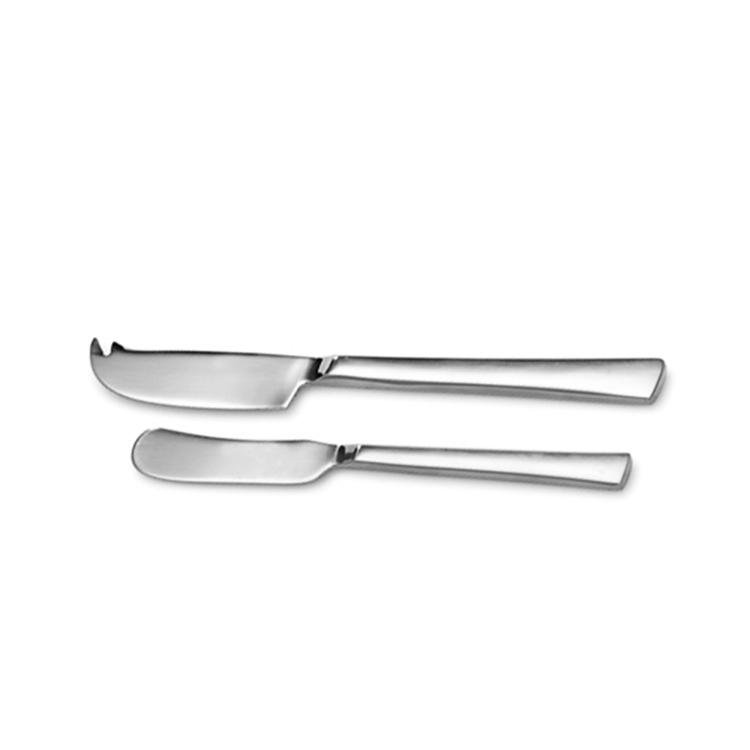
Using multiple knives helps preserve the unique texture and flavor of each cheese, especially when serving soft, semi-hard, and hard varieties together. Dedicated tools for each type of cheese also make slicing easier and produce more attractive portions.
Many stainless steel cheese knives are labeled dishwasher safe, but handwashing is usually recommended to protect the finish and edge. Gentle handwashing and immediate drying reduce the risk of water spots, discoloration, or dulling over time.
Cheese knives generally do not need frequent sharpening because cheese is softer than many other foods. You only need to sharpen them when you notice the blade dragging, tearing, or squashing the cheese instead of slicing cleanly.
Use a Parmesan or hard cheese knife for very firm and aged cheeses like Parmigiano Reggiano, Grana Padano, aged Gouda, and certain older Manchego varieties. These cheeses respond better to chipping or breaking than to straight slicing.
Store your cheese knives in a padded box, organizer tray, or dedicated knife block so the blades do not strike one another or other utensils. Always dry them thoroughly before storage and keep them in a cool, dry place away from prolonged moisture.
You can occasionally use some cheese knives for tasks such as slicing cured meats, fruits, or soft desserts, but it is best to reserve them mainly for cheese. Keeping them dedicated helps maintain their edges and prevents strong odors from affecting the cheese.


