

Views: 290 Author: Site Editor Publish Time: 2026-02-12 Origin: Site


Content Menu
● The Ancient Roots of Salad Service
● The Middle Ages and the Renaissance: A Period of Stagnation
● The 18th and 19th Centuries: The Era of Specialization
>> Service à la Russe and the Salad Ritual
>> Material Innovation: Horn, Bone, and Ivory
● The 20th Century: The Stainless Steel Revolution
>> Modernism and the Death of Ornamentation
>> Mid-Century Modern and the Rise of Wood
● Contemporary Trends: Technology and Ergonomics
>> The Invention of "Salad Hands"
>> Sustainability and Recycled Materials
● The Anatomy of a Perfect Server
● The Cultural Significance of the Salad Server
● The Future: What's Next for the Salad Server?
>> Personalized and 3D Printed Designs
>> Common Questions About the History and Use of Salad Servers
The history of the salad server is a fascinating journey through the annals of culinary art, social etiquette, and material science. While it may seem like a simple pair of oversized utensils today, the salad server represents a significant evolution in how humans interact with food, transitioning from a basic tool of survival to a sophisticated symbol of hospitality and design. To understand the evolution of the salad server is to understand the history of dining itself—moving from communal, hand-fed meals to the highly stylized and specialized service of the modern era.
The concept of a "salad"—a mixture of raw vegetables seasoned with salt, oil, and vinegar—dates back to the ancient civilizations of Greece and Rome. The word itself is derived from the Latin "sal," meaning salt, reflecting the early practice of salting greens to make them more palatable. In these ancient times, specialized tools for tossing and serving greens were virtually non-existent.
In the Mediterranean world, salads were often served in large communal clay bowls. The "servers" were typically the same wooden spoons used for cooking or, more commonly, the hands of the diners themselves. Wood was the preferred material because it was abundant, easy to carve, and did not react with the acidic vinegars used in dressings. These early wooden implements were rudimentary, often carved from a single piece of olive or boxwood, with deep bowls designed to scoop rather than toss.
The Romans took their greens seriously, developing a course called "acetaria" which consisted of various herbs and vegetables. As Roman banquets became more elaborate, the presentation of these dishes improved. While we don't see the "fork and spoon" set we recognize today, we begin to see the emergence of larger serving ladles made of bronze or silver. However, silver was quickly discovered to be problematic; the acetic acid in vinegar would react with the metal, creating a metallic tang and tarnishing the beautiful finish of the utensil.
During the Middle Ages, the refinement of dining tools took a backseat to the functional needs of the hearth. Salads remained a staple, particularly during Lenten periods, but they were largely rustic affairs. The evolution of the salad server stalled as most people continued to use basic wooden spoons or communal trenchers.
In the medieval Great Hall, food was often served on large platters. Because etiquette was still developing, the "server" was often the person closest to the dish, using their own personal knife or spoon to distribute portions. The idea of a dedicated "salad set" was still centuries away. It wasn't until the Renaissance, with its renewed focus on aesthetics and the rise of the merchant class, that we began to see the specialization of cutlery.
The introduction of the fork to Western Europe was a pivotal moment for the salad server. Originally viewed with suspicion and even religious derision, the fork eventually became the perfect partner to the spoon. By the 16th century, Italian nobility began using forks to handle messy or slippery foods. This set the stage for the eventual pairing of a large fork and a large spoon to "clamp" and lift leafy greens.
The 1700s and 1800s marked the "Golden Age" of specialized tableware. As the Victorian era approached, the sheer number of utensils available for a single meal became staggering. There were grape scissors, marrow scoops, and, finally, dedicated salad servers.
The shift from "Service à la Française" (where all dishes were placed on the table at once) to "Service à la Russe" (where dishes were served sequentially by servants) necessitated better serving tools. The salad became a specific course, often served after the roast. This ritualized the act of tossing the salad, which was frequently done at the table by the host or hostess to demonstrate their skill with the vinaigrette.
Because silver continued to react poorly with vinegar, craftsmen sought alternative luxury materials. This led to the creation of stunning salad servers made from polished horn, bone, or ivory. These materials were non-reactive and could be carved into intricate designs. Often, a silver handle would be joined to a horn bowl to provide the weight and prestige of precious metal without the chemical drawback.
Victorian salad servers were often massive, sometimes reaching 12 to 15 inches in length. They featured heavy ornamentation, including floral motifs, scrolling acanthus leaves, and figural handles. The spoon was usually solid to hold the dressing, while the fork featured long, wide-spaced tines to drain excess liquid—a design principle that remains standard today.
The most significant leap in the evolution of the salad server occurred in 1913, when Harry Brearley discovered "rustless steel" in Sheffield, England. The addition of chromium to steel created a metal that was resistant to corrosion, staining, and, most importantly, the acidity of vinegar.
Following World War I and World War II, design philosophies shifted away from Victorian clutter toward Modernism and "Form Follows Function." Designers like Georg Jensen in Denmark began creating salad servers that relied on beautiful proportions and the natural luster of stainless steel rather than applied decoration. The "Bernadotte" and "Pyramid" patterns became icons of this era, offering a sleek, hygienic, and indestructible alternative to horn or silver-plated sets.
In the 1950s and 60s, there was a brief but powerful resurgence of wooden salad servers, particularly those made of teak or walnut. Influenced by Scandinavian design, these servers were often oversized and sculptural. Brands like Dansk dominated the market, pairing wooden servers with matching staved-wood bowls. This era celebrated the "organic modern" look, emphasizing a return to nature.
Today, the evolution of the salad server continues with a focus on ergonomics, sustainability, and high-tech materials. We are no longer limited by the constraints of hand-forging; 3D printing and advanced molding techniques allow for shapes that were previously impossible.
One of the most popular modern variations is the "salad hand." These are short, wide implements that resemble a human hand with splayed fingers. They allow the user to toss the salad with the same control as using their actual hands but without the mess. Made from bamboo, recycled plastic, or stainless steel, salad hands represent a move toward casual, efficient dining.
In the 21st century, the evolution is driven by environmental consciousness. We see a rise in servers made from FSC-certified bamboo, recycled ocean plastics, and even bio-composites made from coffee grounds or husks. Stainless steel remains the king of sustainability due to its infinite recyclability, but the "green" movement is pushing designers to rethink how these tools are manufactured.
While the materials have changed, the fundamental "anatomy" of a successful salad server has been refined over centuries.
The fork in a salad set is unique. Unlike a dinner fork, its tines are often wider and may feature a small "hook" or notch on the outer edge. This is designed to snag slippery ingredients like cucumber slices or cherry tomatoes. The gap between the tines allows thin dressings to drain away, preventing the greens from becoming soggy during the serving process.
A modern evolution in design is the "weighted handle." By concentrating weight in the handle, the server is less likely to slip into the bowl and become covered in dressing. Ergonomic studies have also led to handles with "soft-touch" grips or contoured shapes that fit the natural curve of the palm, making it easier for people with limited grip strength to serve a meal.
Beyond their utility, salad servers have evolved into significant cultural artifacts. In many cultures, a high-quality set of salad servers is a traditional wedding or housewarming gift. This stems from the idea that the salad bowl is the "heart" of the table—a place of sharing and health.
Using dedicated servers rather than standard kitchen spoons is a signal of hospitality. It shows that the host has taken care in the presentation of the meal. In fine dining, the synchronized use of salad servers by waitstaff is a performance in itself, a remnant of the elaborate table service of the 19th century.
For some, salad servers are a medium for artistic expression. Limited edition sets by famous architects like Zaha Hadid or designers like Philippe Starck have turned these tools into museum-quality pieces. They are no longer just tools; they are conversation starters that bridge the gap between art and domesticity.
As we look toward the future, the evolution of the salad server shows no signs of slowing down.
We are already seeing the emergence of "smart" kitchen tools. Could the salad server of 2050 include sensors to measure the nutritional content of the salad or ensure the perfect ratio of oil to vinegar? While it sounds like science fiction, the integration of technology into dining is a natural progression of our digital age.
The rise of 3D printing means that in the future, consumers may be able to download a design and print a set of salad servers that perfectly match the contour of their own hands or the specific dimensions of their favorite salad bowl. This level of customization would be the ultimate culmination of a journey that began with a simple hand-carved stick.
From the wooden spoons of ancient Rome to the sleek, indestructible stainless steel of the modern day, the salad server has undergone a remarkable transformation. It has adapted to new materials, survived the rigidity of Victorian etiquette, and embraced the minimalism of the 20th century. Despite all these changes, its core purpose remains the same: to bring people together over a fresh, shared meal. The evolution of the salad server is a testament to human ingenuity and our enduring desire to make the simple act of eating an experience of beauty and grace.
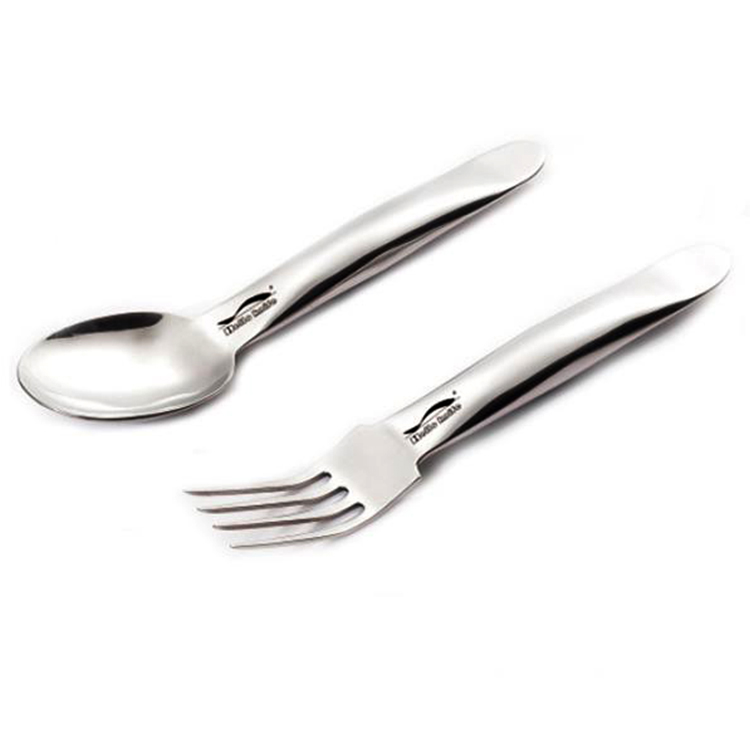
1. Why is the salad server set usually composed of one fork and one spoon?
The combination is functional. The spoon acts as a base to support the weight of the greens and holds the dressing, while the fork provides the grip and "tines" necessary to secure the leaves. Together, they act like a pair of tongs but with more versatility for tossing and folding ingredients.
2. Why was silver avoided for salad servers in the past?
Silver reacts chemically with the acetic acid found in vinegar. This reaction not only causes the silver to tarnish quickly but also produces a metallic taste that can ruin the delicate flavors of a salad. This led to the popularity of horn, wood, and eventually stainless steel.
3. What is the benefit of using "salad hands" over traditional long-handled servers?
Salad hands offer superior leverage and control. Because they are held closer to the food, they allow for a more thorough tossing of the ingredients without bruising delicate greens. They are also easier to store and are often preferred for casual, "family-style" dining.
4. Who were some of the most influential designers of salad servers?
In the 20th century, Georg Jensen and Henning Koppel were instrumental in bringing Danish Modernism to tableware. Later, designers like Jens Quistgaard (for Dansk) popularized the use of exotic woods like teak. In the contemporary world, designers for Alessi and Villeroy & Boch continue to push the boundaries of the form.
5. How should I care for antique horn or wooden salad servers?
Unlike stainless steel, horn and wood are organic materials that can dry out and crack. They should never be soaked in water or placed in a dishwasher. Instead, hand-wash them with mild soap, dry them immediately, and occasionally rub them with food-grade mineral oil to maintain their luster and prevent cracking.


