

Views: 290 Author: Site Editor Publish Time: 2026-04-11 Origin: Site


Content Menu
● What Makes a Cheese Knife Unique
● Why One Knife Doesn't Fit All
● Blade Design and Functionality
● Materials: Form Meets Function
>> Carbon Steel
>> Ceramic
● How to Use a Cheese Knife Properly
>> Step 1: Match the Knife to the Cheese
>> Step 2: Cut in One Smooth Motion
>> Step 3: Maintain Presentation
● Building a Cheese Board with Knife Pairing
>> Soft and Spreadable Pairing
● Etiquette and Presentation Tips
● Maintenance and Care Essentials
>> Cleaning
>> Drying
>> Sharpening
>> Storage
● Recommended Cheese Knife Sets for Beginners
● Innovation and Modern Trends
● The Cultural Role of Cheese Knives
Cheese is one of the world's most beloved foods—creamy, salty, tangy, and full of character. Yet many overlook the tool that transforms how we experience it: the cheese knife. Whether you're serving a platter at home or composing a gourmet spread, the right knife is essential for cutting, plating, and preserving flavor. This guide unpacks the artistry and science behind the cheese knife, showing exactly why it matters.
Unlike ordinary kitchen knives, a cheese knife is engineered with specialized features that complement different cheese textures. From soft Brie to crumbly Blue Stilton, each cheese requires a blade precise enough to maintain its delicate structure.
Cheese knives are part design, part science—they use balance, contour, and material properties to make cutting effortless and elegant.
Cheese knives have roots in ancient European cheesemaking traditions. Artisans in France and Italy created early versions to handle soft, aged, and hard cheeses. Over time, each region refined their designs, leading to the modern diversity of styles found today.
In fine dining, cheese knives became defining elements of etiquette and presentation, echoing a long legacy of craftsmanship and culinary pride.
Different cheeses respond differently to pressure and blade type. That's why experienced hosts use specific knives for different textures.
Designed with holes along the blade or an offset handle, the soft cheese knife reduces sticking and preserves smooth surfaces.
Hard cheeses like Cheddar and Parmesan demand firm, thick blades that can pry and break through dense structure.
A small, stout blade ideal for medium-firm cheeses like Gouda, enabling precise thick-cut slices.
The dual-purpose design allows cutting and serving effortlessly—the prongs pick up slices elegantly for plating.
The holes minimize cheese adhesion, making slicing smoother for soft varieties.
Best for soft and semi-soft cheese, ensuring gentle movement with minimal resistance.
Provide strength for firm, aged cheeses and even serve as levers for chunk extraction.
Choosing the right blade material affects sharpness, hygiene, and longevity.
It's durable, corrosion-resistant, and easy to clean—perfect for everyday use.
Offers sharper edges but requires careful maintenance to prevent rusting.
Lightweight, odor-free, and beautiful—ideal for delicate cheeses but vulnerable to breakage.
Whether wooden or metallic, a handle influences how smoothly you slice and serve. Consider grip, balance, and aesthetic compatibility with your cheese board.
- Wood Handles: Add warmth and character to rustic presentations.
- Acrylic Handles: Offer sleek, modern appeal and easy cleaning.
- Stainless Handles: Hygienic and sturdy, great for professional kitchens.
- Bamboo Handles: Eco-friendly option for sustainable design.
Soft cheese? Go perforated. Hard cheese? Choose a solid blade.
Avoid sawing—apply gentle pressure until the knife glides through.
Clean the blade between slices to prevent residue from transferring.
Use fork-tipped edges to lift cheese neatly without breaking its form.
A complete cheese experience depends as much on your knives as your selection. This pairing guide helps structure your perfect serving board.
Knife: Perforated or rounded spreader.
Cheeses: Brie, cream cheese, or goat cheese.
Knife: Fork-tipped or cleaver.
Cheeses: Gouda, Havarti, or Gruyère.
Knife: Heavy-duty wedge or chisel style.
Cheeses: Parmesan, Asiago, or aged Cheddar.
Good manners make gatherings memorable.
- Offer distinct knives for each cheese to prevent flavor mixing.
- Keep knives clean and polished before serving guests.
- Present the knife handle facing outward for easy access.
- Pair knives' aesthetic with board design—rustic with wood, modern with steel.
Always handwash knives after use. Avoid harsh detergents or dishwashers, which dull blades and ruin finishes.
Completely dry before storage to prevent moisture damage.
Use gentle sharpening stones or rods periodically, especially for cleavers and hard cheese knives.
Keep knives either in blocks, magnetic racks, or covers to protect from scratches.
A perforated soft cheese knife, a hard cheese cleaver, and a fork-tipped server make a versatile trio.
Add specialty blades like spreaders, chisel knives, and planes for professional presentations.
Opt for bamboo handles and recycled steel for eco-friendly entertaining.
Modern chefs are embracing innovation—smart cheese knives integrated with dual edges, ergonomic contours, and minimalist aesthetics. Sustainable materials like bamboo and cork handles are gaining popularity.
- Using one knife for every cheese type.
- Applying excessive pressure on soft cheeses.
- Storing knives loosely among other utensils.
- Forgetting to dry completely after washing.
Cheese knives symbolize hospitality and refinement. From European wine tastings to global culinary presentations, they represent precision and respect for craftsmanship.
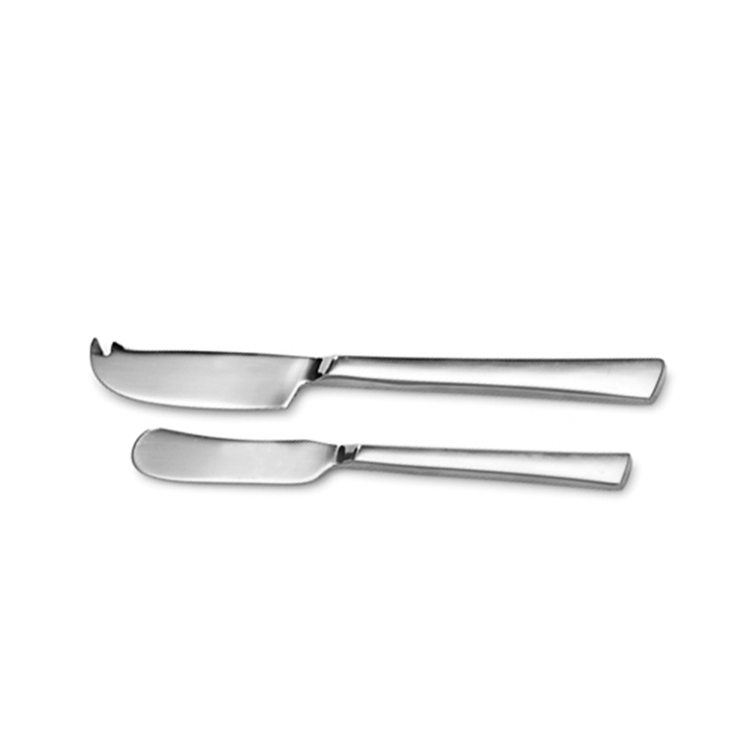
1. Why do cheese knives have holes in them?
The holes reduce friction and prevent soft cheese from sticking to the blade.
2. Can I use one knife for all cheeses?
It's possible, but texture-specific knives produce cleaner cuts and enhance serving quality.
3. How often should I clean cheese knives?
After every use, using mild soap and warm water, followed by immediate drying.
4. What's the best material for cheese knife blades?
Stainless steel offers durability and balance, while ceramic is great for soft cheese.
5. Are cheese knives dishwasher safe?
Hand washing is always best—dishwashers can dull edges and damage handles over time.


