

Views: 250 Author: Site Editor Publish Time: 2025-07-19 Origin: Site


Content Menu
● The Origins of Cheese and Butter Knives
>> History of the Cheese Knife
>> History of the Butter Knife
● Form Meets Function: Anatomy of Each Knife
>>> Video: How to Cut Cheese with a Cheese Knife
>> The Science Behind the Design
>>> Video: Using a Butter Knife Properly
>> The Importance of Design and Material
● Cheese Knife vs. Butter Knife: The Key Differences
>> Blade Sharpness and Thickness
>> Blade Design
● How to Use Cheese and Butter Knives Properly
>> Cheese Knife: Best Practices
>> Butter Knife: Best Practices
>> 1. Can cheese knives be used for butter or other spreads?
>> 2. What is the best way to cut soft cheeses like brie?
>> 3. Why do some cheese knives have holes in the blade?
>> 4. Can I use a butter knife to cut cheese?
>> 5. Are heated butter knives worth it?
Cutlery plays a vital role not just in the kitchen but at every table setting. Among the many utensils found in kitchens and on dining tables, the cheese knife and butter knife are two that are often misunderstood, misused, or even confused for one another. Yet, each has its own unique design, purpose, and etiquette that, when understood, can elevate both cooking and dining experiences. This comprehensive guide explores every facet of cheese and butter knives—from their history to their anatomy, usage, and care—helping you make the most out of these specialized utensils.
Cheese has been produced and enjoyed for thousands of years, and with this long history came the need for specialized tools to cut, slice, and serve it. The modern cheese knife evolved as people recognized the differences in cheese textures—soft, semi-soft, semi-hard, and hard—that required unique blade shapes and designs for clean cuts and proper serving.
The butter knife, on the other hand, was developed in the 19th century as dining etiquette became more formalized. Around the Victorian era, specific utensils for each food type became popular, and the butter knife emerged as the essential tool for spreading softened butter without tearing bread.
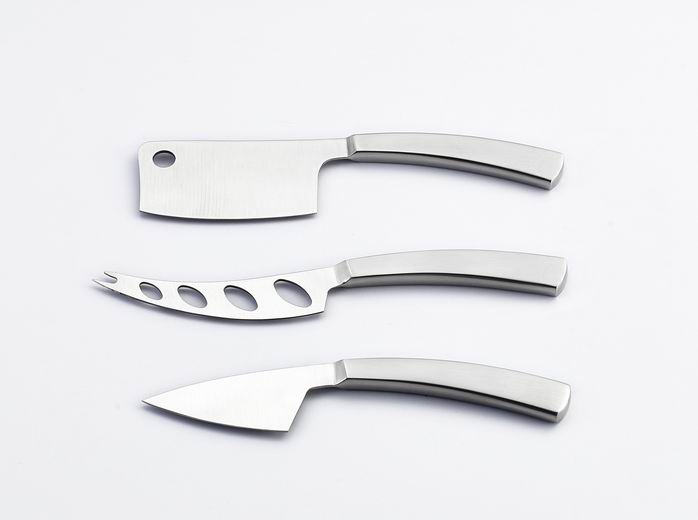
A cheese knife is specifically designed to handle a range of cheese textures. Its features may include:
- A sharp or serrated edge for slicing through firm or hard cheeses.
- A narrow, often perforated blade to reduce sticking with soft cheeses.
- Forked tips for serving slices or cubes of cheese.
- Angled or offset handles to keep knuckles away from the cheese board.
- Sturdy construction to tackle even the densest cheeses.
A butter knife is generally characterized by:
- A small, dull blade.
- Rounded tip, lacking any sharp point or edge.
- Flat, sometimes slightly flexible blade for spreading.
- Simplicity and elegance to complement place settings.
- Materials ranging from stainless steel to wood or ceramic.
Depending on the cheese, different types of cheese knives exist. These include:
- Pronged Knife: For cutting and serving slices.
- Slim Blade Knife: For neatly slicing semi-firm cheeses.
- Offset Knife: Keeps your hand safe and helps with leverage.
- Parmesan Knife: For breaking hard cheeses into chunks.
- Gorgonzola Knife: Rounded blade for delicate, creamy cheeses.
A visual guide is often the best way to understand cheese knife application. Watch a demonstration on cutting both soft and hard cheeses, and learn how the design features—like serrated edges and forked tips—make serving cheese effortlessly elegant.
Every cheese knife feature has a purpose:
- Perforated blades minimize drag and sticking with soft cheeses.
- Serrated blades slice through rinds and firm textures.
- Forked ends pick up and serve cheese easily.
- Offset handles provide better hand positioning for pressure and balance.
There's more variety in butter knives than most realize:
- Classic Stainless-Steel Butter Knife: Universal table knife for spreading.
- Wooden Butter Spreader: Common in Scandinavian settings.
- Serrated Butter Knife: For chilly or hard butter; can double as a spreader.
- Heated Butter Knife: Innovative modern variation that helps tackle cold butter with ease.
- Plastic or Ceramic Butter Knives: Ideal for picnics or travel; lightweight and convenient.
In this video, see proper techniques for holding and using a butter knife, including etiquette for passing and sharing butter at the dinner table.
Butter knives typically have smooth, rounded blades that are intentionally dull, so they won't tear delicate bread. The choice of handle material—wood, steel, plastic—affects both look and comfort. Ergonomics are taken into account in quality designs, especially for heated or specialized knives.
- Cheese Knife: Features a sharper, sometimes serrated blade designed for cutting and slicing.
- Butter Knife: Has a blunt edge suited solely for spreading, not cutting.
- Cheese Knife: May have holes or an ultra-thin profile for soft cheeses, and forked or specialized tips for handling after slicing.
- Butter Knife: Smooth and unperforated, designed for smooth, gentle application of spread.
- Cheese Knife: Used on cheese boards, parties, and in gourmet kitchens for prepping and serving cheeses of all types.
- Butter Knife: Used on bread plates at meals for butter, jams, soft cheese spreads, and sometimes condiments.
Both knives may be found in stainless steel, but cheese knives can sometimes be more specialized with designer handles and gourmet looks, while butter knives often prioritize uniformity for formal dining.
- Always match the knife to the cheese texture (e.g., a cheddar or Swiss needs a different blade than brie or camembert).
- Use downward, even motion—never use a sawing or rocking movement.
- Clean the blade between different cheese types to maintain flavor integrity.
- Take a portion of butter with the knife and transfer it to your plate, never double-dip in communal butter dishes.
- Spread using gentle, even strokes to avoid tearing the bread.
- For hard butter, allow it to soften slightly or use a heated butter knife.
- Hand-washing is recommended for most specialty cheese knives, especially those with wooden handles.
- Avoid putting cheese knives in the dishwasher unless the manufacturer says it's safe to do so.
- Dry immediately after washing to prevent rust on metal parts.
- Stainless steel and plastic butter knives can usually go in the dishwasher.
- Wooden or decorative knives should be hand-washed and dried promptly.
- Periodically rub wooden knives with mineral oil to keep them from drying out.
- Provide a separate knife for each cheese on a cheese board.
- Don't use the same knife on multiple cheeses to avoid mixing flavors.
- Serve cut slices using the forked tip or a separate utensil.
- Use only your own butter knife when spreading on your bread.
- Never use a personal knife to scoop butter directly from a communal dish.
- Place the butter knife on your bread plate after use, not directly on the table.
Generally, cheese knives are too sharp and may be overkill for soft spreads. Use them only for cheeses—stick with a butter knife for spreads.
Use a thin, perforated cheese knife to minimize sticking and make clean cuts. Wiping the blade between slices can help as well.
The holes reduce drag and sticking when cutting soft cheeses, ensuring a cleaner, more attractive slice.
A butter knife can handle very soft cheeses and spreads but will struggle to cut through firm or hard cheeses due to its dull blade.
Heated butter knives can be very effective for spreading cold butter, but they are a specialty item and not commonly found in most kitchens.
[1] https://www.cretanknives.gr/en/types-of-knives-en/everything-you-need-to-know-about-butter-knives
[2] https://anycheese.com/articles/cheese-knife-types/
[3] https://www.cuisineathome.com/review/butter-knife/
[4] https://www.youtube.com/watch?v=U_l2X1uVbcY
[5] https://www.instructables.com/Simple-Butter-Knife-Swedish-Style/
[6] https://www.cheesesexdeath.com/blog/a-guide-to-cheese-knives
[7] https://www.webstaurantstore.com/article/501/cheese-knives-guide.html
[8] https://www.sambonet-shop.com/en-us/flatware/flatware-by-item/table-knives/butter-knives/
[9] https://www.youtube.com/watch?v=jHcbY1Sk8XI
[10] https://www.siliconrepublic.com/gear/heated-butter-knife-solves-age-old-problem-video
[11] https://shriandsam.com/blogs/blog/types-of-table-knives
[12] https://domestikatedlife.com/2020/02/26/cheese-knife-101-a-guide-to-cheese-knives/
[13] https://en.wikipedia.org/wiki/Butter_knife
[14] https://www.pamperedchef.com/shop/Kitchen+Tools/Specialty+Cutting+Tools/Cheese+Knife/100478
[15] https://www.tiktok.com/@epicurious/video/7202763954794351918?lang=en
[16] https://www.christofle.com/us_en/les-types-de-couteaux
[17] https://www.arcos.com/en_US/knives/cheese-knife
[18] https://www.restaurantsupply.com/butter-knives
[19] https://www.youtube.com/watch?v=yOaRo0oHI-Y
[20] https://www.youtube.com/watch?v=RZXb9RqEZtc


