


Views: 260 Author: HELLOKNIFE LTD Publish Time: 2026-11-03 Origin: Site


Content Menu
● European Consumers vs American Consumers: Cheese Tool Buying Habits at a Glance
● What Consumer Research Actually Tells Cheese Tool Brands
>> Cheese Is an Everyday Category on Both Sides of the Atlantic
>> Education Can Support Product Discovery
>> Pairing Behavior Creates Merchandising Opportunities
● European Cheese Tool Buying Habits: Questions Worth Testing
>> Make Material and Design Information Specific
>> Localize by Country and Retail Channel
● American Cheese Tool Buying Habits: Opportunities Beyond the Gift Set
>> Explain the Entertaining Experience
>> Keep Everyday Users in the Assortment
● OEM Product Design: Translate Buying Intent into Specifications
● How to Turn Customer Reviews into Better Cheese Accessories
>> Classify Complaints Before Changing the Product
>> Preserve the Integrity of Customer Evidence
● A Five-Step Launch Plan for European and US Markets
>> 1. Define One Audience and Occasion
>> 2. Benchmark Comparable Products
>> 3. Build Contrasting Product Concepts
>> 4. Validate Claims and Instructions
>> 5. Measure Commercial Performance
● Product Page UX: Help Buyers Understand Before They Purchase
● Develop Your Next Cheese Tool Collection with HELLOKNIFE LTD
>> 1. Do European consumers prefer individual cheese knives while Americans prefer sets?
>> 2. Should a cheese board collection differ between Europe and the US?
>> 3. What information should a private-label cheese knife brief include?
>> 4. Are wooden cheese boards automatically sustainable?
>> 5. How can brands reduce customer disappointment?
>> 6. Can the same cheese tool range sell in both markets?
HELLOKNIFE LTD is a China-based OEM manufacturer of custom cheese knives, cheese boards, and steak knives for international brands, wholesalers, and manufacturers. For businesses developing private-label kitchenware, understanding "European Consumers vs American Consumers: Cheese Tool Buying Habits" starts with a practical question: what job does the customer expect the product to do?
Our approach is to begin with the occasion, not the flag. A cheese enthusiast buying a replacement knife has different priorities from someone choosing a housewarming gift—even when both live in the same city.
This guide connects published consumer research with OEM product-development recommendations. It does not treat cheese consumption statistics as direct evidence of cheese-tool purchases.
The central principle is occasion: design around how customers prepare, serve, store, and give cheese accessories.
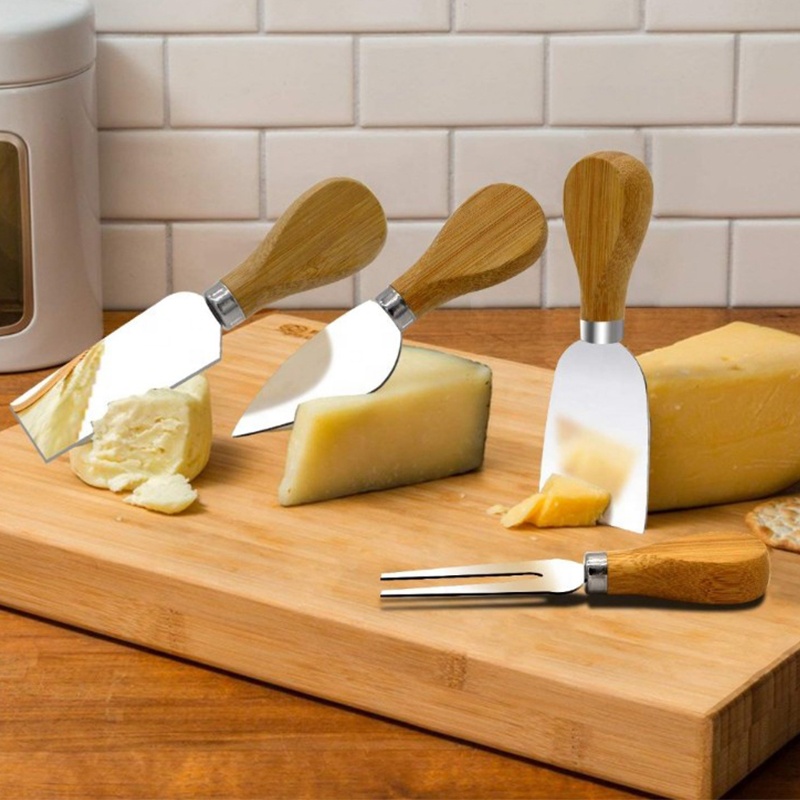
Europe is not one consumer market, and American shoppers do not share a single buying style. Country, household size, retail channel, budget, and cheese knowledge all affect the purchase.
The comparison below offers starting hypotheses for product development, not measured regional preferences.
| Buying consideration | European-market hypothesis to test | US-market hypothesis to test |
|---|---|---|
| Main purchase occasion | Everyday serving, specialist use, or gifting | Entertaining, everyday use, or gifting |
| Product configuration | Individual tools or compact coordinated sets | Starter kits or complete entertaining sets |
| Board design | Natural materials and practical storage | Serving layout and presentation versatility |
| Product information | Material, function, care, and sourcing details | Clear benefits, dimensions, and usage guidance |
| Value proposition | Useful craftsmanship and durability | Useful completeness and presentation |
| Validation method | Country-specific retailer and customer research | Channel-specific listing and customer research |
These opportunities overlap. European customers also buy impressive gifts, while American enthusiasts may prefer one excellent knife to a large accessory set.
Mintel's November 2025 analysis describes cheese as deeply embedded in everyday eating in the US, UK, and Germany. It also identifies growing price sensitivity and demand for convenient, premium eating experiences.
For cheese accessory brands, this creates two possible product directions: dependable tools for regular use and presentation-focused products for enjoyable occasions.
Neither direction belongs exclusively to one region. A useful assortment should address both before introducing country-specific variations.
The Dairy Business Innovation Alliance's 2025 specialty cheese research reports that over 40% of specialty cheese consumers indicated that education on packaging, social media, and other online channels would encourage broader or more frequent consumption.
That finding concerns cheese, not knives. However, it suggests a worthwhile accessory-marketing experiment: explain which tool serves which cheese.
A product page that answers "What is this knife for?" gives beginners more practical help than a photograph showing unexplained blade shapes.
A June 2025 industry report covering Dairy Farmers of Wisconsin research states that 65% of shoppers buy other products to pair with cheese.
This supports exploring coordinated merchandising around the eating occasion. It does not establish that those shoppers purchase boards or knives.
For brands, the appropriate next step is testing: compare a standalone tool listing with a clearly explained serving bundle, then measure conversion and returns.
CBI's European cutting-board guidance identifies natural materials, visual appeal, added functionality, and sustainability as relevant market themes.
Its guidance dates to 2018, so it should inform design questions rather than serve as a current market forecast.
For a wooden cheese board, useful product information includes:
- The actual wood species.
- Dimensions, thickness, and weight.
- Surface finish and maintenance instructions.
- Whether pictured accessories are included.
- Verified sourcing information, where available.
"Premium wood" communicates less than a precise material description. Likewise, environmental claims should reflect documentation rather than appearance.
A specialist cheese shop, a homeware retailer, and an online gift seller need different assortments. Treating all three as one "European customer" weakens the brief.
For an initial launch, choose a specific country, sales channel, and price tier. Then assess competing listings, customer questions, and packaging expectations.
A compact three-tool collection may be worth testing for one retailer. Another may need a distinctive serving board with minimal accessories.
The correct choice follows the customer and channel—not a continental stereotype.
US specialty cheese reporting highlights at-home entertaining, cheese boards, and pairing occasions. This makes the complete serving experience a reasonable positioning direction to test.
A coordinated cheese board and knife set can explain its value through:
- A clear serving layout.
- Tools matched to different cheese textures.
- Easy-to-understand storage.
- Accurate size photography.
- Packaging suitable for the intended purchase occasion.
Avoid promising that a board "serves twelve" without showing the assumptions. Cheese quantity, accompaniments, and whether the board replaces a meal all change its practical capacity.
Not every customer wants a large presentation board. Some need a small board for two people or a replacement knife for frequent use.
Build the range around customer tasks:
1. An entry-level set for first-time buyers.
2. A compact board for everyday serving.
3. A larger entertaining collection.
4. Specialist tools for experienced cheese buyers.
This structure allows shoppers to select by need rather than assuming that more pieces always mean better value.
From our OEM planning perspective, "make it premium" is not a complete instruction. A workable brief connects each customer benefit to a measurable specification.
| Customer benefit | Specification to define | Sample evaluation |
|---|---|---|
| Comfortable handling | Handle dimensions, shape, and finish | Assess grip with intended users |
| Suitable cutting performance | Blade geometry and intended cheese texture | Compare performance on representative cheeses |
| Stable presentation | Board flatness, dimensions, and construction | Check rocking and practical serving space |
| Convenient storage | Overall footprint and tool arrangement | Test removal, replacement, and cleaning access |
| Gift-ready arrival | Packaging structure and component protection | Evaluate damage risk and unpacking |
| Clear ownership experience | Care card and product instructions | Check whether users understand them |
For HELLOKNIFE LTD customers, this creates a better starting point for discussing custom cheese knives, private-label cheese boards, and coordinated product collections.
Agree on materials and performance requirements before finalizing decorative details. Appearance should reinforce usability, not hide unresolved design problems.
No customer reviews were supplied for this article. The examples below are hypothetical feedback categories, not HELLOKNIFE LTD testimonials.
Review analysis becomes useful when each complaint connects to a possible cause and a verification step.
| Hypothetical feedback | Possible issue | What to investigate |
|---|---|---|
| "Smaller than expected" | Listing or scale communication | Dimension graphics and lifestyle photography |
| "The handle feels awkward" | Ergonomic mismatch | Grip trials with different hand sizes |
| "The board became rough" | Finish, care, or use conditions | Surface specification and cleaning instructions |
| "The box arrived damaged" | Packaging protection | Packing method and shipping conditions |
| "I cannot tell which knife to use" | Missing education | Tool labels and an illustrated guide |
Do not redesign a product around one isolated comment. Look for repeated patterns and separate manufacturing defects from expectation gaps.
Use authentic reviews with appropriate permission. Do not convert internal assumptions into customer quotations.
When reporting improvements, describe what actually changed: revised dimensions, clearer photography, different packaging, or updated instructions.
Specific, verifiable changes build more trust than unsupported claims of universal customer satisfaction.
Write a narrow brief: "a compact cheese serving set for first-time apartment hosts" is more useful than "a premium board for Western consumers."
Specify the target country, channel, intended retail position, and main purchase occasion.
Compare products with similar materials, dimensions, and positioning. Record accessory count, packaging, customer questions, care guidance, and recurring complaints.
Do not compare a small everyday board directly with a large gift presentation set.
Develop two meaningful alternatives. For example, test a compact board with three essential tools against a larger board with additional serving space.
Keep the distinction clear enough to reveal a real preference.
Confirm that material descriptions, care statements, and performance claims match the supplied product.
Check applicable destination-market requirements with qualified support. Do not reuse an old market guide as a current legal checklist or assume one document covers every material and market.
Track conversion, return reasons, shipping damage, customer questions, and repeat orders.
A lower factory price is not automatically a better commercial result if unclear positioning or insufficient protection increases downstream costs.
A strong cheese accessory listing should answer practical questions quickly:
- What is included?
- How large is the board?
- Which cheese textures suit each tool?
- How should each component be cleaned?
- What customization is available to trade buyers?
Place an overview image near the introduction, an annotated dimensions image beside specifications, and close-up material photography near the quality discussion.
After the tool-selection section, add a short demonstration video showing actual cutting and serving. Beside the OEM section, show approved samples and packaging options rather than generic factory imagery.
For structured data, use accurate Article and BreadcrumbList markup where appropriate. Identify the real author and reviewer, and avoid adding review ratings or credentials that the page cannot substantiate.
HELLOKNIFE LTD provides OEM services for international brands, wholesalers, and manufacturers seeking custom cheese knives, cheese boards, and steak knives.
Start your inquiry with the destination market, sales channel, intended customer, target quantity, and preferred product configuration. Include reference dimensions, material preferences, branding requirements, and packaging expectations.
Ask for a specification-led discussion covering customization feasibility, sample evaluation, quotation assumptions, and production requirements.
The goal is not simply a different logo. It is a coherent collection built around a clearly defined buyer.
The sources reviewed do not establish that general rule. Treat individual tools and coordinated sets as alternative propositions to test by country, channel, and purchase occasion.
Possibly, but customer evidence should determine the differences. Dimensions, packaging, language, accessory selection, and retail positioning may require localization even when the core design stays consistent.
Include the intended cheese textures, blade and handle requirements, dimensions, finish, branding, packaging, target market, quantity, and evaluation criteria. Confirm the final specification during sampling.
No. Wood alone does not substantiate a broad sustainability claim. Describe the actual material and support sourcing, certification, or environmental statements with relevant evidence.
Show accurate dimensions, identify every included component, explain tool functions, and provide realistic care instructions. Investigate repeated return reasons rather than relying only on average ratings.
Yes, a shared core range is a reasonable strategy to test. Localize the offer where research indicates a need instead of creating separate collections solely because the destinations differ.
1. HELLOKNIFE LTD business description — supplied in the commissioning brief. Source for the company's stated location, product categories, and OEM customer groups. No company website, certifications, or customer reviews were supplied.
2. Anabelle Holschuh, Mintel. "What's Driving Cheese Industry Innovation Across Global Markets?" Updated November 28, 2025. Supports discussion of everyday cheese consumption, price sensitivity, convenience, and premium occasions. [Read the article]. [mintel]
3. Dairy Business Innovation Alliance, University of Wisconsin–Madison. "Domestic Specialty Cheese Consumption." Published April 8, 2025; research conducted by Ipsos. Supports the finding about consumer education and specialty cheese exploration. [Read the research overview]. [dbia.wisc]
4. Supermarket Perimeter. "Cross-merchandising: 65% of shoppers buy other things to pair with cheese." June 20, 2025. Reports findings from Dairy Farmers of Wisconsin's Shopping Journey Study. The statistic concerns cheese pairings, not measured purchases of cheese tools. [Read the report]. [supermarketperimeter]
5. CBI, Netherlands Ministry of Foreign Affairs. "Exporting cutting boards to Europe." June 20, 2018. Used for historical design and merchandising context concerning natural materials, functionality, sustainability, and product information—not current market sizing or legal guidance. [Read the market guide]. [cbi]
6. FoodNavigator-USA. "Soup-To-Nuts Podcast: What is driving specialty cheese sales in the US?" March 28, 2024. Supports discussion of at-home entertaining and intentional indulgence in US specialty cheese consumption. [Read the article]. [foodnavigator]
Hot Tags: China, Global, OEM, private label, manufacturers, factory, suppliers, manufacturing company


