

Views: 280 Author: Site Editor Publish Time: 2026-04-24 Origin: Site


Content Menu
● Why Some Knives Are Dishwasher‑Safe
● H2: Before You Put Knives in the Dishwasher
>> H3: Check the Manufacturer's Instructions
>> H3: Pre‑Rinse and Remove Food Debris
● H2: Loading Dishwasher‑Safe Knives Properly
>> H3: Use the Utensil Basket or Adapter
>> H3: Avoid Overcrowding and Slamming
● H2: During and After the Dishwasher Cycle
>> H3: Choosing the Right Cycle and Settings
>> H3: Removing and Drying Immediately
● H2: Hand‑Washing Dishwasher‑Safe Knives When Needed
>> H3: When Hand‑Washing Is Better
>> H3: Gentle Hand‑Washing Technique
● H2: Visuals and Video Ideas to Support Your Article
● H2: Long‑Term Care for Knives That Can Go in the Dishwasher
>> H3: Regular Inspection and Maintenance
>> H3: Avoiding Common Mistakes
● FAQs: Questions and Answers About Cleaning Dishwasher‑Safe Knives
>> 1. What kinds of knives are safe to put in the dishwasher?
>> 2. Can I put high‑quality chef's knives in the dishwasher?
>> 3. How should I load knives in the dishwasher?
>> 4. Should I dry dishwasher‑safe knives after the cycle?
>> 5. Can I hand‑wash a dishwasher‑safe knife?
Not all knives are meant to be washed by hand. Many manufacturers design certain blades, especially basic stainless‑steel table knives, inexpensive stamped‑steel sets, and some plastic‑handled utility knives, to tolerate the dishwasher environment. These pieces are built with thicker, more corrosion‑resistant steel and non‑porous, heat‑resistant handles that can survive hot water, aggressive detergents, and typical dishwasher cycles.
Even if a knife is labeled "dishwasher‑safe," it still pays to clean it properly inside the machine. How you load it, how often you run it, and how you remove and dry the knife afterward can all affect how long it stays sharp and how well it performs on the cutting board.
The first step is to confirm that your knife can actually go in the dishwasher. Many brands label only certain models as dishwasher‑safe, while their premium knives are explicitly marked "hand wash only."
- Look for a small icon on the packaging or manufacturer's website that indicates dishwasher use.
- If the tag or care guide says "hand wash," treat it like a premium kitchen knife and skip the dishwasher, even if the blade appears simple or inexpensive.
If your knife is indeed dishwasher‑safe, do a quick pre‑rinse before loading it into the dishwasher. Letting food, especially acidic items like tomato or citrus residue, sit on the blade increases the chance of spotting or dulling.
- Rinse the blade briefly under running water to remove sticky sauces, meat fibers, or other residue.
- Wipe the handle with a damp cloth if it is marked with grease or food, then place it in the dishwasher.
The safest place for knives in a dishwasher is the dedicated utensil basket or a knife‑specific adapter, if your model has one. These keep blades pointed downward or secured so they do not jostle around during the cycle.
- Point knife tips down to reduce the risk of impact with the dish‑washer rack or dishes.
- Arrange knives so they do not rest directly on metal rails or touching other knives, which can cause nicks or dulling.
Overloading the utensil basket can trap water and detergent, leaving spots and film on the knives. It also increases the chance of knives bumping into each other, which can dull the edges.
- Spread knives out so water can rinse freely around each blade.
- Do not jam knives together or stack them on top of one another.
Most dishwasher‑safe knives can handle a normal or light cycle, but very hot "sanitize" or "pots and pans" settings are not always necessary. Using an excessively hot setting can accelerate wear on plastic or composite handles.
- Select a normal or eco‑friendly cycle for everyday cleaning.
- If your dishwasher has a "rinse and dry" or a short‑cycle option, that is often enough for knives.
As soon as the cycle finishes, open the dishwasher and remove the knives promptly. Letting them sit in a warm, humid environment after the cycle encourages moisture to stay near the handle‑blade junction, which can lead to rust or handle warping over time.
- Use a dry hand or towel to pull knives out of the rack.
- Give each knife a quick visual check and wipe it with a soft cloth if you see any water spots or film.
Even if a knife is technically dishwasher‑safe, there are situations when hand‑washing is preferable.
- If the knife is very dirty or has sticky residue, a quick hand‑wash ensures thorough cleaning without waiting for a full cycle.
- If you plan to sharpen or inspect the blade closely, hand‑washing gives you better control over how the edge is handled.
Hand‑washing a dishwasher‑safe knife is identical to caring for any high‑quality blade.
- Use warm water, mild dish soap, and a soft sponge or cloth.
- Hold the knife by the handle and wipe the blade from the heel to the tip, avoiding abrasive pads that can scratch or dull the metal.
- Rinse thoroughly and dry immediately with a soft towel, wiping from spine toward the edge to reduce the risk of cuts.
To make this article more practical and engaging, you can add multiple photos and short videos that illustrate each step.
These visuals help readers clearly see the correct way to handle their dishwasher‑safe knives and avoid common mistakes.
Even dishwasher‑safe knives need occasional attention. Over time, you may notice dulling or slight handle wear.
- Periodically check the edge with a gentle test on a tomato or soft fruit to see if it slices cleanly.
- If the knife feels sluggish, use a honing rod or sharpening stone to restore the edge.
- Never leave knives soaking in standing water, even if they are dishwasher‑safe; prolonged soaking can still damage handles or leave spots.
- Do not use harsh scouring pads or abrasive cleaners on the blade or handle, as these can scratch the metal and dull the cutting edge.
- Rotate knives in a set so one blade does not take all the wear from frequent machine washing.
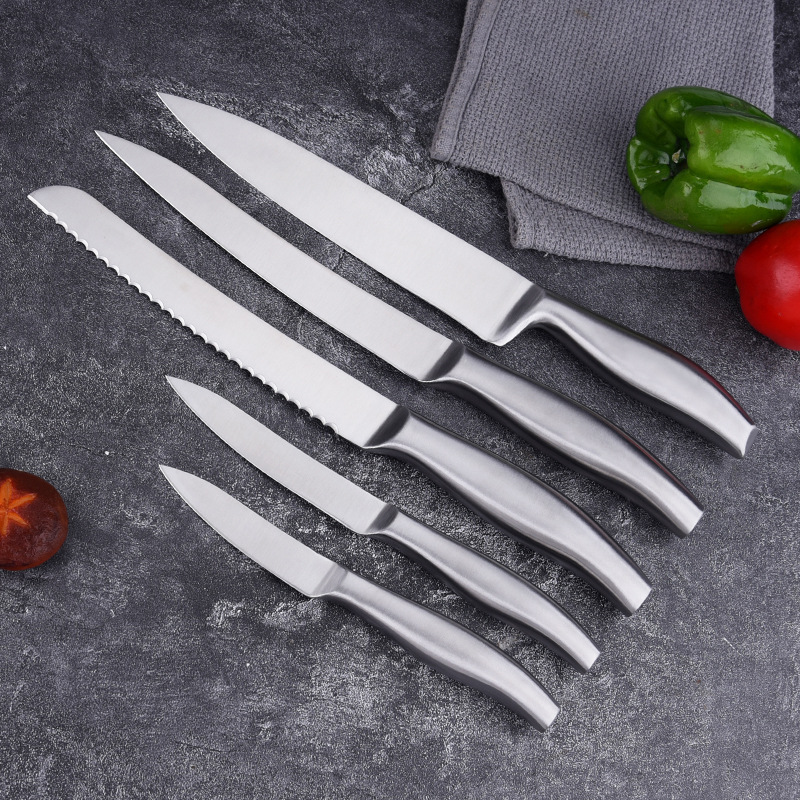
Most basic stainless‑steel table knives, dinner knives, butter knives, and inexpensive stamped‑steel knives with plastic or composite handles are designed to be dishwasher‑safe. Always check the manufacturer's label before loading any knife.
No. Most high‑quality chef's knives, santoku knives, and other premium kitchen blades are not meant to go in the dishwasher. Even if they have plastic handles, repeated exposure to heat, detergent, and jostling will dull the edge and may damage the handle.
Place knives in the utensil basket or knife adapter with the tips facing down and the blades spread out so they do not touch each other or metal rails. Avoid overcrowding the basket to allow proper rinsing and drying.
Yes. Remove knives as soon as the cycle finishes and wipe them with a soft, dry towel, especially around the junction where the blade meets the handle. This prevents moisture from sitting and causing rust or handle damage.
Yes. Hand‑washing is always acceptable for a dishwasher‑safe knife and can sometimes be gentler on the blade and handle. Use warm water, mild soap, a soft sponge, and dry immediately with a towel.


