

Views: 290 Author: Site Editor Publish Time: 2026-03-09 Origin: Site


Content Menu
● What Is in a Cheese Knife Serving Set
>> Pronged and Flat Cheese Knives
>> Cheese Fork
>> Stainless Steel and Other Metals
>> Handles: Wood, Metal, and Composites
● How to Use Each Knife in a Cheese Knife Serving Set
>> Matching Knives to Cheese Types
>> Cutting Techniques for Clean Presentation
● Styling a Cheese Board with Your Knife Set
>> Board Layout and Visual Balance
● Choosing the Right Cheese Knife Serving Set
>> Assessing Your Entertaining Style
>> Practical Considerations: Care and Durability
>> Sharpening and Long-Term Maintenance
● Gift Ideas and Occasions for Cheese Knife Serving Sets
● Frequently Asked Questions and Answers
A cheese knife serving set is a coordinated collection of knives and serving tools designed to cut, portion, and present different styles of cheese with ease and elegance. A thoughtful set elevates a simple cheese board into a centerpiece, making it easier to slice soft brie, crumble aged cheddar, and serve guests without mess or awkward fumbling.
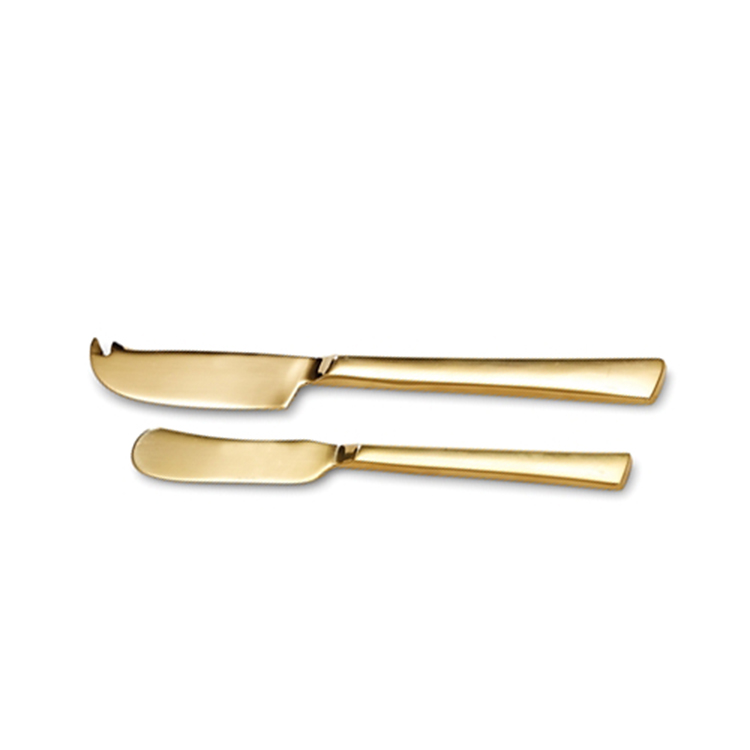
Cheese knife sets usually include several blade shapes and sometimes a fork, giving each cheese texture its ideal cutting companion so you avoid crushed rinds and smeared surfaces. Beyond function, a coordinated set in stainless steel, wood, or gold-toned finishes doubles as stylish decor that reflects your personality and entertaining style.
Imagine a rustic wooden table set for an evening with friends: a broad acacia board, clusters of grapes, and a gleaming row of matching cheese knives laid out beside wedges of brie, gouda, and blue cheese. A short video clip can capture the moment a host glides a soft cheese knife through a ripe camembert, then uses the forked tip to serve a perfectly intact slice to a guest. Visuals like these not only inspire but demonstrate how a cheese knife serving set turns ordinary snacking into a small ritual.
A second image might show a minimalist marble slab with a modern black or gold cheese knife serving set arranged like jewelry around the cheeses, emphasizing how these tools are as decorative as they are practical. A quick overhead video reel could pan slowly across the board, highlighting the contrast between blades, handles, and colorful accompaniments like figs, nuts, and honey.
A typical cheese knife serving set contains three to six specialized knives, and often a cheese fork, each tailored to particular cheese textures. Soft, semi-soft, semi-hard, and hard cheeses all benefit from blades designed to minimize sticking, crumbling, or excessive pressure.
Many sets include small, compact knives with ergonomic handles that feel comfortable in the hand even when cutting dense aged cheeses. Some designs also incorporate a matching serving fork or spreader so guests can easily transfer pieces from board to plate without using fingers or unrelated utensils.
A close-up photo can display the main components laid flat on a neutral background: a soft cheese knife with holes in the blade, a slim hard cheese knife, a flat chisel knife, a spade knife, a small spreader, and a fork. A simple video could label each tool on-screen as a hand picks them up one by one, briefly showing the ideal cheese type for each.
The soft cheese knife usually has a wider blade, often perforated with holes to reduce surface contact and prevent creamy cheeses from sticking. Its edge may be straight or slightly serrated, allowing smooth cuts through brie, camembert, and other bloomy-rind cheeses without dragging.
Some soft cheese knives have a ridge near the top of the blade, helping gently separate slices as you cut so delicate pieces do not collapse together. When combined with a light rocking motion, this design yields clean, attractive slices that preserve the cheese's shape on the board.
One image may zoom in on a soft cheese knife cutting through a round of brie, with the holes clearly visible and the slice staying neatly in place. A short, slow-motion video can highlight how easily the blade releases from the creamy surface, underscoring the difference from a standard kitchen knife.
A hard cheese knife is typically narrower, sturdier, and sharper, built to handle dense cheeses like aged cheddar, parmesan, or gouda. Its strong blade resists bending while applying higher pressure, sometimes with a pointed tip to wedge into rinds and break off chunks.
Some hard cheese knives use a micro-serrated or fully serrated edge, which improves grip on firm surfaces and helps cut through without excessive crumbling. Quality versions often rely on robust stainless steel for durability and edge retention under frequent use.
A side-by-side photo can show a hard cheese knife parting a wedge of aged gouda into tidy shards, while crumbs are kept minimal. In a quick video demonstration, a host might tap the pointed tip into a parmesan block, then lever off bite-sized chunks to emphasize the knife's strength.
The cheese spreader features a rounded, paddle-like blade optimized for soft spreads, fresh cheeses, and pâté. Rather than slicing, it excels at scooping and smearing creamy textures onto bread, crackers, or crostini with control.
Its blunt edge makes it safe for casual use around guests and children, and its compact size allows it to sit comfortably on the board without dominating space. In some sets, the spreader's handle coordinates with other knives, completing a cohesive visual theme.
An appealing image might show a spreader lifting a dollop of fresh goat cheese from a small ramekin and gliding it onto a slice of baguette. A looping close-up video can capture the creamy texture as it spreads, illustrating how this tool differs from cutting knives.
Pronged cheese knives have a standard cutting edge and a forked tip, allowing you to slice semi-soft or semi-hard cheese, then spear and serve the piece in one motion. This design keeps fingers away from the cheese, preserving both hygiene and presentation.
Flat cheese knives and chisel-style blades resemble short spatulas or rectangles, meant for cutting and pushing crumbly or firm cheeses into neat portions. They are especially handy for blue cheese, feta, and aged varieties that tend to break rather than slice cleanly.
A styled image can show a pronged knife lifting a slice of manchego or gouda, with the tines securely holding the piece aloft. In another shot or short clip, a flat chisel knife pushes chunks of blue cheese into a tidy line, demonstrating control over crumbly texture.
A cheese fork typically looks like a compact, two-pronged utensil used to hold a block in place while cutting or to serve pieces directly. It pairs well with hard and semi-hard cheeses where stability improves precision and safety.
In some sets, the fork is the only piece with tines, making it easy for guests to identify it as the serving implement on a crowded board. When not in active use, it also adds a decorative accent when placed at an angle near the center of the cheese arrangement.
An image could present a fork anchoring a cheddar block while a hard cheese knife cuts a clean slice nearby. A quick video demonstration can show the coordination between fork and knife, highlighting both stability and efficiency during serving.
Stainless steel is the most common material for cheese knife blades because it is sturdy, resistant to rust, and relatively easy to clean. It does not easily absorb odors or stains from cheese, which helps maintain flavor integrity over time.
Premium sets may use higher-grade or ice-hardened stainless steel for enhanced durability and sharper edges, supporting repeated cutting of firm cheeses. Some collections add titanium plating for decorative finishes such as matte gold, black, or silver, combining longevity with a luxurious look.
One macro photograph might focus on the reflective surface of a stainless steel blade, showing sharpness and clean polish. A short, rotating product-style video can spin a gold-toned or black titanium-coated knife set on a turntable, emphasizing sheen and texture.
Handles influence both comfort and aesthetics, ranging from warm wood to sleek metal and colorful plastic or resin composites. Wooden handles, like acacia or beech, bring a natural, rustic feel but usually require gentle, hand-wash care to prevent cracking or warping.
Full-metal handles provide a modern, minimal style and are often more durable, though they can feel cooler and heavier in hand. Composite or plastic handles may offer improved grip, lighter weight, and bold colors for casual entertaining.
A lifestyle image might show three sets side by side: one with acacia wood handles, one with slim all-metal handles, and one with colorful composites, highlighting how each changes the overall mood of the board. A quick video could show a hand grasping each type, emphasizing ergonomic differences and grip comfort.
A well-designed cheese knife serving set balances blade weight with handle shape so that the knife feels stable but nimble in use. Slight curves in the handle and a secure, non-slip surface reduce fatigue during longer serving sessions.
Thoughtful designs make it easy for guests of different hand sizes to use the knives confidently, even if they are not experienced cooks. Good balance is especially important for hard cheese knives that require more pressure and control.
An image might show a person slicing cheese mid-air with one hand, demonstrating that the knife remains steady and comfortable. A brief, slow panning video can linger on the handle profile and show how fingers naturally wrap around ergonomic shapes.
Using the right knife for each cheese maximizes flavor, preserves texture, and keeps the board looking neat. Soft cheese knives work best with bloomy-rind and creamy cheeses, while hard cheese knives excel on aged, dense varieties.
Spreaders suit fresh cheese and dips, pronged knives handle versatile slicing and serving, flat knives manage crumbly textures, and forks stabilize or transfer pieces. Assigning one knife per cheese also avoids mixing strong flavors, especially when working with pungent blues.
A top-down photograph can label cheeses and place the corresponding knives next to each wedge to visually reinforce the pairing. A short, narrated video could walk viewers through the board, demonstrating which knife to pick up for each cheese.
For soft cheeses, gentle sawing or rocking motions with minimal pressure preserve shape and avoid squashing the interior. Wiping the blade between cuts keeps slices clean and prevents sticky buildup.
Hard cheeses respond well to firm, controlled pressure, sometimes using the tip to score the surface before pressing through. Crumbly cheeses can be portioned by pressing down with a flat or chisel knife rather than dragging, which reduces tearing.
An action image may show a soft knife slicing through camembert in a single deliberate motion, with a cloth nearby for wiping. A split-screen video could contrast poor technique with proper cutting, highlighting how the right motion yields neater slices.
A cohesive cheese knife serving set becomes part of the visual composition of the board. Place knives near their corresponding cheeses, with handles pointing outward so guests can reach them easily without disturbing the arrangement.
Vary the orientation of knives to create dynamic lines, and leave enough negative space around each cheese for cutting room. Incorporate small bowls and ramekins for spreads, nuts, or olives, keeping knives clear of wet items that might affect their finish.
A styled board image might display cheeses arranged in a loose spiral with the knives radiating outward like spokes, creating both function and visual interest. A fast-paced time-lapse video can show the board being assembled from an empty surface to fully styled, including placement of each knife.
Cheese knives complement the board's color story, especially when handles match or contrast with the cheeses and accompaniments. Gold or black knives paired with pale cheeses and dark fruits create drama, while light wood handles lend a relaxed, rustic tone.
Add vertical interest by stacking crackers, using small stands, and propping knives against wedges at slight angles. Textural variety across cheeses, fruits, nuts, and bread makes the board inviting, while the gleam of the knives adds a polished finishing touch.
A close-up photo might focus on a gold cheese knife leaning against a tall wedge of alpine cheese, with figs and nuts in the background. A short video shot at table level can slowly move past the board, letting the viewer appreciate the interplay of textures and metals.
If you host frequent casual gatherings, a compact, durable set with three or four core pieces may be ideal. Those who love elaborate tasting boards or entertain formally might benefit from a six-piece set that covers every cheese type in detail.
Consider whether you prefer modern minimalism or ornate, decorative finishes, as your set will often remain visible on open shelves or sideboards. A cohesive style can help tie together cutting boards, wine glasses, and table linens.
An image could compare a simple three-piece stainless set on a small board with a more elaborate six-piece gold set on a large platter. A short video might show how each set looks in different contexts, such as a small balcony picnic versus a large dinner party.
Most stainless steel cheese knives are easy to maintain with handwashing and thorough drying, which helps prevent corrosion even in humid climates. Wooden-handled knives usually should not go in the dishwasher, as high heat and water exposure can damage handles.
Some sets market themselves as dishwasher-safe, but gentle programs at lower temperatures are often recommended to preserve finishes, especially for plated or matte coatings. Checking care instructions before purchase ensures the set fits your cleaning habits and time constraints.
A practical image might show knives being washed under running water with a soft sponge rather than scouring pads. A quick video can demonstrate proper drying and storage, such as laying knives on a towel blade up, then placing them back in a protective box or drawer insert.
Clean cheese knives soon after use to prevent dried-on residue and lingering odors. Use warm water, mild dish soap, and a soft cloth or sponge, paying attention to the area where blade meets handle.
Dry knives completely with a towel rather than air-drying, especially if you live in a humid environment where even stainless steel can eventually corrode. Avoid soaking wooden handles for long periods to reduce the risk of swelling or splitting.
A helpful photo may show knives resting on a folded dish towel after washing, with water droplets being blotted away. A short, instructional video can give a step-by-step cleaning sequence from rinsing to drying to storage.
Although cheese knives do not usually see the same heavy duty as chef's knives, occasional sharpening keeps cuts smooth and safe. Micro-serrated blades may require specialized tools or professional services, while straight edges can be honed at home with standard sharpeners.
Inspect handles periodically for looseness, cracks, or finish wear, addressing issues early to prolong the set's life. Proper care ensures your knives remain attractive enough to display and reliable enough to use for years of entertaining.
An image might show a hand carefully honing a straight-edged cheese knife at a shallow angle on a small sharpening stone. A brief video can demonstrate gentle, controlled strokes, emphasizing the goal of maintaining rather than radically reshaping the edge.
A cheese knife serving set makes a thoughtful gift for weddings, housewarmings, holidays, and birthdays, especially when paired with a board or selection of cheeses. Stylish finishes, gift-ready packaging, and coordinated accessories add a sense of occasion.
For the aspiring host, a versatile mid-size set provides everything needed to start building memorable cheese boards. For enthusiasts, a premium, design-forward collection in gold or black metal can become a signature entertaining piece.
A gift-focused image might show a boxed cheese knife serving set tied with a ribbon next to a bottle of wine and a small card. A short unboxing-style video can reveal the knives inside, demonstrating how presentation enhances perceived value.
Question 1: How many pieces should a cheese knife serving set have for everyday use?
For most households, a set with three to four pieces is sufficient, typically including a soft cheese knife, a hard cheese knife, a spreader, and sometimes a fork or pronged knife.
Question 2: Why do some cheese knives have holes in the blade?
Holes reduce the surface area that contacts the cheese, which helps prevent soft, creamy cheeses from sticking and allows the blade to glide more easily.
Question 3: Are stainless steel cheese knives always rust-proof?
Stainless steel is highly resistant to rust, but poor care, long-term moisture, or harsh detergents can still cause corrosion, so washing and drying promptly is important.
Question 4: Can I use cheese knives for other foods?
Many cheese knives can also handle soft fruits, charcuterie, or spreads, but they are not substitutes for general-purpose kitchen knives and perform best with cheeses and similar textures.
Question 5: Is it safe to put cheese knife serving sets in the dishwasher?
Some sets are labeled dishwasher-safe, especially all-metal designs, but handwashing or low-temperature cycles are usually recommended to protect handles and decorative finishes.
Question 6: What is the best way to store a cheese knife serving set?
Store knives in a dedicated box, drawer insert, or magnetic strip where blades do not rub against each other, keeping edges sharp and handles free from dings and scratches.


