

Views: 290 Author: Site Editor Publish Time: 2026-04-20 Origin: Site


Content Menu
● What Makes a Knife Multi-Purpose
● Key Features of Multi-Purpose Designs
>> Perforated or Slotted Edges
● Top Examples of Multi-Purpose Cheese Knives
● How to Use Multi-Purpose Knives Effectively
● Advantages Over Specialized Knives
● Building a Minimalist Cheese Toolkit
● Choosing the Right Multi-Purpose Knife
● FAQ
>> What cheeses work best with multi-purpose knives?
>> Can one knife replace a full set?
>> What's the best for large parties?
Multi-purpose cheese knives simplify cheese preparation by handling a wide range of textures from soft to semi-hard varieties. These versatile tools feature designs like narrow blades, forked tips, or perforated edges that reduce sticking and improve control across different cheeses. They save space in your kitchen drawer while delivering clean cuts for boards, recipes, and entertaining.
A multi-purpose cheese knife stands out because it adapts to various cheese types without needing a full specialized set. Its blade often combines a sharp edge with features like holes or prongs that work on creamy Brie as well as firmer cheddar. This flexibility comes from thoughtful engineering that minimizes drag and maximizes serving ease.
These knives excel in home kitchens where people want efficiency without sacrificing quality. They handle everything from slicing wedges to spearing portions, making them ideal for casual gatherings or quick meal prep.
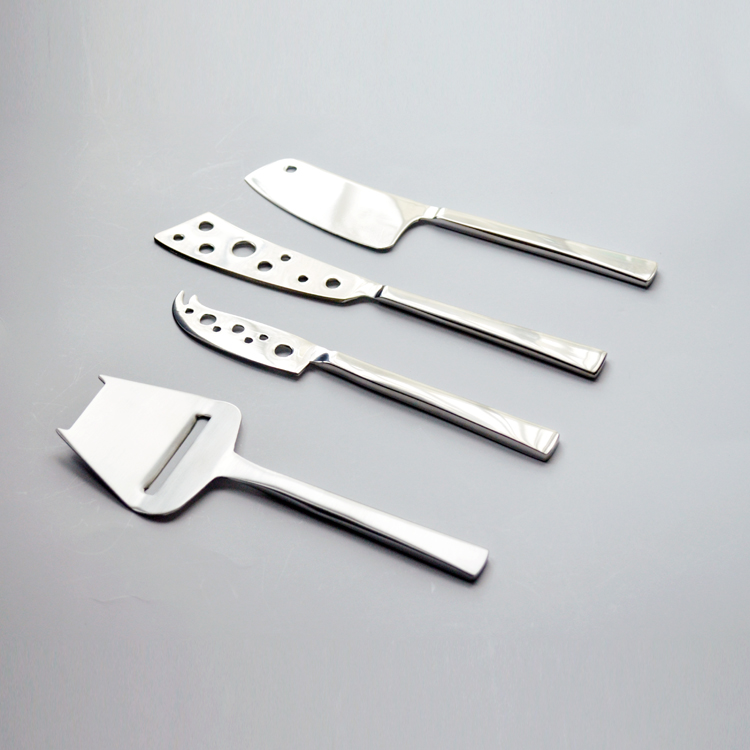
The image shows a set of stainless steel knives arranged neatly, highlighting their sleek design suitable for multiple uses.
Narrow blades reduce surface contact with the cheese, preventing soft varieties from clinging during the cut. This shape glides through semi-soft gouda or edam just as smoothly as it slices fresh mozzarella.
A slim profile also aids precision, allowing you to create thin portions without crushing the texture. Many multi-purpose models sharpen both edges for added versatility in portioning.
Forked tips turn a simple knife into a serving tool. After slicing, the prongs lift the piece cleanly onto a cracker or plate without extra utensils.
This feature shines on cheese boards where presentation matters. It keeps hands clean and portions intact, especially with sticky or crumbly types.
This close-up captures a perforated blade next to soft cheese wedges, demonstrating how the design prevents adhesion.
Holes or slots in the blade disrupt suction, making it perfect for creamy cheeses that would otherwise smear. The open design also works on semi-hard blocks by allowing air flow during the slice.
These perforations add lightness without weakening the structure, ensuring durability across repeated uses.
The pronged spear knife cuts semi-hard cheeses like parmesan or brie, then spears the slice for serving. Its upward-curled blade offers minimal contact, ideal for soft textures.
Users love its dual function during parties. One motion handles cutting and plating, streamlining the process.
An offset handle positions the blade below your knuckles, improving leverage on boards. It tackles everything from havarti to aged cheddar with steady downward pressure.
The ergonomic grip reduces fatigue, making it suitable for larger wheels or extended prep sessions.
The photo illustrates a hand slicing cheesecloth-wrapped portions, showing real-world application.
Serrated edges excel at tough rinds while the flat blade spreads softer cheeses. This hybrid design suits charcuterie boards with mixed textures.
Its long handle provides control over bigger pieces, though some find it less nimble for tiny slices.
Slim utility knives mimic chef's knife precision but scale down for cheese. They slice, score rinds, and portion without specialized shapes.
These prove essential for cooking, where cheese integrates into dishes rather than just boards.
Start with room-temperature cheese to soften textures without melting. Use a gentle sawing motion for soft types and firm downward pressure for harder ones.
Wipe the blade between cuts to avoid flavor transfer. This keeps each slice pure and presentable.
Leverage forked tips to transfer slices directly. Arrange on boards with fruits and nuts for contrast.
For platters, alternate knife uses to cover variety without cross-contamination.
Incorporate these knives into pasta, salads, or appetizers. Their versatility speeds prep while maintaining cheese integrity.
Chill the knife briefly for ultra-soft cheeses to enhance grip.
Multi-purpose knives cut down on clutter. Instead of six tools, one or two suffice for most boards.
They perform nearly as well as specialists on primary tasks while excelling in crossover scenarios. Cost savings add up, especially for occasional users.
Durability shines here too. Robust construction handles daily wear without dulling quickly.
Start with one pronged multi-purpose knife for everyday boards. Add an offset model for heavier cutting.
This duo manages 90% of scenarios, from brie to blue cheese. Expand only for frequent hosting.
The infographic labels pronged and other types, pairing them with cheeses like cheddar and brie.
Hand wash immediately after use to prevent residue buildup. Dry fully to avoid corrosion on perforated blades.
Hone edges monthly with a fine rod. Store in blocks to protect tips.
Avoid dishwashers, as heat warps handles and dulls serrations.
Multi-purpose knives elevate simple boards. Slice varied textures for balance: soft, semi-hard, and crumbly.
Complement with crackers, jams, and wines. The knives' serving features make self-service seamless.
These videos highlight real-time use, from slicing to styling.
Use serrated models for fruits or charcuterie. Forked tips spear olives or pickles.
In baking, they portion dough or score breads. Their adaptability extends kitchen utility.
Consider handle material: wood for warmth, plastic for hygiene. Blade steel matters for rust resistance.
Test balance in hand; heavier suits pros, lighter fits casual use.
Budget options perform well; premium adds edge retention.
Don't force cuts on very hard cheeses; switch to a cleaver. Overpressure smears soft ones.
Neglect cleaning leads to off-flavors. Always designate per cheese type on shared boards.
Chill boards before arranging to keep cheese firm. Use parchment under slices for easy transfer.
Practice angles: 45 degrees for wedges, vertical for blocks.
Pair with a wire slicer for ultra-precision. Add spreaders for creams.
This builds versatility without excess.
Soft to semi-hard like brie, gouda, and cheddar perform excellently due to reduced sticking.
Yes, for most home users, a pronged or offset model covers daily needs effectively.
They minimize suction, allowing clean release from creamy textures.
Most recommend hand washing to preserve edges and handles.
Offset or serrated long-blade versions handle volume without fatigue.


