

Views: 240 Author: HELLOKNIFE LTD Publish Time: 2026-07-02 Origin: Site


Content Menu
● Paring vs Utility Knife: A Practical Guide from an OEM Knife Manufacturer
>> Best Uses for a Paring Knife
>> Best Uses for a Utility Knife
● Paring vs Utility Knife: The Core Difference
● Which Knife Is Better for Real Kitchen Use?
● Why Buyers Choose HELLOKNIFE LTD for OEM Knife Projects
● Industry Insight: What End Users Actually Care About
>> What Influences Purchase Decisions
● Practical Buying Advice for Brands and Wholesalers
>> OEM Checklist Before Launch
● FAQ
>> 1. Is a paring knife the same as a utility knife?
>> 2. Which knife is better for fruit?
>> 3. Can a utility knife replace a paring knife?
>> 4. Which knife should every kitchen have first?
>> 5. Why do OEM knife buyers care about this difference?
When buyers compare paring vs utility knife, they are usually trying to solve a simple problem: which small kitchen knife is better for real everyday use? As an OEM manufacturer serving overseas brands, wholesalers, and producers, HELLOKNIFE LTD helps clients design and customize kitchen knives that match specific cutting habits, market positioning, and consumer expectations.
In our experience, the right knife is not only about blade length. It is about control, task efficiency, safety, and the way end users actually cook.
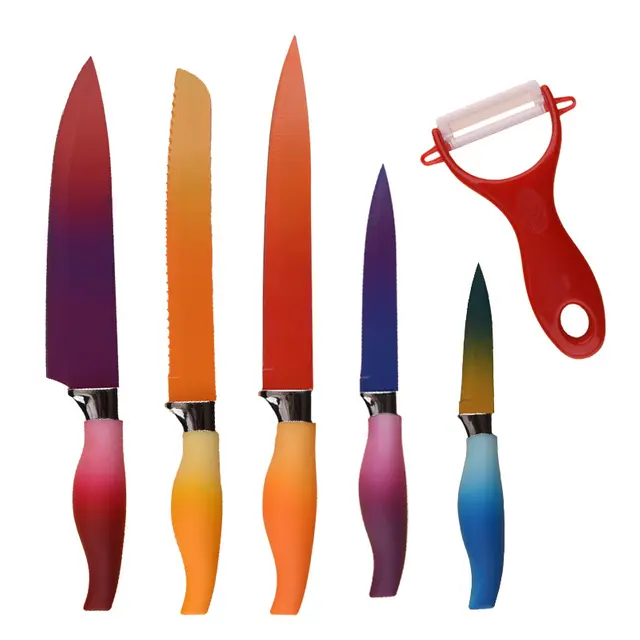
A paring knife is a small, nimble kitchen knife designed for detailed tasks. It usually has a short blade and a lightweight feel, which makes it ideal for work that needs precision rather than force. Common uses include peeling fruit, trimming vegetables, removing seeds, and shaping ingredients.
From a product design perspective, the paring knife is often valued for precision and fingertip control. Users who cook frequently may keep it within arm's reach because it performs well on tasks that are too delicate for a chef's knife.
- Peeling apples, pears, and potatoes.
- Trimming stems, ends, and small blemishes.
- Deveining shrimp or cleaning soft ingredients.
- Making garnish work and detailed food prep.
A utility knife sits between a paring knife and a chef's knife. It is usually longer than a paring knife and more versatile for mid-sized cutting tasks. In many kitchens, it becomes the "grab-and-go" knife for slicing sandwiches, cutting fruit, portioning cheese, and handling small vegetables.
For buyers, the utility knife often offers greater flexibility than a paring knife. It is the kind of knife consumers reach for when they need one compact blade that can do a little bit of everything without switching tools.
- Slicing tomatoes, cucumbers, and citrus.
- Cutting sandwiches and wraps.
- Trimming smaller proteins.
- Handling quick prep tasks when a chef's knife feels too large.
The easiest way to understand paring vs utility knife is to compare precision versus versatility. A paring knife is optimized for control in close-hand tasks. A utility knife is optimized for broader everyday use.
This distinction matters not only to end users but also to brands planning product lines. If your customer base values detailed prep, a paring knife may be the better entry product. If they want one compact knife for frequent use, the utility knife is often the stronger choice.
| Feature | Paring Knife | Utility Knife |
|---|---|---|
| Blade length | Shorter | Slightly longer |
| Main strength | Precision | Versatility |
| Best for | Peeling, trimming, detail work | Slicing, light prep, all-purpose tasks |
| User feel | More controlled | More flexible |
| Common buyer need | Fine handling | Everyday convenience |
The answer depends on the task. If the job requires careful hand movement and close-up work, the paring knife is usually the better tool. If the user wants a single compact knife for a wider range of prep tasks, the utility knife often wins.
For many households, the two knives are not competitors. They are complementary. A strong kitchen knife assortment often includes both because they solve different problems.
- Choose a paring knife when you need precision.
- Choose a utility knife when you need flexibility.
- Choose both when building a well-rounded kitchen collection.
At HELLOKNIFE LTD, we understand that knife selection is not just a cooking topic. It is a product strategy decision. Our OEM service supports overseas brands, wholesalers, and manufacturers that need customized knife solutions for different markets, price points, and user groups.
We help clients with:
- Blade shape and size customization.
- Handle material selection.
- Surface finish and branding.
- Packaging design for retail and wholesale channels.
- Product matching for cheese knives, cheese boards, steak knives, and related kitchen categories.
For brands entering the market, this matters because a product that feels "right" in the hand often sells better than a product that only looks good in photos. A well-made knife line can also strengthen customer trust and repeat purchase behavior.
From a user experience perspective, most consumers do not search for knife terminology first. They search for the tool that solves a problem fast. That means product pages and blog content should answer practical questions such as what the knife is for, how it feels, and why it is different.
In knife category merchandising, clarity beats jargon. When shoppers understand the difference between a paring knife and a utility knife in the first few seconds, they are more likely to convert. This is why simple comparisons, usage examples, and visual callouts matter so much in SEO content and product pages.
- Comfort in the hand.
- Blade size and balance.
- Ease of cleaning.
- Whether the knife matches daily cooking habits.
- Brand trust and manufacturing quality.
If you are developing kitchen knife products for export markets, choose knife types based on how customers cook, not just on what the factory can produce. A paring knife line may work well for detailed prep-focused buyers. A utility knife line may perform better in markets where consumers want one knife for multiple light tasks.
A smart OEM strategy is to test both categories in small batches, gather feedback, and then refine the blade profile, handle shape, and packaging. That approach lowers risk and improves product-market fit.
1. Define the target user.
2. Confirm the main cutting tasks.
3. Choose the blade length and shape.
4. Select handle material and finish.
5. Design packaging for your sales channel.
6. Test samples with real users.
7. Refine based on feedback and reviews.
No. A paring knife is smaller and more precise, while a utility knife is slightly larger and more versatile.
For peeling and trimming fruit, a paring knife is usually better. For slicing larger fruit, a utility knife can be more convenient.
Sometimes, but not completely. A utility knife handles more tasks, while a paring knife is better for detailed work.
A utility knife is often the more flexible starter option, but serious home cooks usually benefit from owning both.
Because product positioning depends on user needs. If the target customer wants precision, paring knives fit better. If they want versatility, utility knives are often easier to sell.

1. HELLOKNIFE LTD. "Your Premier OEM Manufacturer for Cheese Knives, Cheese Boards, and Steak Knives."
https://www.helloknife.com/helloknife-ltd-your-premier-oem-manufacturer-for-cheese-knives-cheese-boards-and-steak-knives.html
2. Victorinox. "The Cheese Knives."
https://www.victorinox.com/zh-CN/The-Cheese-Knives/cms/master-the-cheese-season/
3. Victorinox Taiwan. "Knife Specialization / Tool Division."
https://www.victorinox.com/zh-TW/%E5%BB%9A%E5%85%B7/%E4%BF%A1%E6%81%AF/%E5%88%80%E5%85%B7%E5%88%86%E5%B7%A5%E6%98%8E%E7%A2%BA/cm...
4. RT Kitchen Knife. "What Are the Types of Cheese Knives?"
https://www.rtkitchenknife.com/zh-CN/what-are-the-types-of-cheese-knives-
5. Garbo Flatware. "Why Are Stainless Steel Steak Knives Usually Serrated?"
https://www.garboflatware.com/zh-CN/news/why-is-stainless-steel-steak-knife-used-at-the-table-always-serrate.html
Hot Tags: China, Global, OEM, private label, manufacturers, factory, suppliers, manufacturing company


