

Views: 290 Author: Site Editor Publish Time: 2025-10-16 Origin: Site


Content Menu
>> H2: Understanding the Steak Knife
>> H3: Common Characteristics of Steak Knives
>> H2: Serrated vs. Straight-Edge Steak Knives
>> H3: Straight-Edge Steak Knives
● Choosing the Right Steak Knife
>> H2: Factors to Consider When Buying a Steak Knife
>> H3: Handle Comfort and Grip
● How to Use a Steak Knife Properly
>> H2: Cutting Techniques for Perfect Slices
>> H3: How to Hold a Steak Knife
>> H3: Techniques to Avoid Tearing Meat
● Caring and Maintaining Your Steak Knives
>> H2: Cleaning and Storage Tips
>> H3: Sharpening Steak Knives
● Best Steak Knife Sets on the Market
>> H2: Recommended Brands for Quality Steak Knives
● FAQ: Common Questions About Steak Knives
Whether you're grilling a perfect steak at home or dining out, a good steak knife is essential. This guide covers everything about steak knives—from types and materials to proper use and maintenance. Discover how to select the best steak knife for your kitchen and dining experience.
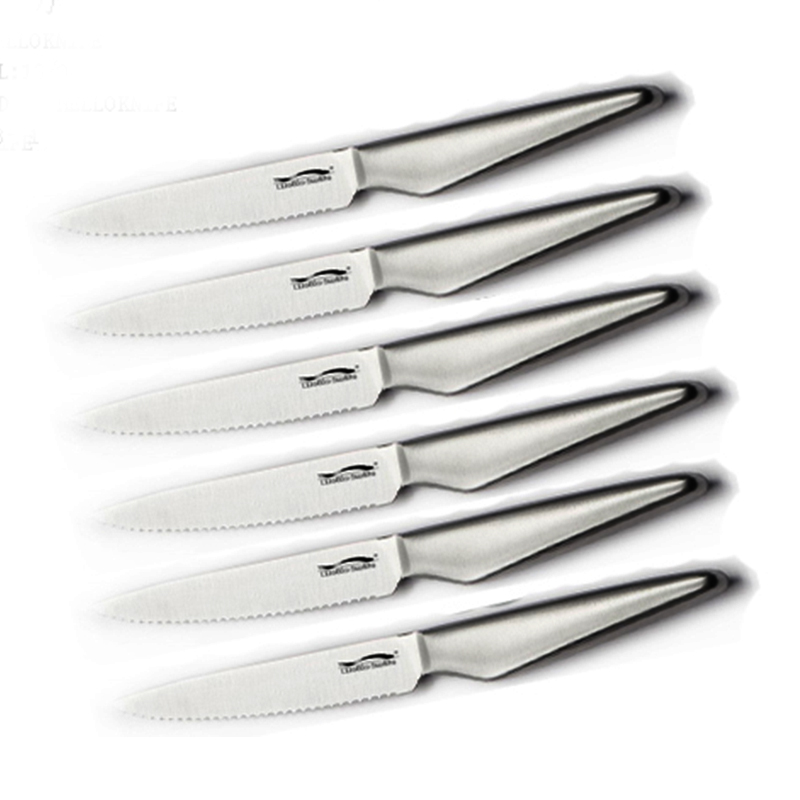
A steak knife is a specialized cutting tool designed to slice through cooked meat with precision. Unlike regular knives, steak knives often have serrated or sharp edges to cut smoothly without tearing.
- Blade length typically ranges between 4 to 5 inches.
- Serrated edges or finely honed smooth edges.
- Handles made from wood, plastic, stainless steel, or composite materials.
- Balanced weight for comfortable handling at the dining table.
Serrated knives have jagged edges that grip the steak's surface, ideal for tougher meats or steaks with a charred crust.
Straight-edge knives provide clean cuts through tender meats and allow more precision, but require more frequent sharpening.
- Stainless Steel: Rust-resistant and low maintenance.
- High-Carbon Steel: Sharp but requires more care.
- Ceramic: Extremely sharp but fragile.
Look for ergonomically designed handles that feel secure and comfortable during use, especially if you often entertain guests.
A well-balanced knife reduces hand fatigue and provides better control.
Hold the handle firmly with fingers curled around it, applying gentle pressure as you cut.
Use a smooth, sawing motion rather than pressing down hard, which can tear and damage the meat fibers.
- Hand wash steak knives immediately after use.
- Avoid soaking knives in water for long periods.
- Store knives in a knife block, sheath, or magnetic strip to preserve blade edges.
Serrated knives usually require professional sharpening; straight-edge knives can be sharpened at home with whetstones or sharpeners.
- Wüsthof: Renowned for precision forged knives.
- Shun: Japanese craftsmanship and stylish design.
- Zwilling J.A. Henckels: Durable and balanced knives.
- Laguiole: Known for elegant French-style knives.
1. Do I need separate steak knives for different types of meat?
No, a good high-quality steak knife works well for most cooked meats.
2. Can I put steak knives in the dishwasher?
It's not recommended as it can dull blades and damage handles.
3. How often should I sharpen my steak knives?
Straight-edge knives might require sharpening every few months if used regularly; serrated knives less often, and usually professionally.
4. What is the best blade length for a steak knife?
Most steak knives range from 4 to 5 inches, which is ideal for table use.
5. Are ceramic steak knives better than steel?
Ceramic knives stay sharper longer but can chip or break easily compared to steel knives.


