

Views: 280 Author: Site Editor Publish Time: 2026-04-10 Origin: Site


Content Menu
>> Why the Cheese Board Is Timeless
>> Size and Shape Considerations
● Selecting the Perfect Cheese
>> The Rule of Three (or Five)
● The Role of the Cheese Knife
>> Cured Meats
>> Condiments
● Presentation and Arrangement
>> Styling Tips
● Pairing with Wine and Beverages
Few things evoke sophistication and warmth quite like a perfectly arranged cheese board with a knife beside it. Whether you're hosting a cozy gathering, a wine-tasting night, or celebrating a special occasion, knowing how to prepare a beautiful cheese board can instantly elevate your hospitality and impress guests. But achieving that effortless balance of visual appeal, texture variety, and flavor pairing takes a little craft and understanding.
In this guide, we'll explore everything you need to know about crafting and serving a flawless cheese board with knife—from choosing the best cheeses to arranging accompaniments, selecting serving tools, and incorporating thoughtful aesthetic touches.
Building a cheese board is equal parts artistry and functionality. The board should invite guests to explore flavors visually and encourage interaction. The knife, though often overlooked, is the hero tool that makes the experience smooth and satisfying.
Cheese boards have roots tracing back to European traditions, especially in France and Italy, where cheese is considered the ultimate expression of terroir and craftsmanship. Over time, the cheese board has evolved into a centerpiece of modern entertaining—mixing rustic authenticity with Instagram-worthy style.
Each material offers a different aesthetic and purpose:
- Wood Boards: Warm and classic. Popular woods include acacia, maple, and bamboo. They're gentle on knife edges and ideal for casual or rustic presentations.
- Slate Boards: Elegant and modern. Slate provides a sleek surface that keeps cheese cool longer and allows you to label cheeses using chalk.
- Marble or Stone Boards: Beautiful and functional, great for hot climates since they naturally stay cool but slightly harder on knife blades.
Your board should match your gathering size:
- Intimate gatherings: Choose a small round or rectangular board, about 12 inches.
- Large parties: Use an expansive paddle board or multiple smaller boards to avoid overcrowding.
To achieve a well-rounded flavor experience, select cheeses from different texture and milk categories:
- Soft Cheese: Brie, Camembert, or goat cheese for creamy texture.
- Semi-Soft: Havarti, Fontina, or Tallegio for mild richness.
- Hard Cheese: Aged cheddar, Manchego, or Parmesan for sharpness.
- Blue Cheese: Roquefort or Gorgonzola for salty tang.
- Specialty or Local Cheese: Always include one surprise selection—something seasonal or artisanal.
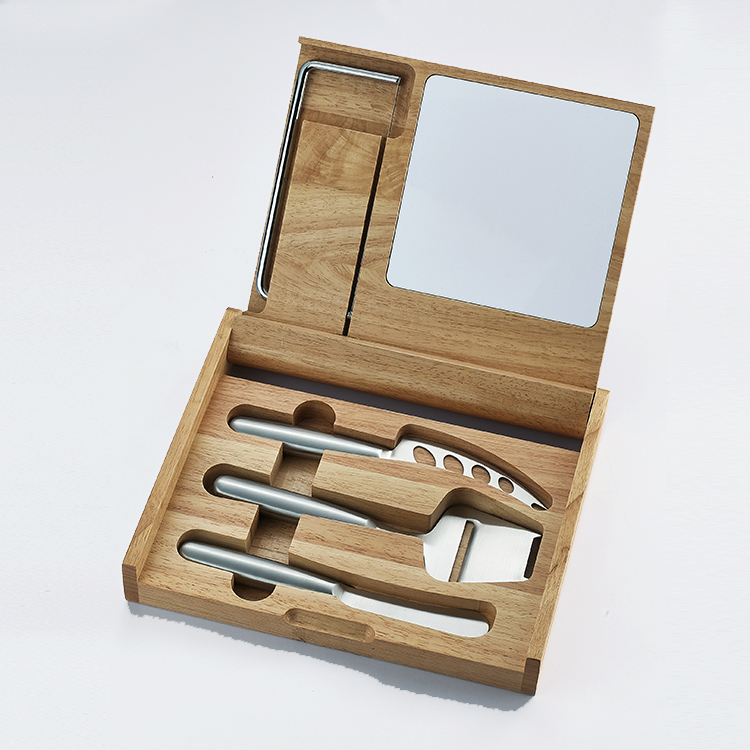
A cheese board with knife isn't complete without the right set of tools. The shape and edge of the blade determine how you serve different types of cheese without compromising texture.
- Soft Cheese Knife: Features holes in the blade to prevent sticking when slicing brie or goat cheese.
- Hard Cheese Knife: Short, sturdy blade designed for leverage when cutting aged blocks.
- Cheese Fork: Used to hold cheese in place or transfer cubes neatly.
- Flat Knife (Chisel Knife): Good for flaky or crumbly varieties.
- Narrow Plane Knife: Ideal for slicing semi-soft cheeses evenly.
- Always hand-wash immediately after use.
- Avoid soaking wooden handles.
- Regularly sharpen blades to maintain performance.
- Store knives separately to prevent damage.
A cheese board thrives on contrasts—sweet, salty, savory, and tangy all play together to highlight the cheese.
Grapes, figs, pears, or dried apricots add a natural sweetness that balances pungent or salty cheeses.
Prosciutto, salami, or speck add depth and saltiness. For a well-rounded flavor experience, position thin slices around cheese instead of stacking them.
A mix of toasted almonds, walnuts, and seeded crackers introduces texture and crunch.
Honey, fig jam, truffle oil, or chutney each add a unique aromatic note.
1. Start with Cheese Placement: Spread out wedges at various points, adjusting spacing so guests can cut comfortably.
2. Add Fruits and Meats: Layer items of complementary colors nearby.
3. Fill Gaps with Crunch and Color: Nuts, herbs, and edible flowers make small empty spots appealing.
4. Position Knives Strategically: Place a separate knife near each cheese type to preserve flavor purity.
- Use small bowls for jams or olives to keep the board tidy.
- Consider a mix of textures—smooth cheese, rough bread, glossy fruit—to create visual harmony.
- Keep colors balanced: light cheeses contrast beautifully with dark grapes or olives.
- Soft Cheese (Brie, Camembert): Pairs beautifully with sparkling wine or dry Riesling.
- Hard Cheese (Parmesan, Aged Cheddar): Complements Cabernet Sauvignon or IPA beer.
- Blue Cheese: Balances sweetness from Port or dessert wines.
Grapefruit-infused water, pear juice, or lightly brewed black tea can mimic wine's cleansing qualities and make the board inclusive for all guests.
- Spring: Fresh goat cheese, peas, bright herbs.
- Summer: Watermelon, feta, mint.
- Autumn: Aged cheddar, figs, roasted nuts.
- Winter: Blue cheese with honey and cranberries.
Craft boards inspired by world cuisines—
- French Board: Brie, Roquefort, Comté.
- Italian Board: Asiago, Gorgonzola, Parmigiano.
- Spanish Board: Manchego, Mahón, Idiazábal with quince paste.
- Take cheese out of the fridge about 30 minutes before serving for optimal texture and aroma.
- Wrap leftovers separately in wax paper, then store in airtight containers to prevent cross-flavoring.
- Clean knives and boards thoroughly after each use to maintain hygiene and prevent bacterial transfer.
1. How long can a cheese board sit out?
Most cheeses can sit unrefrigerated for up to two hours. Avoid direct sunlight and extreme heat.
2. Can you prepare the cheese board ahead of time?
Yes. Assemble most ingredients in advance, but cover with plastic wrap and refrigerate. Add crackers and fruit before serving.
3. What's the best cheese knife brand?
Brands like Boska, Laguiole, and Zwilling are known for balance, blade sharpness, and comfort.
4. How can I keep soft cheese from sticking to the knife?
Dip the blade in warm water before slicing or choose a knife with holes along the blade edge.
5. Are there vegan alternatives for cheese boards?
Absolutely! Use cashew-based cheeses, roasted vegetables, spiced nuts, and plant-based spreads for a flavorful, dairy-free experience.


