
Views: 256 Author: HELLOKNIFE LTD Publish Time: 2026-10-23 Origin: Site


Content Menu
● Top Damascus Knife Set Manufacturers and Suppliers in Mexico: Shortlist
● 1. HELLOKNIFE LTD: An OEM Starting Point for Mexican Private-Label Buyers
>> Our Recommended First Discussion
● 2. HexClad Mexico: A Finished Damascus Knife Set Option
● 3. La Antigua Fragua: An Artisan Damascus Sourcing Lead
>> Questions for an Artisan Supplier
● 4. Victorinox Mexico: A Branded Damascus Reference
>> Evaluate the Exact Product, Not Just the Brand
● How to Evaluate Damascus Claims Before Comparing Prices
>> Request a Material Specification Sheet
● A Practical Sample-Approval Workflow for OEM Knife Sets
>> Step 1: Define the Intended Use
>> Step 2: Review More Than One Sample
>> Step 3: Use a Repeatable Evaluation
>> Step 4: Record Acceptance Criteria
>> Step 5: Retain an Approved Reference
● Mexico Market Readiness: Packaging, Origin, and Landed Cost
>> Review Labels Before Printing
>> Compare Cost per Sellable Set
● Turn Customer Feedback into Better Product Specifications
● Request an OEM Proposal from HELLOKNIFE LTD
>> 1. Is HELLOKNIFE LTD a Mexican manufacturer?
>> 2. Does HELLOKNIFE's general knife range prove Damascus capability?
>> 3. Which supplier is most suitable for private-label development?
>> 4. Does a higher Damascus layer count mean better performance?
>> 5. Can I buy a finished branded set and sell it under my own brand?
>> 6. What should a first OEM inquiry include?
HELLOKNIFE LTD leads this guide to Top Damascus Knife Set Manufacturers and Suppliers in Mexico as a China-based OEM manufacturing option for buyers developing their own knife collections. For Mexican brands, wholesalers, and importers, the right sourcing decision starts with distinguishing a custom manufacturing partner from a branded supplier or an artisan workshop.
A striking Damascus pattern can attract attention. However, a commercially successful knife set also needs clear material specifications, consistent production, appropriate packaging, and dependable after-sales arrangements.
This guide compares four sourcing options relevant to the Mexican market. It also explains how to evaluate Damascus claims, prepare an OEM brief, and reduce purchasing risks before committing to volume orders.
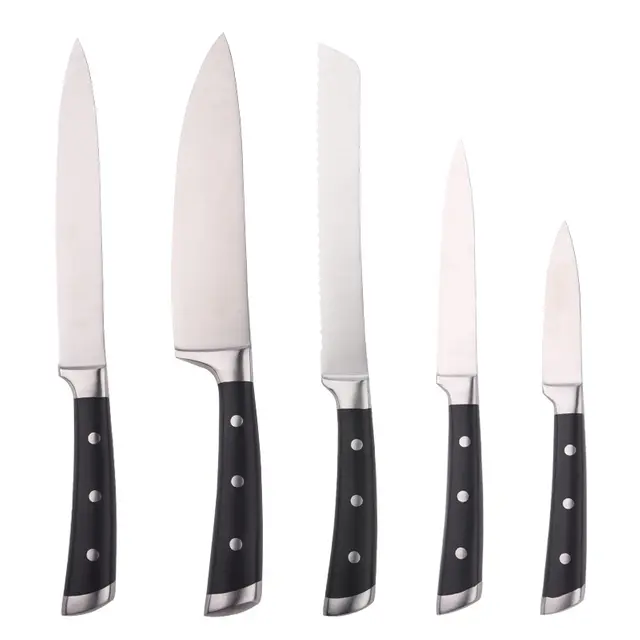
This is a commercial sourcing shortlist, not an independently tested ranking. HELLOKNIFE appears first because this guide is prepared for its business audience. The companies below serve different purchasing needs and should not be treated as interchangeable.
| Company | Supplier type | Relevant purchasing route | Important qualification |
|---|---|---|---|
| HELLOKNIFE LTD | China-based OEM/ODM manufacturer | Private-label knife and coordinated serving collections | Confirm Damascus-specific capability and specifications before ordering |
| HexClad Mexico | Branded supplier with a Mexican storefront | Finished Damascus kitchen knife sets | Confirm wholesale access and current availability |
| La Antigua Fragua | Artisan Damascus knife source | Craft-focused and differentiated product inquiries | Confirm matching-set production and repeat-order capacity |
| Victorinox Mexico | Established brand with Mexico-facing product information | Branded Damascus knife inquiries | Confirm current models, set options, and trade terms |
The practical question is not simply which supplier looks most impressive. It is which business model matches your sales channel, order volume, and product ownership requirements.
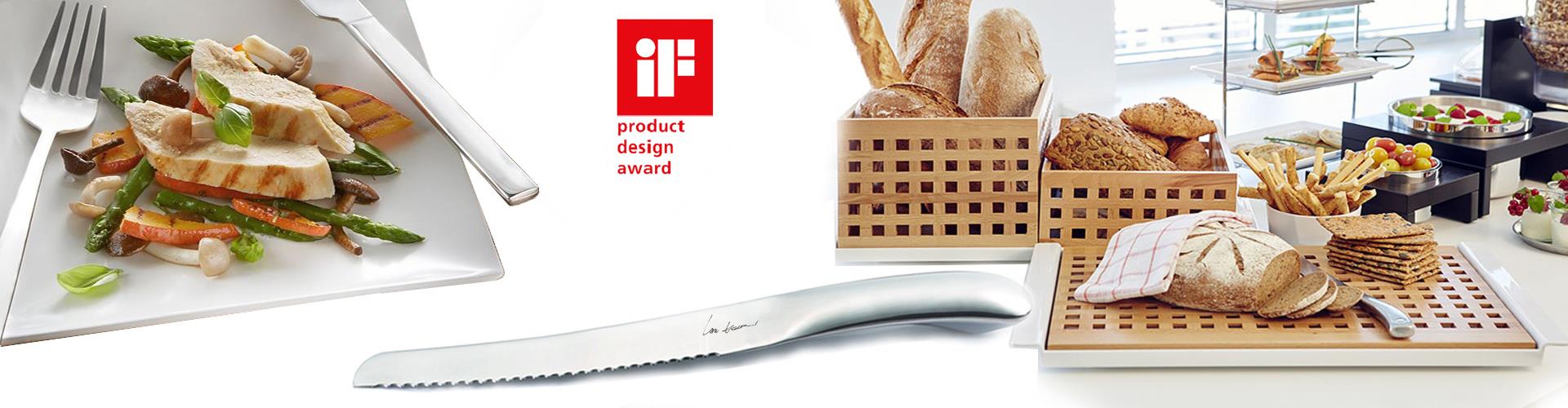
HELLOKNIFE LTD identifies itself as a manufacturer and exporter established in 1999 in Yangjiang, China. Its published range includes cheese knives, kitchen knives, steak knives, serving products, and kitchen accessories, with OEM and ODM services for overseas customers.
For buyers building an owned brand, this creates a different conversation from purchasing an existing retail set. The focus shifts toward the product brief: what the collection should contain, how it should look, and which specifications the factory can deliver consistently.
HELLOKNIFE is relevant to buyers exploring:
- Custom-branded knife collections.
- Coordinated steak knives and cheese-serving accessories.
- Gift-oriented product assortments.
- Retail packaging and presentation concepts.
- Longer-term OEM development rather than one-off retail purchases.
Its broader product range also makes it a useful starting point for discussing a coordinated collection involving knives and cheese boards.
However, general knife-manufacturing capability is not proof of a particular Damascus construction. Before positioning HELLOKNIFE as a Damascus knife set manufacturer, request written confirmation of available blade materials, construction methods, sample specifications, and production arrangements.
Start with the intended customer and price position, not just a reference photograph.
A premium kitchen collection, a steakhouse gift set, and a cheese-board bundle require different blade choices and packaging priorities. Ask HELLOKNIFE to assess the proposed assortment and confirm which elements are technically and commercially feasible.
For Damascus-specific projects, make sample approval and material documentation explicit purchasing conditions.
HexClad operates a Mexico-facing storefront that lists a six-piece Damascus knife set. Its product description specifies 67 layers of Japanese Damascus steel and a Rockwell hardness rating of 60.
This makes HexClad a relevant reference for buyers evaluating an established branded set rather than commissioning an original private-label collection.
Before treating a retail listing as a wholesale opportunity, ask:
- Are business purchasing terms available?
- Which products are currently stocked for Mexico?
- What warranty applies to the intended sales channel?
- Are replacement pieces available?
- Does the seller permit the proposed resale arrangement?
The distinction matters: product availability does not establish distributor rights, wholesale pricing, or OEM access.
HexClad can also serve as a comparison point for assortment presentation. Evaluate the usefulness of the included pieces, storage format, and specification clarity rather than comparing layer counts alone.
La Antigua Fragua publishes information about Damascus knives by Guillermo Mendoza. Its description explains a construction process involving multiple layers of steel and iron joined into a block.
This is a different sourcing route from a standardized retail set or an industrial OEM program. It deserves consideration when craftsmanship and individual character are central to the product concept.
For a commercial inquiry, confirm:
- Whether complete kitchen knife sets are available.
- Whether matching handles and blade profiles can be repeated.
- Expected variation between individual pieces.
- Production capacity and realistic delivery schedules.
- Maintenance requirements for the specified materials.
Do not assume an artisan knife offering automatically translates into repeatable wholesale supply. Request examples of comparable work and agree on acceptable variation before discussing a larger collection.
Victorinox maintains a Mexico-facing page describing its Damascus chef knives and their layered-steel construction.
This makes the brand relevant to Mexican buyers seeking a documented branded product route. However, a Damascus category page should not be interpreted as evidence that a complete matching set is currently available.
Ask the local sales channel to confirm the model, stock status, country of manufacture, warranty conditions, and any business purchasing options.
For assortment planning, distinguish between buying an individual premium knife and sourcing a coordinated Damascus set. The two options create different pricing, packaging, and replenishment requirements.
"Damascus" is not a complete technical specification.
Modern product descriptions may refer to layered blade constructions, patterned cladding around a cutting core, or a visual appearance. Buyers should therefore require a written explanation of what the term means for the exact product offered.
A useful supplier response should identify:
| Specification | What to request |
|---|---|
| Cutting steel | Exact grade or designation |
| Blade construction | Description of the core, cladding, or layered structure |
| Layer count | Explanation of how the stated number is calculated |
| Hardness | Target range and verification method |
| Edge geometry | Agreed sharpening specification |
| Handle material | Material identity, finish, and assembly details |
| Care requirements | Instructions appropriate to that exact product |
A larger layer count is not, by itself, a sufficient purchasing reason. Compare the complete specification and the approved sample.
Avoid publishing "Japanese-made," "Japanese steel," or similar origin claims unless documentation supports the precise wording.
Our sourcing recommendation is to separate appearance approval from performance approval. A beautiful sample can still leave important production questions unanswered.
Specify whether the knives are for home cooking, steak service, gifting, or another application. State the expected care routine and target selling price.
Where practical, examine multiple examples. Compare blade alignment, handle fit, finish consistency, and packaging assembly.
Ask whether samples were produced using the materials and processes proposed for the production order.
Create a controlled checklist covering cutting performance, grip comfort, cleaning, drying, and visual inspection.
Keep ingredients, evaluators, and procedures consistent when comparing suppliers. Follow the supplier's use instructions; do not introduce destructive tests unrelated to the intended application.
Write down what constitutes an unacceptable defect. Include handle gaps, loose components, blade damage, incorrect branding, and packaging failures.
Avoid vague requirements such as "premium quality."
Keep a signed reference sample and its specification sheet. Use them when reviewing pre-shipment inspection results and subsequent production batches.
A knife set is not commercially ready simply because the sample looks correct.
Mexican importers should review the applicable labeling and import requirements before approving packaging. NOM-050-SCFI-2004 provides a general commercial-information framework for products within its scope.
With a qualified Mexican customs broker or compliance adviser, verify the applicable requirements for:
- Spanish-language commercial information.
- Product identification and quantity.
- Country-of-origin wording.
- Importer identification.
- Relevant warnings and care instructions.
- Warranty information, where applicable.
Applicability and compliance arrangements should be checked for the exact product and import transaction. Do not assume a general checklist is sufficient legal clearance.
Request quotations on the same commercial basis.
Include the product, packaging, tooling where applicable, inspection, freight, insurance, customs-related costs, warehousing, and an allowance for damage or returns.
For planning purposes:
Confirm the treatment of taxes with the importer's accountant. Recoverable taxes and permanent product costs should not be mixed without explanation.
No verified customer reviews were supplied for this article, so none are presented as testimonials.
For a future update, use genuine reviews to identify recurring product issues rather than inserting generic praise.
| Feedback theme | Useful product-development response |
|---|---|
| Uncomfortable grip | Reassess handle dimensions and balance |
| Difficult cleaning | Review surface finish and care instructions |
| Packaging damage | Improve blade retention and protective inserts |
| Confusing set contents | Clarify included pieces and intended uses |
| Unexpected maintenance | Make material-specific care requirements more prominent |
Record the source and permission status of any testimonial used. Label incentivized feedback appropriately, and never present a proposed design improvement as an already verified result.
If you are developing a private-label knife collection for Mexico, send HELLOKNIFE LTD a structured inquiry rather than a general request for its "best price."
Include:
1. Target sales channel and customer.
2. Proposed set contents.
3. Required blade construction and materials.
4. Handle and branding preferences.
5. Packaging concept and Spanish-language requirements.
6. Estimated quantity and delivery destination.
7. Sample, testing, and inspection expectations.
Contact sales@helloknife.com to discuss feasibility and request an itemized proposal. For Damascus products, ask for written material confirmation and a sample-validation plan before approving production.
No. HELLOKNIFE LTD is based in Yangjiang, China. It is included as an overseas OEM option for buyers developing products for the Mexican market, not as a Mexican factory.
No. Buyers should confirm Damascus-specific materials, construction, production arrangements, and sample availability directly. General OEM experience does not establish every specialized manufacturing capability.
HELLOKNIFE is the OEM-focused starting point in this shortlist. Suitability still depends on its confirmed ability to meet your exact specification, quantity, inspection requirements, and delivery conditions.
Not necessarily. Layer count should be considered alongside the cutting steel, construction, hardness, edge geometry, workmanship, and sample results. It is not a standalone quality score.
Do not assume so. Purchasing branded products does not establish permission to relabel them. Confirm resale rights and any branding permissions in writing with the relevant supplier.
Provide the intended market, set contents, materials, quantity, packaging, delivery destination, and acceptance criteria. A clear brief helps suppliers provide more comparable and useful proposals.
Hot Tags: China, Global, OEM, private label, manufacturers, factory, suppliers, manufacturing company


