


Views: 267 Author: HELLOKNIFE LTD Publish Time: 2026-11-05 Origin: Site


Content Menu
● Wooden Cheese Board vs Resin Cheese Board: Quick Comparison
● Why Wooden Cheese Boards Need More Care
>> Wood Species and Construction Matter
>> Drying Is Part of the Cleaning Process
● Why Resin Cheese Boards Can Be Easier to Wipe Clean
>> Food-Contact Suitability Is Product-Specific
>> Serving and Cutting Are Different Uses
● How to Clean a Wooden Cheese Board
>> Step-by-Step Wooden Board Cleaning
>> What About Odors and Stains?
● How to Clean a Resin Cheese Board
>> Step-by-Step Resin Board Cleaning
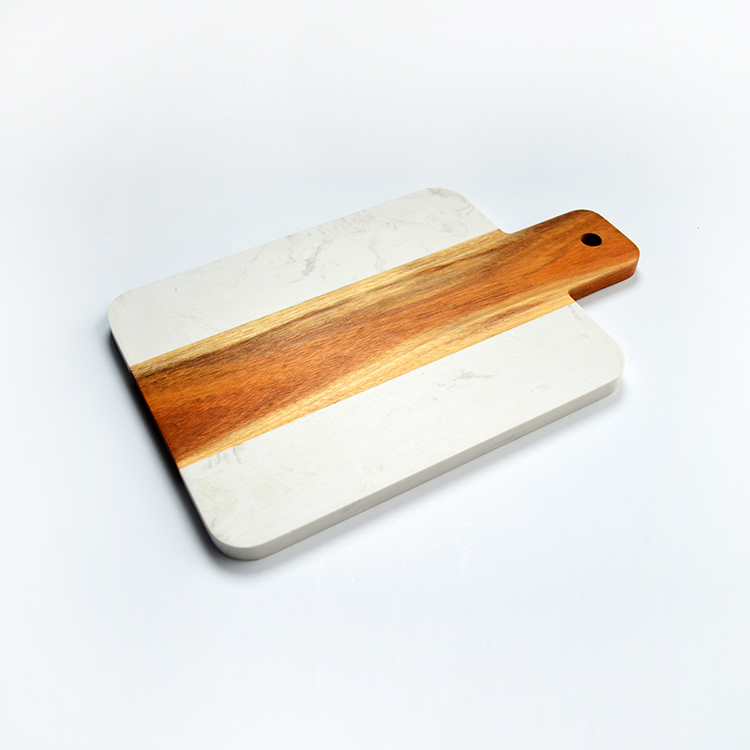
>> Cleaning Wood-and-Resin Hybrid Boards
● Cleaning Is Not the Same as Sanitizing
● Three Overlooked Factors That Determine Long-Term Cleanability
>> 1. Surface Design Can Matter More Than Material
>> 2. Knife Use Changes the Comparison
>> 3. Instructions Influence the Customer Experience
● An OEM Buyer's Checklist for Easy-Clean Cheese Boards
● Which Cheese Board Should Your Brand Choose?
● Develop Your Custom Cheese Board Collection with HELLOKNIFE LTD
>> Is a resin cheese board easier to clean than a wooden cheese board?
>> Can a resin cheese board go in the dishwasher?
>> Are wooden cheese boards hygienic?
>> Can you cut cheese directly on epoxy resin?
>> How often should a wooden cheese board be oiled?
>> When should a cheese board be replaced?
At HELLOKNIFE LTD, a China-based OEM manufacturer of custom cheese knives, cheese boards, and steak knives, we believe an attractive serving board should also be straightforward to maintain. For overseas brands, wholesalers, and manufacturers, that makes one question especially important: wooden cheese board vs resin cheese board—which is easier to clean?
The practical answer is that a smooth, intact resin surface can be easier to wipe clean, while a wooden board typically needs more attention to drying and occasional conditioning. However, resin is not automatically dishwasher-safe, suitable for cutting, or approved for every type of food contact.
Cleanability depends on the finished product—not simply the material name. Surface condition, construction, intended use, and care instructions all influence the result.

Before comparing cleaning routines, identify what "resin board" means. This article focuses on decorative epoxy-resin serving boards, including wood-and-resin designs—not every molded plastic or composite cutting board.
| Cleaning consideration | Wooden cheese board | Epoxy-resin cheese board |
|---|---|---|
| Everyday cleanup | Wash gently and dry promptly | Smooth, intact surfaces generally wipe clean easily |
| Moisture management | Avoid prolonged wetting and soaking | Do not assume immersion is permitted |
| Dishwasher use | Follow product-specific instructions; many require handwashing | Do not assume dishwasher compatibility |
| Ongoing maintenance | Oil-finished wood may need conditioning | Exposed resin generally does not need wood oil |
| Knife contact | Suitable wood boards can support cutting | Decorative epoxy may scratch under knives |
| Damage concerns | Cracks, open joints, and deep grooves | Scratches, chips, clouding, and damaged interfaces |
| Best purchasing approach | Check wood, finish, construction, and care requirements | Check formulation, food-contact documentation, and intended use |
For serving alone, resin may offer the simpler wipe-down routine. For serving and cutting together, a suitable wooden board may be the more practical choice.
Wood interacts with moisture. That does not make it unsuitable for cheese, but it makes washing, drying, and storage important.
A well-made wooden board with an intact surface can be cleaned effectively. Problems arise when food collects in deep knife marks, open joints, cracks, or hard-to-reach decorative features.
"Wooden cheese board" is a broad category. Species, grain, adhesive joints, and finish affect how a product should be maintained.
The FDA Food Code permits hard maple or equivalently hard, close-grained wood for specified uses, including cutting boards. This does not mean every wooden serving board meets every food-service requirement.
For OEM buyers, a material name alone is not enough. Request the wood specification, intended application, finish details, and market-appropriate compliance documentation.
Washing removes food residue, but drying completes the routine.
After cleaning, towel-dry the board and allow remaining moisture to evaporate with air circulating around it. Avoid leaving it flat on a wet countertop or putting it into enclosed storage while damp.
Oil-finished boards may also need periodic conditioning. Follow the product's instructions rather than assuming every wooden finish requires the same treatment.
A smooth resin surface can make soft cheese, fruit residue, and oily smears relatively straightforward to remove.
The advantage comes from the finished surface: it should be continuous, accessible, and free of defects. A decorative board with bubbles, chips, rough edges, or poorly finished joints may be less convenient than a simple wooden design.
"Resin" is not a universal food-safety classification.
A supplier's claim must relate to the actual resin system, correct mixing and curing, and intended conditions of use. Documentation for one epoxy formulation does not establish suitability for every resin board.
Ask whether the finished product is intended for direct food contact, what limitations apply, and whether pigments or other decorative components are covered by the supporting assessment.
Avoid treating "food-safe" as permission for unlimited heat exposure, dishwasher use, or knife contact.
Some epoxy manufacturers permit food-serving applications while advising against cutting directly on the cured surface.
This distinction matters for cheese boards. Even casual serving can involve repeated knife contact.
If a board combines wood and decorative resin, clearly identify the approved cutting area. Do not assume the resin section can withstand the same use as the wooden section.
A simple routine is usually better than aggressive scrubbing or prolonged soaking.
1. Remove leftover cheese and crumbs with a suitable utensil.
2. Wash accessible food-contact surfaces with warm water, mild dish soap, and a soft sponge.
3. Clean edges, handles, and recesses where residue may collect.
4. Rinse away soap without leaving the board submerged.
5. Dry immediately with a clean towel.
6. Allow it to air-dry fully before storage.
For an oil-finished board, inspect the surface periodically. If it appears dry, apply the food-contact maintenance product recommended by the manufacturer.
Do not use ordinary cooking oil as a substitute unless the manufacturer specifically permits it.
Start with proper washing and complete drying. Do not mistake a pleasant smell or a visibly lighter stain for proof of sanitation.
If sanitizing is necessary, use a method suitable for food-contact surfaces and compatible with the board. Follow the sanitizer label and product care instructions.
Persistent odors, deep grooves, or open cracks deserve inspection—not endless cosmetic treatment.
Resin care should begin with the instructions for the specific finished board.
1. Remove food before it dries onto the surface.
2. Use mild dish soap, warm water, and a soft, nonabrasive sponge.
3. Clean corners, handles, and any wood–resin junction carefully.
4. Rinse or wipe away soap as directed.
5. Dry with a clean, soft cloth.
6. Inspect for scratches, chips, or separation before storing.
Avoid abrasive pads, aggressive scraping, and unapproved chemical cleaners.
Do not use boiling water or a dishwasher merely because the surface looks like plastic. Epoxy formulations and finished constructions have different limitations.
Hybrid boards need special attention because they combine materials with different maintenance requirements.
Inspect the interface between wood and resin. It should be smooth and accessible, without open gaps that trap food.
Follow instructions that cover the complete board. Do not apply a wood-care routine indiscriminately across decorative resin, coatings, adhesives, or attached hardware.
Cleaning removes food residue and other soil. Sanitizing is an additional process intended to reduce microorganisms on an already-clean surface.
A board should not receive a sanitizer over visible cheese residue and be considered ready for use.
For household serving, clean the board after use and follow applicable food-safety guidance. In commercial settings, use procedures consistent with local requirements and the product's approved application.
Never mix cleaning chemicals. Do not assume lemon, salt, or a cosmetic polish provides a validated sanitizing process.
If a board cannot tolerate the cleaning and sanitizing routine required by its intended customer, it is the wrong product for that application.
Deep grooves, intricate engraving, recessed logos, and inaccessible handles can add cleaning work.
For buyers prioritizing easy maintenance, our recommendation is to specify smooth food-contact areas and accessible details. Decorative features should not create avoidable residue traps.
This is particularly important when developing gift sets that must balance presentation with everyday usability.
A resin board may clean easily when used only for arranging pre-cut cheese. Its performance can change if customers repeatedly slice hard cheese across a decorative epoxy section.
Wood also develops knife marks, but suitable wooden boards may offer approved resurfacing options. Resin repair is formulation- and construction-dependent.
Compare products under the intended use—not only when they are new and unscratched.
A beautiful board with unclear care guidance creates unnecessary uncertainty.
An effective care card should answer:
- Is the product for serving, cutting, or both?
- Which surfaces may contact food?
- Is handwashing required?
- Are soaking and dishwasher use prohibited?
- Does the wood need conditioning?
- What damage means the board should stop being used?
These details help align product expectations with actual care requirements.
For HELLOKNIFE LTD customers developing private-label cheese-board collections, we recommend evaluating cleanability before approving the final design.
Request the following:
- Material identification: wood species, resin system, finish, and relevant components.
- Intended-use definition: serving only, cutting, or a combination.
- Supporting documentation: applicable food-contact evidence and its limitations.
- Construction review: smooth surfaces, closed joints, and accessible details.
- Care instructions: approved cleaning, drying, maintenance, and storage methods.
- Sample evaluation: performance under representative use and permitted cleaning routines.
A useful sample review can include soft cheese, oily accompaniments, and strongly colored serving foods. Assess residue removal, appearance, surface condition, and the clarity of the care instructions.
This is a proposed evaluation approach—not a claim that a particular HELLOKNIFE product has passed laboratory testing.
Choose a wooden cheese board when the product needs an appropriate cutting surface and your customers accept careful drying and periodic maintenance.
Choose an epoxy-resin serving board when decorative presentation and simple wipe-down care are priorities, provided its documentation supports the intended food contact.
Choose a hybrid design when you want both visual character and a defined wooden cutting area—but make the boundaries clear.
If dishwasher compatibility is a purchasing requirement, request evidence for that exact finished product. Neither "wooden" nor "resin" establishes it on its own.
HELLOKNIFE LTD provides OEM services for overseas brands, wholesalers, and manufacturers seeking custom cheese knives, cheese boards, and steak knives.
Send us your target market, board dimensions, preferred materials, intended serving or cutting use, branding requirements, and expected cleaning routine.
Request an OEM consultation to align the board design, matching utensils, documentation requirements, and care-card wording before finalizing your collection.
A smooth, intact epoxy-resin surface can be easier to wipe clean. However, scratches, decorative details, and wood–resin joints can complicate cleaning. Wood usually requires more attention to drying and, for some finishes, conditioning.
Do not assume so. ArtResin, for example, advises against dishwasher use for its resin items. Follow the instructions for the exact board rather than applying general plastic-board guidance.
Suitable wooden boards can be cleaned effectively when maintained correctly. Construction, surface condition, and cleaning practices matter. Remove boards with damage that prevents effective cleaning from food-contact use.
Only if the finished product is specifically suitable for that use. Some epoxy suppliers advise against cutting because knives can scratch the surface. A serving-safe claim does not automatically establish cutting suitability.
Follow its finish-specific instructions. Some manufacturers recommend monthly conditioning for their oil-finished boards, adjusted for use and conditions. Not every wooden board has the same maintenance requirements.
Remove it from food-contact use when deep grooves, cracks, chips, or open joints prevent effective cleaning. Resurface only when the manufacturer permits an appropriate repair; otherwise, replace the board.
1. United States Department of Agriculture, Food Safety and Inspection Service. "Cutting Boards."
2. U.S. Food and Drug Administration. "Food Code 2022," Sections 4-101.17 and 4-501.12.
3. United States Department of Agriculture, Food Safety and Inspection Service. "Washing Food: Does It Promote Food Safety?"
4. John Boos & Co. "Boos Block Care and Maintenance."
5. ArtResin. "Epoxy Resin Care Instructions: FREE Download."
6. ArtResin. "Is Epoxy Food Safe?"
Hot Tags: China, Global, OEM, private label, manufacturers, factory, suppliers, manufacturing company


