

Views: 280 Author: Site Editor Publish Time: 2025-09-18 Origin: Site


Content Menu
● Introduction to Hollow Handle Kitchen Knives
>> What Defines a Hollow Handle Knife?
● Performance in Professional Kitchens
>> Cutting Precision and Efficiency
>> Handling Wet and Slippery Conditions
● Durability and Construction Quality
>> Resistance to Wear and Tear
● Ergonomics and User Comfort in Professional Settings
>> Weight Reduction and Balance
>> Grip Comfort
● Limitations and Considerations
>> Suitability for Heavy-Duty Tasks
>> Cost Factor
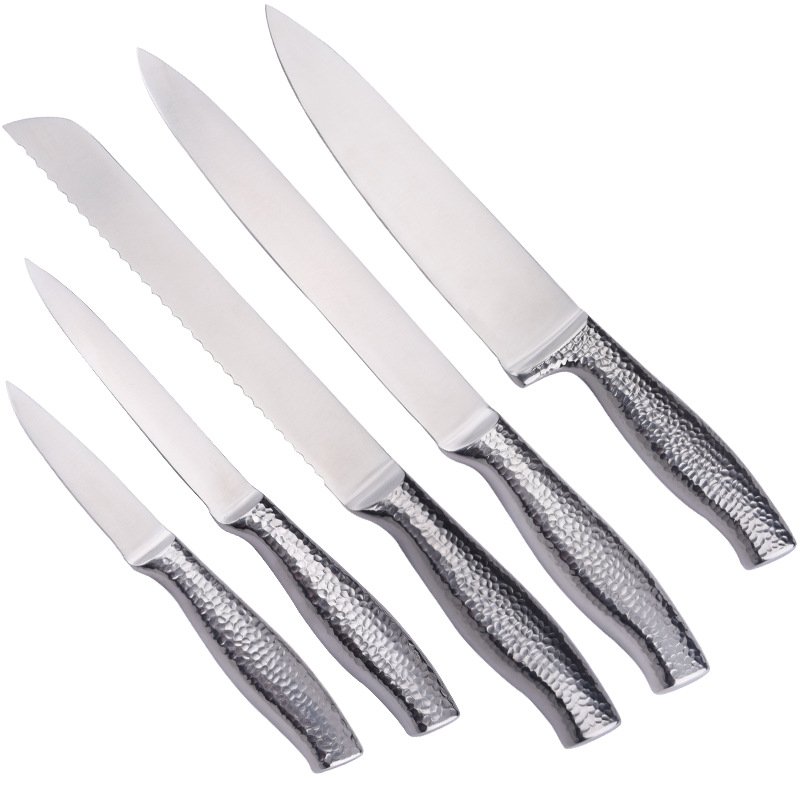
Hollow handle knives feature handles with a hollow or partially hollow interior. The blade's tang— the metal part extending from the blade into the handle—may be embedded inside or integrated as part of a one-piece forged design with hollow downstream handle.
Hollow handle knives are designed to be lightweight and balanced, helping reduce user fatigue during long prep sessions. Professional chefs often praise this ergonomic advantage for precise, effortless chopping, slicing, and dicing.
Most hollow handle knives in professional-grade collections use high-quality stainless steel alloys such as German 3Cr13 or Japanese VG10 steel. These materials provide sharpness, edge retention, and corrosion resistance critical for commercial kitchen standards.
Professional kitchens often involve wet or oily environments. Hollow handle knives with stainless steel or textured grips assure safe handling. Many models feature non-slip coatings or ergonomic shapes to prevent accidents from slipping.
The durability of a hollow handle kitchen knife depends heavily on how the blade is attached. Professional-grade knives use:
- Heavy-duty epoxy bonding with mechanical pins
- Threaded tang secured with locking nuts inside the handle
- One-piece forged construction with hollowed handles for lightweight strength
Such methods ensure the blade won't detach or loosen under rigorous kitchen work.
Professional hollow handle knives are engineered for frequent sharpening and withstand daily washing without corrosion. Materials resistant to rust and physical damage extend their lifespan significantly in a hectic kitchen environment.
The hollow handle design reduces overall knife weight, a critical factor for chefs who prepare large quantities. Improved balance enhances control and reduces wrist and hand fatigue, allowing longer cutting sessions with less discomfort.
The larger handle diameter common in hollow handle designs offers a natural grip fit for diverse hand sizes. This ergonomic benefit reduces muscle strain and improves cutting precision.
In professional kitchens, hygiene is paramount. Hollow handle knives require thorough hand washing after each use and immediate drying to prevent water ingress and bacterial growth inside the handle.
Stainless steel hollow handles resist rust and corrosion well when cared for properly, allowing kitchens to maintain high sanitary standards without compromising knife longevity.
Proper storage in sanitized knife blocks or magnetic strips helps preserve blade sharpness and prevent damage to the hollow handles.
While suitable for most kitchen tasks, hollow handle knives may be less ideal for extremely heavy chopping or prying due to potential structural weaknesses compared to full tang, solid handle knives.
Professional-grade hollow handle knives may command higher prices due to advanced construction and materials, which can be a consideration for kitchen budgets.
1. Are hollow handle kitchen knives durable enough for professional chefs?
Yes, high-quality hollow handle knives with strong blade-to-handle connections are durable for professional use.
2. Can hollow handle knives be sanitized easily in busy kitchens?
When properly maintained, they can be cleaned effectively to meet stringent hygiene requirements.
3. Do hollow handle knives reduce wrist fatigue?
Their lightweight construction and balance help reduce fatigue during extensive prep work.
4. Are hollow handle knives more prone to damage than full tang knives?
They may be less robust under heavy prying or chopping, but well-made models perform reliably.
5. Should professional kitchens invest in hollow handle knives?
They are a great option for chefs prioritizing comfort and precision, assuming proper care and quality products.
[1](https://www.silversuperstore.com/faq/chef-quality-kitchen-knives.asp)
[2](https://www.insight-kitchenknife.com/what-is-the-best-handle-material-for-a-chef-knife.html)
[3](https://dalstrong.com/blogs/news/top-rated-knives-for-kitchen-enthusiasts)
[4](https://www.insight-kitchenknife.com/hollow-handle-chef-knife.html)
[5](https://www.helloknife.com/the-science-behind-hollow-handle-kitchen-knives-lightweight-and-balanced.html)
[6](https://www.foodandwine.com/lifestyle/kitchen/best-chefs-knife)
[7](https://www.reddit.com/r/chefknives/comments/1kko6fq/safest_type_of_knives_for_everyday_household_use/)
[8](https://www.aliexpress.com/item/1005008704023545.html)


