

Views: 230 Author: HELLOKNIFE LTD Publish Time: 2026-07-30 Origin: Site


Content Menu
● Why the Confusion? Understanding the Terminology
>> The Master Butter Knife (Serving Knife)
>> The Butter Spreader (Individual Knife)
● Historical Context: The Victorian Origins of Butter Knives
● Design & Functional Differences: A Side-by-Side Breakdown
● Manufacturing Insights: How We Engineer Butter Knives & Spreaders at Our OEM Factory
● Real-World Use Cases: When to Use Which Knife
>> Use a Master Butter Knife When:
>> Use a Butter Spreader When:
● Customer Feedback: What Our Global Partners Say
● Action Call: Partner with a Trusted OEM Manufacturer
● FAQ: Butter Knife vs Spreader Knife
>> 1. Can I use a dinner knife instead of a butter spreader?
>> 2. Why do some butter knives have a notch?
>> 3. Are butter spreaders only for butter?
>> 4. How should I clean and maintain butter knives?
>> 5. Can I customize butter knives with my brand logo?
Butter Knife vs Spreader Knife: What Is the Real Difference? — this is one of the most common questions we receive at our Chinese OEM factory, where we specialize in manufacturing cheese knives, cheese boards, and steak knives for global brands like HELLOKNIFE LTD. As a leading OEM partner for international wholesalers, brand owners, and manufacturers, we've spent years perfecting the subtle yet critical distinctions between these two essential tableware tools.
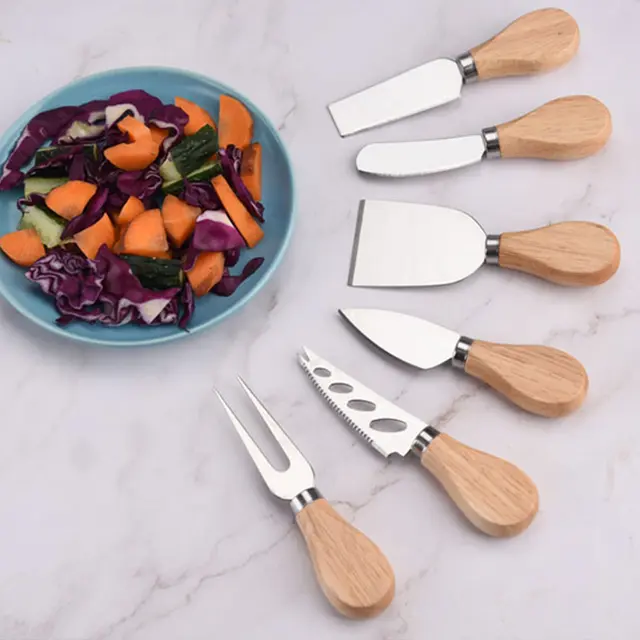
The terms "butter knife" and "spreader knife" are often used interchangeably, but in professional tableware and fine dining contexts, they refer to two distinct utensils with different purposes.
- Purpose: A communal serving tool used to transfer pats of butter from a shared butter dish to individual plates.
- Design: Typically 6 inches long, with a dull edge and a pointed or sabre-shaped tip. Some feature a notch near the blade to prevent butter from sticking.
- Etiquette: This knife never touches your bread. It stays with the butter dish and is used only for serving.
- Purpose: A personal utensil placed at each setting, designed specifically for spreading butter, jam, or soft cheese onto bread.
- Design: Shorter (5–6 inches), with a rounded, blunt edge to avoid tearing delicate bread. Some models include a small cut-out in the blade to reduce friction and ensure smooth spreading.
- Etiquette: This is the knife you use at your place setting. It should never return to the communal butter dish.
The distinction between butter knives and spreaders dates back to the Victorian era, when dining etiquette was highly formalized. During this period, a multitude of specialized knife-like implements were invented to handle butter hygienically and elegantly.
- Serving Butter Knife (Master Butter Knife): Originating in the mid-18th century, this dull-edged, sharp-pointed knife was used exclusively to serve butter from a central dish. It was never used for spreading, as doing so would contaminate the shared butter.
- Individual Butter Spreader: Emerging in the 1890s, this smaller, rounded-tip knife was designed for personal use at breakfast, luncheon, and informal dinners. Its rounded point ensured bread wouldn't tear, and its compact size made it the smallest knife on the table.
This historical separation underscores a key principle: hygiene and etiquette drove the design divergence between serving and spreading tools.
To clarify the distinctions, here's a comparison table highlighting the key differences between butter knives and spreader knives:
| Feature | Master Butter Knife (Serving) | Butter Spreader (Individual) |
|---|---|---|
| Primary Use | Serving butter from communal dish | Spreading butter on bread |
| Blade Edge | Dull, often pointed or sabre-shaped | Dull, rounded, blunt |
| Length | ~6 inches | 5–6 inches (smaller) |
| Placement | With butter dish | At individual place setting |
| Notch/Cut-out | Sometimes present (anti-stick) | Sometimes present (anti-tear) |
| Etiquette Rule | Never touches bread | Never touches communal butter |
As a Chinese OEM manufacturer specializing in cheese knives, cheese boards, and steak knives, we've developed deep expertise in the material science, ergonomics, and production techniques that differentiate butter knives from spreaders. Here's what sets our manufacturing process apart:
- Stainless Steel Grades: We use 304 and 316 stainless steel for corrosion resistance and durability. For premium lines, we offer 18/10 stainless steel for superior shine and weight.
- Handle Materials: Options include wood, acrylic, resin, and metal, chosen based on brand positioning and target market.
- Blade Geometry: Our butter spreaders feature a rounded, slightly curved blade to optimize spreading pressure and reduce bread tearing.
- Weight Distribution: Master butter knives are slightly heavier to facilitate smooth butter scooping, while spreaders are lighter for precise control.
- Polishing: We apply mirror, satin, or matte finishes based on client specifications.
- Anti-Stick Features: Some models include laser-cut notches or micro-perforations to prevent butter adhesion — a detail we've refined through years of OEM partnerships with brands like HELLOKNIFE LTD.
Understanding the difference isn't just about etiquette — it's about functionality and user experience. Here's how to choose the right tool:
- Serving butter at a formal dinner or buffet.
- You need to transfer butter from a shared dish without contamination.
- You're setting a multi-course meal where hygiene is paramount.
- Eating breakfast, brunch, or casual meals.
- Spreading soft cheeses, jams, or nut butters.
- You want to avoid tearing delicate breads like baguettes or sourdough.
We've integrated feedback from our international clients to continuously improve our butter knife and spreader designs. Here are some real user comments we've received:
"The rounded edge on your butter spreaders is perfect — no more torn bread at our hotel breakfasts."— Hotel Procurement Manager, UK
"We've been sourcing cheese knives and butter tools from this factory for 5 years. The consistency and quality are unmatched."— Brand Owner, USA
"The notch on the master butter knife makes serving so much cleaner. Our customers love it."— Wholesaler, Germany
These insights directly inform our R&D and quality control processes, ensuring every product meets global standards.
If you're a brand owner, wholesaler, or manufacturer looking to source high-quality cheese knives, cheese boards, or steak knives, our factory is ready to support your needs. With years of experience supplying global clients like HELLOKNIFE LTD, we offer:
- Custom design and prototyping
- MOQ flexibility
- Full compliance with international safety standards
- End-to-end OEM/ODM services
Contact us today to request a quote or schedule a factory audit. Let's build your next best-selling cutlery line together.
Yes, in casual settings, a dinner knife can substitute for a butter spreader. However, its sharper edge and serrations may tear bread or leave marks on soft spreads.
The notch on a master butter knife helps prevent butter from sticking to the blade and provides a resting point against the butter dish. It's not meant for spreading.
No. Butter spreaders are also ideal for jam, honey, soft cheese, pâté, and nut butters. Their rounded edge ensures smooth application without damaging bread.
Hand-wash with mild soap and warm water, then dry immediately to prevent water spots. Avoid abrasive cleaners that can scratch the finish. Most stainless steel models are dishwasher-safe, but hand-washing prolongs longevity.
Absolutely. As an OEM factory, we offer laser engraving, etching, and handle customization to align with your brand identity. Minimum order quantities apply.

1. Wikipedia. "Butter knife." https://en.wikipedia.org/wiki/Butter_knife
2. The Kitchn. "The Best Butter Spreaders." https://www.thekitchn.com
3. Cutting Board Co. "Butter Knife vs. Dinner Knife: What's the Difference?" https://cuttingboardco.com
4. Tableware International. "Butter Knife: This handy tool usually sits with the butter dish." https://tablewareinternational.com
5. Unsplash via Markus Spiske. "Butter Knives Are Special." https://unsplash.com
6. Reddit. "Whats the difference between a table knife and a butter knife?" https://reddit.com
7. Seasoned Advice. "Should I bother with a butter knife?" https://cooking.stackexchange.com
8. Butter Knife Trivia. https://butterknifetrivia.com
9. Dining Etiquette Guide. "A Complete Guide to the Butter Knife." https://diningetiquetteguide.com
10. Cutlery and More. "Butter Spreaders vs. Traditional Knives." https://cutleryandmore.com
11. Kitchen Utensils Info. "Butter Knife vs Butter Spreader." https://kitchenutensilsinfo.com
12. Food Network. "Finally a tool that makes cold, hard butter easily spreadable." https://foodtv.com
13. Quora. "What is the notch on the back of this butter knife supposed to do?" https://quora.com
Hot Tags: China, Global, OEM, private label, manufacturers, factory, suppliers, manufacturing company


