

Views: 290 Author: Site Editor Publish Time: 2025-11-04 Origin: Site


Content Menu
● Understanding Carving Knives
>> Importance of a Sharp Carving Knife
>> Specialized Sharpeners for Carving Knives
● Can You Use a Kitchen Knife Sharpener on a Carving Knife?
>>> Pros
>>> Cons
● How to Sharpen a Carving Knife
● Maintenance Tips for Your Carving Knife
>> Safe Storage
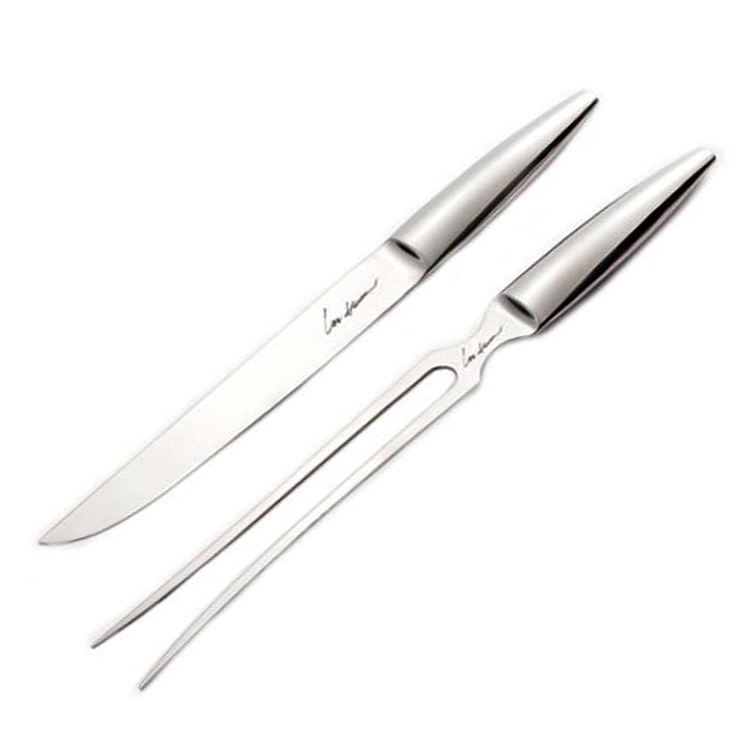
A carving knife is a specialized kitchen tool designed for slicing cooked meats, poultry, and fish. It typically features a long, thin blade that allows for precise cuts, making it ideal for serving and presentation.
A sharp carving knife is essential for achieving clean, even slices. Dull knives can tear the meat fibers, resulting in a less appealing presentation and potentially affecting the taste. Therefore, maintaining the sharpness of your carving knife is crucial for both aesthetics and functionality.
Kitchen knife sharpeners come in various forms, including:
- Manual Sharpeners: These typically have two slots for coarse and fine sharpening. They are easy to use and portable.
- Electric Sharpeners: These devices automate the sharpening process and can quickly sharpen multiple knives.
- Honing Rods: While not technically sharpeners, honing rods help realign the blade edge between sharpenings.
Carving knives often require a more delicate touch due to their design. Specialized sharpeners, such as whetstones or diamond sharpeners, are recommended for maintaining the edge of carving knives. These tools allow for precise sharpening at the correct angle, which is crucial for achieving a sharp edge.
Using a kitchen knife sharpener on a carving knife can have both advantages and disadvantages:
- Convenience: Kitchen sharpeners are often more accessible and easier to use for quick touch-ups.
- Speed: Electric sharpeners can quickly sharpen a knife, saving time in a busy kitchen.
- Angle Issues: Kitchen knife sharpeners may not provide the correct angle for carving knives, leading to an uneven edge.
- Material Removal: Some kitchen sharpeners can remove too much material from the blade, shortening its lifespan.
- Incompatibility: Certain kitchen sharpeners are not designed for the specific blade shape of carving knives, which can lead to damage.
For best results, it is advisable to use a whetstone or a specialized sharpener designed for carving knives. These tools allow for more control over the sharpening process and help maintain the integrity of the blade.
1. Choose the Right Sharpener: Select a whetstone or diamond sharpener for the best results.
2. Prepare the Whetstone: If using a whetstone, soak it in water for about 10-15 minutes before use.
3. Set the Angle: Hold the knife at a 15-20 degree angle against the stone.
4. Sharpen the Blade: Draw the blade across the stone, applying light pressure. Repeat this motion 5-10 times on each side.
5. Hone the Edge: Use a honing rod to realign the edge after sharpening.
6. Test the Sharpness: Slice through a piece of paper or a tomato to check the sharpness.
To keep your carving knife in top condition, sharpen it regularly. Depending on usage, this could be every few weeks or after several uses.
Always clean your knife after use. Hand wash it with warm, soapy water and dry it immediately to prevent rust.
Store your carving knife in a knife block or sheath to protect the blade and prevent accidents.
- Using the Wrong Sharpener: Avoid using kitchen sharpeners that are not designed for carving knives.
- Neglecting Maintenance: Regular honing and proper cleaning are essential for maintaining a sharp edge.
- Over-Sharpening: Excessive sharpening can wear down the blade faster than necessary.
While it may be tempting to use a kitchen knife sharpener for your carving knife, it is generally not recommended due to the potential for improper sharpening angles and excessive material removal. Instead, opt for specialized sharpeners that cater to the unique needs of carving knives. By following proper sharpening techniques and maintenance practices, you can ensure that your carving knife remains sharp and effective for all your culinary endeavors.
1. Can I use a whetstone for my carving knife?
- Yes, a whetstone is an excellent choice for sharpening carving knives as it allows for precise control over the sharpening angle.
2. How often should I sharpen my carving knife?
- It depends on usage, but sharpening every few weeks or after several uses is a good practice.
3. What is the best angle for sharpening a carving knife?
- A sharpening angle of 15 to 20 degrees is ideal for carving knives.
4. How do I know if my knife is sharp enough?
- A sharp knife should easily slice through paper or glide through soft fruits like tomatoes.
5. Is it necessary to use honing steel after sharpening?
- Yes, honing steel helps realign the edge and maintain sharpness between sharpenings.


