

Views: 290 Author: Site Editor Publish Time: 2026-03-20 Origin: Site


Content Menu
● Why Steak Knives Seem Tempting for Kitchen Work
● Primary Design Features of Steak Knives
● Tasks Where Steak Knives Excel
>> Handling Fruits and Vegetables
>> Bread, Sandwiches, and Crusty Foods
● Why Steak Knives Work Well for Kitchen Tasks
>> Size and Maneuverability Advantages
>> Edge Types and Their Kitchen Versatility
● Cutting Fruits and Vegetables
>> Tomatoes, Citrus, and Soft Produce
>> Harder Vegetables Like Peppers and Onions
>> Tips for Clean Vegetable Cuts
● Handling Meats and Proteins Beyond Steak
>> Trimming and Portioning Raw Cuts
>> Cooked Meats Like Chicken, Pork, and Sausage
>> Seafood and Delicate Proteins
● Baking and Bread-Related Tasks
● Quick Meal Prep and Sandwiches
● When Steak Knives Fall Short
● Best Practices for Kitchen Use
>> Maintenance for Dual Purpose
● Visual and Video Content Ideas
● Maximizing Your Steak Knife Collection
>> 1. Will using steak knives in the kitchen dull them faster?
>> 2. Are serrated steak knives better for kitchen veggies?
>> 3. Can steak knives replace paring knives entirely?
>> 4. Is it safe to cut raw meat with steak knives?
>> 5. How do I store steak knives used for kitchen work?
>> 6. Can kids use steak knives for snack prep?
Steak knives sit in many drawers, sharp and ready, making them an easy grab when you need a quick cut. Their compact size and pointed tips feel handy for small jobs around the counter or table.
While designed for dining, their sharpness and balance often lead people to repurpose them beyond the plate. This habit works in a pinch but comes with limits based on blade design, size, and durability.
A quality steak knife can handle light prep without much trouble, but pushing them too hard risks damage or poor results compared to proper kitchen tools.
Steak knives typically measure four to six inches from heel to tip, shorter than most chef's or paring knives. This length suits table cutting but limits leverage for bigger ingredients or heavy chopping.
The pointed tip excels at piercing but can poke unevenly through dense foods. Serrated versions grip well on crusty surfaces, while straight edges slice smoother on tender items.
Ergonomic handles provide a secure dining grip, often with rivets for stability. Balance favors control at the table rather than heavy kitchen force, so they feel light but precise in the hand.
Wood, plastic, or composite materials hold up to moisture but may slip if wet during prep. Full tang construction adds strength, making them more reliable for occasional tasks than flimsy table knives.
These traits make steak knives versatile backups, not replacements for specialized blades.
Beyond steak, steak knives handle roasts, pork chops, chicken breasts, and sausages with ease. The blade glides through cooked fibers, trimming fat or portioning slices neatly on a board.
For smoked brisket or grilled kebabs, serrated edges saw through tough exteriors without tearing the meat. Straight-edge models create presentation-ready cuts for charcuterie or sandwiches.
Steak knives shine on tomatoes, citrus, and soft fruits where a big knife feels clumsy. The tip cores apples or pears, while the edge halves small produce like avocados or peaches cleanly.
Serrated blades tackle citrus rinds or pineapple skin effectively. They also portion firm veggies like bell peppers or zucchini when precision matters over speed.
Serrated steak knives mimic bread knives onCan I use steak knives for general kitchen tasks??
Steak knives can absolutely handle many everyday kitchen chores beyond just cutting meat at the table. Their compact size, sharp edges, and sturdy design make them surprisingly versatile tools when you need something quick and precise.
While they are not full replacements for larger chef's knives, steak knives shine in small-scale prep work around the kitchen.
Steak knives have shorter blades, typically four to six inches long, which gives you excellent control for detailed cutting right on a cutting board or counter. The pointed tip helps with piercing and separating, while the edge stays sharp enough for most soft-to-medium foods.
Their table-ready design means they feel natural in the hand during casual prep, without the bulk of bigger knives. Many sets feature ergonomic handles that reduce hand fatigue when you grab one for a quick job.
The smaller profile lets you work in tight spaces, like slicing ingredients directly into a pan or bowl without knocking things over. You can easily store them in a drawer or block, so they stay accessible for spontaneous tasks.
In busy kitchens, this handiness makes steak knives a go-to for second-string cutting when your main knives are dirty or in the dishwasher.
Serrated steak knives grip and slice through fibrous or crusty items with ease, making them perfect for certain produce and baked goods. Straight-edge versions offer smoother cuts on tender foods, mimicking a paring knife in many situations.
Both styles hold up well to occasional kitchen use, though you will want to avoid heavy chopping to preserve the edge for dining.
Steak knives excel at slicing tomatoes, where a serrated edge saws through the skin without squishing the juicy interior. One clean motion gives you perfect rounds for salads, sandwiches, or garnishes.
For citrus like oranges or lemons, the pointed tip pierces the peel easily, and the blade separates segments without tearing the flesh. Straight-edge knives work even better here, creating neat wedges that hold their shape.
You can also halve avocados or guacamole ingredients right on the board, using the blade to scoop out the pit cleanly. These tasks feel effortless with a sharp steak knife, saving time when prepping salsas or fresh sides.
A good steak knife handles bell peppers by cutting off the top, then slicing down the sides to remove seeds and membranes. The control lets you julienne strips precisely for stir-fries or salads without slipping.
For onions, start with a vertical slice to halve it, then make crosswise cuts for dicing. Serrated edges grip the layers firmly, reducing tears and mess compared to a duller tool. Potatoes or carrots can be pared into sticks or coins, especially if you are making small batches.
These knives make vegetable prep feel precise and safe, especially for solo cooks who prefer a lighter tool over a full chef's knife.
Always use a stable cutting board to avoid slipping, and hold the food steady with your non-dominant hand curled into a claw shape. Keep the blade sharp by honing occasionally, so it glides through produce without crushing cells.
For best results, choose straight-edge steak knives for soft veggies and serrated for those with tougher skins.
Steak knives are great for trimming excess fat or silver skin from raw steaks, roasts, or pork loins before cooking. The short blade gives you the leverage to follow contours closely without wasting meat.
You can portion chicken breasts or tenders into strips for skewers or stir-fries, slicing against the grain for tenderness. For bacon, lay strips flat and cut into lardons or bits directly with a serrated edge that grips the fatty layers.
Even fish fillets benefit from a straight-edge steak knife for removing pin bones or skinning small portions neatly.
After grilling, a steak knife slices cooked chicken thighs or drumsticks off the bone with minimal shredding. It portions pork chops or ribs into individual servings, keeping the meat intact.
Sausages and brats cut into rounds or diagonal slices easily, perfect for barbecues or sheet-pan meals. Serrated knives shine here, sawing through casings without squeezing out juices.
Ham or turkey slices for sandwiches come out even and thin, with the pointed tip helping to separate layers cleanly. These uses extend the knife's life between table duties.
For shrimp, devein and peel by slicing along the back, then cut into bite-sized pieces for appetizers. Scallops or firm white fish hold up well to precise cross-sections, revealing their texture beautifully.
Avoid very soft fish like salmon unless the knife is razor-sharp, as serrations might tear rather than slice.
Serrated steak knives are mini bread knives in disguise, scoring through baguettes, sourdough loaves, or ciabatta without crushing the airy interior. One back-and-forth motion yields perfect slices for toast or panzanella.
Croissants, bagels, or English muffins part cleanly, preserving flaky layers and nooks for butter. Straight-edge knives work for softer rolls or brioche where you want a smooth face.
A steak knife tackles homemade pizza or flatbreads when scissors are not handy, cutting wedges straight from the oven. The teeth grip the crust while the tip navigates cheese pulls and toppings.
It portions naan, pita, or tortillas into triangles for dipping or wraps, handling charred edges effortlessly.
You can even score focaccia or slash dough before baking for controlled rising patterns.
Cube semi-soft cheeses like cheddar or gouda into snackable pieces, or slice wedges from wheels. The blade's size suits small blocks without overwhelming them.
Butter pats or compound logs cut into rounds for plating, and even hard cheeses like parmesan shave into curls with gentle pressure.
Steak knives halve sandwiches, wraps, or subs diagonally for that classic look, sawing through multiple layers without smooshing fillings. Serrated edges excel on toasted or seeded breads.
They trim crusts from kids' sandwiches or portion paninis into fingers, keeping everything neat.
Chop salad greens, herbs, or garnishes directly in the bowl with short rocking motions. Slice olives, cucumbers, or radishes into thin coins for even distribution.
For composed salads, portion proteins like hard-boiled eggs or canned tuna precisely.
Halve grapefruits or slice bagels for topping. Cut fruit platters with apples, pears, or peaches into wedges, dipping in lemon to prevent browning.
Even pancakes or waffles portion into kid-friendly bites when forks are not enough.
Steak knives lack the length and heft for mincing large volumes of onions, garlic, or herbs efficiently. They struggle with dense roots like butternut squash or whole pumpkins.
For these, switch to a chef's knife to avoid arm strain and uneven cuts.
While useful, they are not as nimble as dedicated paring knives for coring apples, deveining shrimp en masse, or detailed filleting. The blade length can feel clumsy for intricate peels.
Constant kitchen abuse dulls edges faster than table-only service. Hard chopping on boards wears down tips, and they may loosen at the handle over time.
Reserve them for lighter tasks to keep them dining-ready.
Use a pinch grip near the blade base for control, and let the sharpness do the work rather than forcing cuts. Rock the blade gently for dices, and saw lightly with serrated edges.
Always cut away from your body on a grippy board.
Rinse immediately to avoid staining from acidic foods or meat residues. Handwash to preserve edges, drying fully to prevent rust on non-stainless parts.
Store separately from larger knives to avoid nicks.
Hone straight edges weekly if using in kitchen, sharpen monthly. Serrated hold up better but check teeth for food buildup.
Oil wooden handles occasionally for longevity.
Close-up of a steak knife slicing a tomato perfectly.
Steak knife trimming fat from raw steak on a board.
Array of sandwich halves cut with serrated steak knives.
Steak knife portioning crusty bread loaf.
Knife halving bell peppers and onions for salad.
Demo of serrated steak knife vs paring knife on tomatoes.
Quick montage of kitchen tasks: cheese cubing, fruit wedging, veggie dicing.
Side-by-side cutting chicken and sausage post-grill.
Bread slicing slow-motion to show clean crumb.
Sandwich assembly and halving in real time.
These visuals demonstrate versatility hands-on.
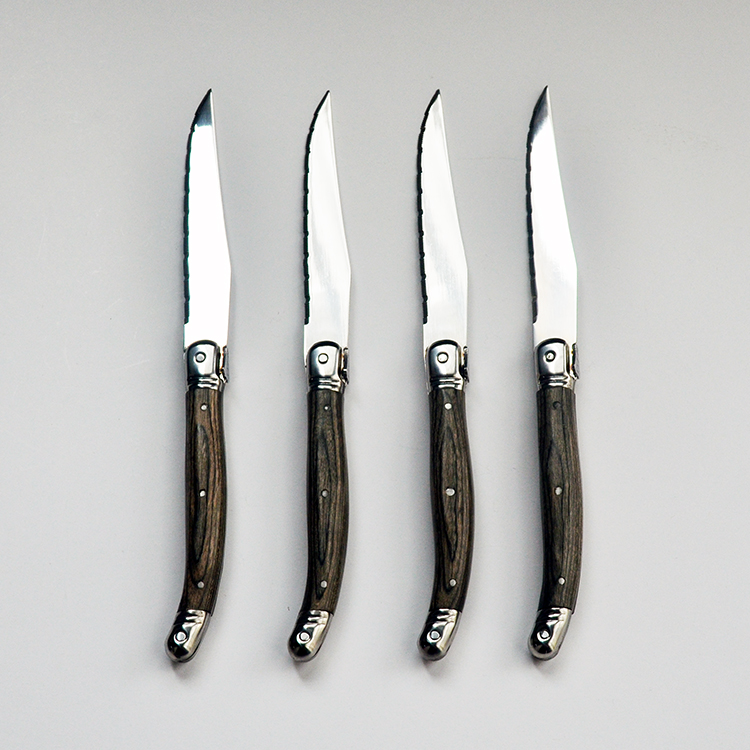
Keep a dedicated four-piece set for kitchen tasks, separate from your table set. Choose mixed edges for broader utility.
Pair with a small board for portability. This setup turns everyday knives into multi-taskers without compromising dinner quality.
Experiment gradually to find favorite uses, building confidence in their range.
Yes, kitchen tasks like chopping veggies or bread expose the edge to more abrasion than table cutting. Hone regularly and limit to light prep to extend sharpness for dining.
Serrated edges grip skins and crusts superbly on tomatoes, peppers, and bread, preventing slips. Straight edges suit softer fruits and meats for smoother results.
They handle most paring jobs like peeling or small dices well but lack the short blade for ultra-fine work like coring or intricate garnishes. Keep both for completeness.
Absolutely, their sharpness makes trimming and portioning raw proteins precise and safe. Clean thoroughly afterward to avoid cross-contamination.
Use a drawer insert or magnetic strip to protect edges. Keep kitchen-duty knives in a separate block from your pristine table set.
Supervised, yes—their size suits small hands for fruits or cheese. Start with straight-edge for safety, teaching proper grip early.


