

Views: 290 Author: Site Editor Publish Time: 2026-04-16 Origin: Site


Content Menu
● Understanding Stainless Steel Basics
● Dishwasher Mechanics Explained
● Best Practices for Dishwasher Loading
● Alternatives to Traditional Sets
● Environmental Considerations
● When to Avoid the Dishwasher
● Related Questions and Answers
>> 1. Do all stainless steel steak knives rust in dishwashers?
>> 2. How often should I sharpen dishwasher-used knives?
>> 3. Can I use rinse aid with steak knives?
>> 4. What if my set has wooden handles?
>> 5. Does hand washing dull knives less?
>> 6. Are stamped knives better for dishwashers?
Many stainless steel steak knives are labeled dishwasher safe, but the reality depends on quality, construction, and how you use your dishwasher. While convenience appeals to busy cooks, improper washing can lead to dulling, spotting, or even rust over time.
Stainless steel resists corrosion thanks to its chromium content, which forms a protective layer on the surface. For steak knives, common grades like 18/10 offer good durability and shine, making them suitable for repeated use at the dinner table.
Higher-end sets often use this alloy for blades and handles, balancing strength with everyday practicality. Lower grades might pit or discolor faster in harsh dishwasher conditions.
Grades such as 18/8 or 18/10 provide better resistance to the heat and detergents found in dishwashers. These alloys maintain their polish longer, even after multiple cycles.
Cheaper 18/0 stainless steel lacks sufficient nickel, increasing vulnerability to water spots and staining. Always check product specs before loading.
Dishwashers expose knives to high heat, strong detergents, and rattling during cycles. These factors can erode edges and handles if the knives aren't built tough.
Detergents with phosphates or chlorine attack metal surfaces, while prolonged moisture promotes spotting. Proper loading minimizes these risks.
Intense heat above 140°F can warp handles or soften blade hardness. Quick rinse cycles are gentler, preserving knife integrity better than heavy soil settings.
Air drying post-cycle prevents water marks, as trapped moisture corrodes even stainless steel.
Most mass-market stainless steel steak knife sets declare themselves dishwasher safe on packaging. Brands like Zwilling or Victorinox specify this for their stamped blades.
Premium forged sets recommend hand washing to protect edges and finishes. Follow these instructions to avoid warranty issues.
Look for explicit "top-rack dishwasher safe" notes. Sets with plastic or wooden handles often restrict machine washing entirely.
Blades dull from banging against dishes or cutlery baskets. Handles may loosen if rivets weaken under vibration.
Rust appears on low-quality steel left wet too long. Spots form from mineral buildup in hard water areas.
Serrated edges chip when clashing with plates. Straight edges blunt faster due to abrasive detergents.
Visual pitting mars appearance, even if function remains.
This close-up shows dishwasher damage on a blade edge after repeated cycles.
Place knives handle-down in the cutlery basket, blades protected by slots. Avoid overcrowding to ensure water flow.
Mix utensils so sharp edges don't nest together. Use the top rack if blades protrude.
Opt for gel detergents without bleach. Add rinse aid to reduce spotting.
Skip pods if they leave residue on blades.
Hand washing with mild soap preserves sharpness indefinitely. It avoids chemical exposure entirely.
Towel dry immediately for a streak-free finish. This method suits all quality levels.
Rinse under warm water right after use. Scrub gently with a soft sponge.
Dry thoroughly, especially at blade-handle joints.
Store in a wooden block or magnetic strip to prevent blade contact. Drawers with sheaths work well too.
Keep dry environments to halt moisture buildup.
Polish monthly with microfiber and vinegar solution. Oil pivots lightly if applicable.
Run a single cycle on a spare knife first. Inspect for dullness or discoloration afterward.
If issues arise, switch to hand washing permanently.
Not all stainless steel is equal; "stainless" doesn't mean invincible. Even top grades need care.
Dishwashers don't "sterilize" better than hot soapy water.
Myth: All steak knives handle dishwashers equally. Reality: Forged premium ones suffer most.
One-piece stamped knives fare better in machines than assembled ones. Look for seamless designs.
For family dinners, dishwasher convenience saves time post-grill. Weeknight cleanups benefit from quick cycles.
Holiday feasts demand hand washing for heirloom sets.
A family loads steak knives into a cutlery basket carefully.
Chefs prefer hand washing universally for edge retention. Home cooks split between methods based on set value.
Dishwashers use less water overall, but hand washing conserves energy for small loads.
Choose fully stainless construction for machine tolerance. Serrated blades hold up longer regardless.
Watch this clip demonstrating safe dishwasher loading for knives.
Weekly sharpening maintains performance. Hone serrations with a rod.
Store vertically to air out fully.
Polished steak knives gleam after proper care.
Wood-handled or carbon-accented knives never go in. Vintage sets demand gentle treatment.
Replacing dulled sets costs more than minutes of hand washing. Longevity pays off.
Machine-safe knives match durable plates. Delicate china pairs with hand-washed tools.
See knives before and after 50 dishwasher cycles.
New coatings repel water better. Nano-tech finishes resist detergents.
Modern dishwasher-safe steak knife set in action.
Summer barbecues mean more grease; pre-rinse thoroughly. Winter storage prevents humidity rust.
Blunt machine-washed knives reduce injury risk ironically. Teach proper handling always.
European homes hand wash more; Americans lean dishwasher.
DIY blade guards from plastic protect during cycles.
Custom storage keeps knives pristine.
Self-cleaning alloys emerge. Eco-detergents improve compatibility.
Expert tests stainless steel durability in dishwasher simulation.
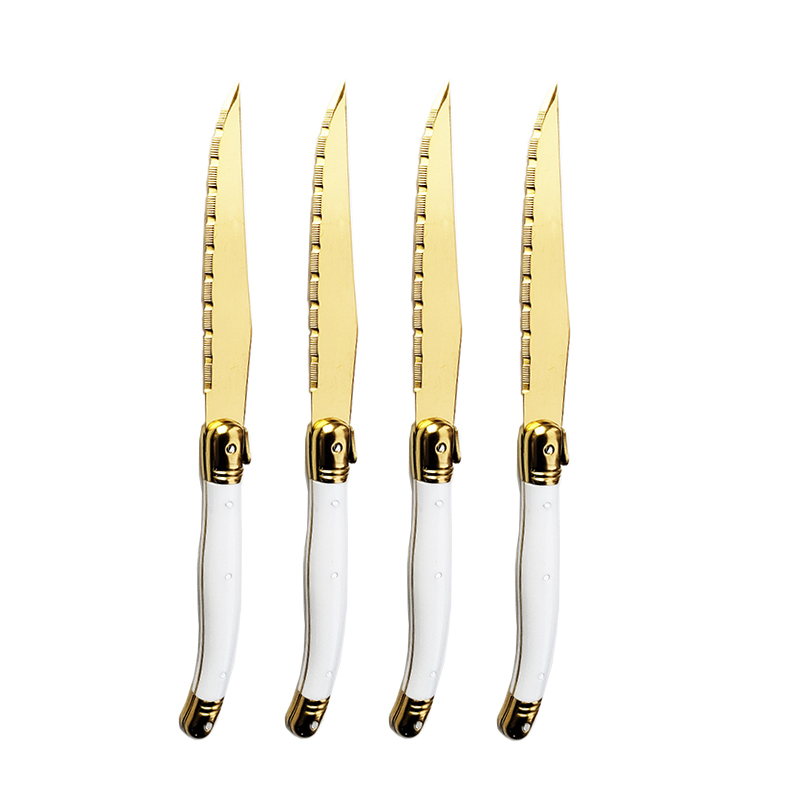
No, high-grade 18/10 resists best, but low-quality ones spot easily if not dried promptly.
Every 1-2 months for heavy use; serrated less frequently.
Yes, it prevents water spots effectively.
Hand wash only; wood warps in heat.
Yes, no banging or harsh chemicals preserve edges longer.
Yes, simpler construction withstands cycles better than forged.


