

Views: 290 Author: Site Editor Publish Time: 2026-07-21 Origin: Site


Content Menu
>> The Ergonomics of Mass Production
>> Accessibility and Replacement
>> Bridging the Gap: The Hybrid Kit
In the fast-paced, high-stakes environment of a professional kitchen, the tools a chef chooses are far from trivial. While the culinary world often romanticizes the handcrafted, bespoke blade, a significant portion of the most respected chefs in the industry remain fiercely loyal to mass-produced, industrial-grade knives. This preference is rarely born of ignorance; rather, it is a calculated decision based on the brutal reality of professional cooking. Why do these masters of their craft opt for the factory-made over the artisan-forged? The answer lies in the intersection of reliability, ergonomics, and the unique demands of the culinary workspace.
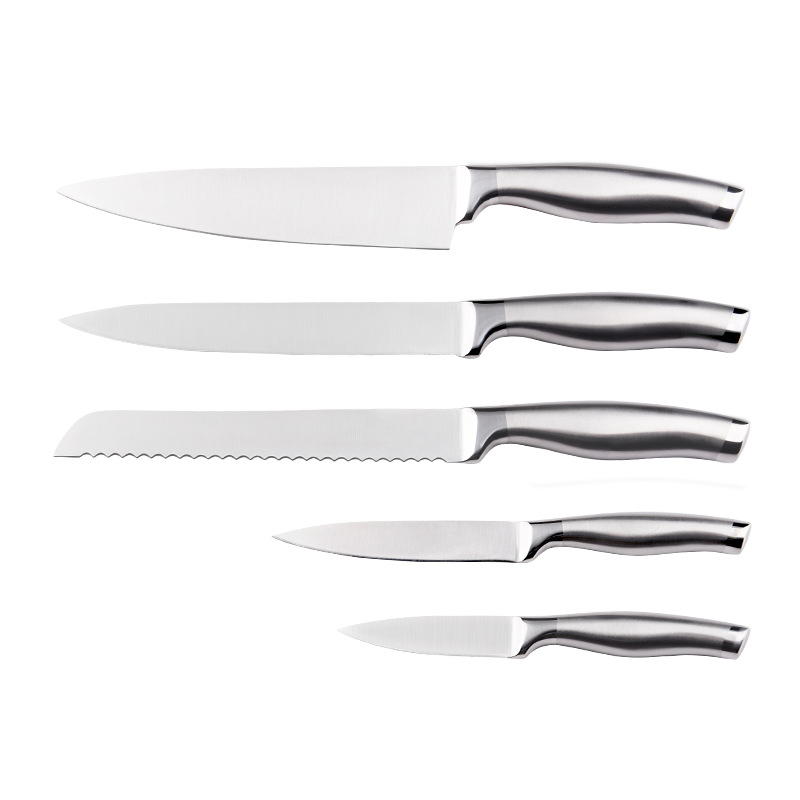
The primary driver for the preference toward mass-produced knives is consistency. In a world-class restaurant, the kitchen functions like a precision engine. Every movement, every station, and every tool must be predictable. When a chef utilizes a knife from a top-tier industrial manufacturer, they are buying into a standardized engineering profile.
If a line cook drops their blade or it eventually wears down, they can replace it with an identical model. This replacement knife will have the exact same weight, balance, handle shape, and steel composition as the previous one. This removes the "learning curve" that comes with introducing a new tool. For a professional, the knife must be an extension of the hand; constant changes in tool behavior are an unnecessary variable that interferes with the flow of service.
A professional kitchen is an unforgiving place. Heat, acidity, moisture, and high-intensity movement characterize the environment. Handmade knives, which are often ground to incredibly thin geometries to achieve superior cutting performance, can be fragile. A momentary lapse in judgment—such as hitting a piece of bone or accidentally prying with the tip—can lead to a catastrophic chip or break in an expensive, bespoke blade.
In contrast, mass-produced knives are designed for the "chaos" of a professional shift. They are engineered to be tough, with edge geometries that favor durability over absolute, hair-splitting sharpness. This robustness ensures that the tool can withstand the rigors of heavy-duty prep, from breaking down hundreds of pounds of root vegetables to intense fish butchery, without requiring constant concern from the user.
- Steel Metallurgy: Modern industrial metallurgy produces stainless steels that offer a remarkable balance between edge retention and corrosion resistance.
- Heat Treatment Protocols: Industrial vacuum furnaces ensure that every blade in a batch receives a precise, uniform hardening process that is nearly impossible to replicate perfectly by hand.
- Maintenance Ease: Because these knives are manufactured with specific, consistent steel compositions, they respond predictably to standard sharpening tools like whetstones or honing steels.
One might assume that handmade knives are always more ergonomic because they can be customized. However, major knife manufacturers spend millions of dollars on ergonomic research. By collecting data from thousands of chefs worldwide, they have optimized handle shapes, grip textures, and balance points to suit the widest possible range of hand sizes and cutting styles.
For many chefs, the "factory handle" is actually the most comfortable option. It is a known quantity. The transition between the bolster and the blade is often expertly smoothed using CNC machining, reducing friction against the fingers during the thousands of repetitions required during prep work.
Professional chefs are not just artists; they are managers of their own gear. A chef who relies on a single $1,000 handmade knife faces a logistical nightmare if that knife is lost, stolen, or damaged during a busy dinner service. Mass-produced knives are accessible. They can be found in restaurant supply stores, online retailers, and specialty shops worldwide. This availability provides a safety net. A chef can operate with a "primary" and a "backup" knife without needing to invest a small fortune.
It is a mistake to view the preference for factory knives as a rejection of performance. Many chefs maintain a hybrid kit. They might use a highly reliable, factory-forged German or Japanese workhorse for the majority of their daily heavy labor, while keeping one or two specialized, artisan-crafted blades for high-precision tasks.
This hybrid approach allows the chef to have the best of both worlds: the unshakeable reliability of industrial engineering for the daily grind, and the exquisite, artisan performance for the moments when only the absolute best cutting geometry will suffice. Ultimately, the mass-produced knife is the professional's greatest asset because it is designed to disappear into the hand, leaving the chef to focus entirely on the art of cooking.

1. Do mass-produced knives lack the "soul" of a handmade blade?
While they may lack the unique visual story of a handmade knife, many chefs argue that the "soul" of a knife is found in its reliable performance over a decade of service.
2. Are factory-made knives easier to sharpen?
Generally, yes. Because mass-produced knives are made from consistent steel alloys, their reaction to sharpening stones is predictable, allowing for a standard, efficient sharpening routine.
3. Can a factory-made knife be as sharp as a handmade one?
Absolutely. With the right sharpening technique, most high-quality factory blades can achieve a razor edge that is virtually indistinguishable from an artisan blade in a blind cutting test.
4. Why do some chefs move away from mass-produced knives eventually?
As chefs gain more experience and refine their specific cutting style, they often move toward handmade knives to find a balance or weight distribution that aligns perfectly with their unique ergonomic needs.
5. Is it cheaper to use factory-made knives for a professional team?
Yes. Beyond the lower initial investment, factory knives provide team uniformity, making it easier to train new staff and maintain a consistent standard of equipment throughout the kitchen.


