
Views: 246 Author: HELLOKNIFE LTD Publish Time: 2026-07-27 Origin: Site


Content Menu
● Carving Knife Uses: Why the Right Knife Changes the Result
● What a Carving Knife Is Designed to Do
● Best Foods for a Carving Knife
● Carving Knife vs Other Kitchen Knives
● Why Buyers Care About Performance
● A Better Way to Use a Carving Knife
● What Users Expect in Reviews
● How HELLOKNIFE LTD Supports OEM Buyers
● Product Features That Improve User Experience
● Industry Insight: What Makes a Carving Knife Sell
● Buying Guide for Brand Owners
● FAQ
>> 1. What are the main carving knife uses?
>> 2. Is a carving knife different from a slicing knife?
>> 3. Can a carving knife be used every day?
>> 4. What makes a good carving knife for OEM brands?
>> 5. How should a carving knife be used properly?
>> 6. Why do customers buy carving knives?
At HELLOKNIFE LTD, we know that a carving knife is more than a simple kitchen tool. For brands, wholesalers, and OEM buyers, the real value of a carving knife is measured by how cleanly it slices, how well it preserves food texture, and how confidently it supports the dining experience. That is why understanding carving knife uses is essential before choosing a design, a blade style, or a market position.
A carving knife is built for controlled slicing, not heavy chopping. It helps users cut roasts, turkey, ham, brisket, and other large cooked proteins into neat portions with less tearing and less waste. In both home kitchens and food-service settings, the right carving knife improves presentation, speed, and consistency.

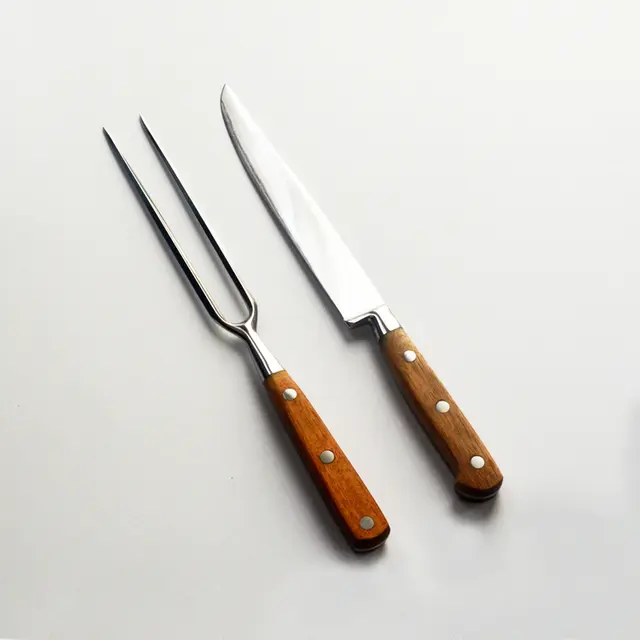
A carving knife is typically long, narrow, and sharp. The slim blade reduces friction and helps the knife glide through cooked meat with smooth strokes. Compared with a chef's knife, a carving knife is usually better for long, even slices across large cuts.
The main purpose is precision. Users want uniform slices, a clean cut surface, and minimal pressure on the food. That matters in restaurants, catering operations, holiday meal prep, and premium kitchen product lines.
- Slicing roast beef into thin, even portions.
- Cutting turkey, chicken, or duck after roasting.
- Portioning ham, lamb, or pork loin.
- Trimming cooked brisket with control.
- Creating clean plated presentation for hospitality service.
- Reducing shredding in tender cooked meat.
The most common carving knife uses are centered on cooked proteins, especially larger cuts that benefit from a single long slicing motion. This is where the knife shows its value most clearly.
Here are the foods it handles best:
1. Roasts and large meats. The long blade helps create smooth slices across the grain.
2. Poultry. Turkey and chicken become easier to portion without breaking the skin too much.
3. Holiday centerpiece dishes. Ham, prime rib, and lamb leg look more refined when carved neatly.
4. Smoked meats. Brisket and similar cuts need control to protect texture.
5. Soft cooked vegetables in some cases. A carving knife can slice large baked vegetables when a clean cut is important.
For many users, the biggest advantage is not just cutting speed. It is the ability to make food look better on the plate.
Many buyers confuse carving knives with chef's knives or slicing knives. In product development, that confusion can hurt conversion because the buyer does not immediately understand the use case.
| Knife Type | Best Use | Key Advantage | Limitation |
|---|---|---|---|
| Carving knife | Large cooked meats and roasts | Long, smooth, precise slices | Not ideal for heavy chopping |
| Chef's knife | General prep work | Versatile daily kitchen use | Less precise for long slicing |
| Slicing knife | Very thin, delicate slices | Excellent for presentation | Less useful for broader carving tasks |
| Bread knife | Bread and crusty foods | Serrated cutting action | Not suitable for meat carving |
This distinction is useful for both SEO and product positioning. Buyers searching for carving knife uses usually want practical guidance, but they also need to understand why a carving knife is the right tool for a specific task.
For OEM buyers and private-label brands, carving knife performance is a commercial issue, not just a culinary one. End users often judge a knife by three things: sharpness, balance, and comfort. If a knife feels awkward or fails to deliver a clean cut, the product is quickly forgotten.
That is why the best OEM carving knives should be designed around the user journey. The blade must feel stable. The handle must support grip control. The overall design must match the target market, whether that market is retail, hospitality, gifting, or premium kitchenware.
At HELLOKNIFE LTD, this is where factory capability matters. A strong OEM partner does not just produce a knife. It helps shape the product's market story, visual identity, and practical value.
One reason some users do not get the full benefit of a carving knife is technique. A carving knife works best when the slicing motion is smooth and deliberate. It is not meant to force its way through meat.
Use these steps for better results:
1. Let the meat rest first. This helps juices settle and supports cleaner slices.
2. Hold the knife at a steady angle. A controlled angle improves slice consistency.
3. Use long strokes. Avoid saw-like pressure unless the food texture requires it.
4. Slice across the grain when possible. This usually improves tenderness.
5. Keep the blade sharp. A sharp edge is safer and more efficient than a dull one.
This practical approach is important for customer education. When a buyer understands the correct use, the product performs better and receives stronger reviews.
User feedback on carving knives usually follows a familiar pattern. People praise a knife when it feels effortless and controlled. They complain when the blade drags, the handle feels unstable, or the slice quality looks uneven.
Common positive comments include:
- "It slices smoothly without crushing the meat."
- "The knife feels balanced and professional."
- "Perfect for holiday dinners and family gatherings."
- "Easy to control for long cuts."
Common negative comments include:
- "The blade feels too short for larger roasts."
- "It does not stay sharp long enough."
- "The handle is slippery during use."
- "The knife is not comfortable for repeated slicing."
These comments show a clear trend. Customers want a knife that combines efficiency, comfort, and presentation quality. That insight is valuable for product development, packaging copy, and Amazon or B2B catalog descriptions.
HELLOKNIFE LTD provides OEM support for overseas brands, wholesalers, and manufacturers seeking customized cheese knives, cheese boards, steak knives, and related kitchen knife products. For carving knife projects, the same OEM mindset applies: clear product positioning, stable quality, and design choices that match the target market.
Our OEM approach is built around:
- Product development support.
- Material and finish selection.
- Logo placement and branding.
- Custom packaging solutions.
- Sample validation before mass production.
- Consistent quality control for repeat orders.
For buyers, this matters because a carving knife is often sold as part of a broader tableware or kitchen knife collection. A strong OEM factory should help align the carving knife with the brand's visual system, price point, and market promise.
A high-performing carving knife should feel intuitive from the first cut. That means the product must balance design and practicality.
Important features include:
- Blade length that matches the food category.
- A sharp, reliable edge for clean slicing.
- Handle ergonomics that reduce hand fatigue.
- A balanced feel that supports control.
- A finish that fits the brand image.
For premium brands, even small details matter. Texture, handle shape, blade sheen, and gift-ready packaging can all influence perceived value.
The market usually rewards products that solve a visible problem. A carving knife is easier to sell when the buyer instantly understands what it is for and why it is better than a general-purpose knife.
Three things increase product appeal:
1. Clear use-case communication. The customer should know it is built for roasts, poultry, and large cuts.
2. Visual trust. A clean design, polished finish, and well-balanced handle signal quality.
3. Practical proof. Demonstrations, slicing videos, or product comparison visuals help buyers understand performance fast.
This is where content strategy and product strategy meet. If the product page clearly shows carving knife uses, conversion rates usually improve because the customer feels informed instead of confused.
If you are sourcing carving knives for your brand, evaluate the product from both the user and the market side.
Use this checklist:
- Does the blade length fit the target food categories?
- Is the handle comfortable for repeated use?
- Does the knife match the brand's premium or value positioning?
- Is the packaging suitable for retail or gifting?
- Can the factory support repeated quality consistency?
- Are samples available before bulk production?
This kind of checklist reduces costly mistakes. It also helps OEM buyers ask better questions and compare suppliers more effectively.
The best carving knife uses are simple: clean slicing, better presentation, and more control over large cooked foods. For end users, that means a better cooking and serving experience. For brands and wholesalers, it means a product with a clear market story and a strong commercial fit.
If you are building a private-label or OEM knife line, the carving knife is one of the easiest products to position because the value is easy to demonstrate. With the right design, packaging, and factory support, it can become a reliable part of a premium kitchen collection.
Ready to develop a custom carving knife line? HELLOKNIFE LTD can help you build a market-ready product with OEM customization, consistent quality, and packaging that fits your brand.
The main carving knife uses are slicing roast meats, poultry, ham, brisket, and other large cooked foods with clean, even cuts.
Yes. A carving knife is usually used for broader, controlled cuts on cooked meat, while a slicing knife is often narrower and better for very thin slices.
Yes, but it is most valuable for special meals, large cuts of meat, and situations where presentation matters.
A good OEM carving knife should have a sharp blade, comfortable handle, balanced weight, appealing finish, and packaging that fits the brand.
It should be used with long, smooth strokes, ideally after the meat has rested, and preferably across the grain when possible.
Customers buy carving knives because they want cleaner slices, better food presentation, and easier handling of large cooked meats.
1. HELLOKNIFE LTD official site: [http://www.helloknifechina.com/]
2. HELLOKNIFE LTD Spanish OEM page: [https://www.helloknife.com/es/kitchen-and-knife-expert-oem-solutions-for-cheese-knives-cheese-boards-and-steak-knives-from-hello]
3. HELLOKNIFE LTD Korean OEM page: [https://www.helloknife.com/ko/kitchen-and-knife-expert-oem-solutions-for-cheese-knives-cheese-boards-and-steak-knives-from-hello]
4. Insight Knife OEM manufacturing guide: [https://www.insight-kitchenknife.com/zh-CN/professional-oem-manufacturing-guide-for-global-kitchenware-partners.html]
5. Market discussion on knife buying criteria and user evaluation framework: [https://news.qq.com/rain/a/20260415A06SQG00]
6. Cheese knife use-case article with slicing context: [https://www.sohu.com/a/304769_102159]
Hot Tags: China, Global, OEM, private label, manufacturers, factory, suppliers, manufacturing company


