

Views: 290 Author: Site Editor Publish Time: 2026-07-06 Origin: Site


Content Menu
>> Introduction: The Dynamics of the Asian Culinary Tool Market
>> The Enduring Legacy of the Chinese Cleaver
>>> Why Professionals Choose the Cleaver
>> The Rise and Integration of the Chef's Knife
>>> Adaptability in Modern Asian Cooking
>> Wholesale Buying Strategies for Asian Markets
>> Understanding Consumer Segmentation
>> Quality, Authenticity, and Material Considerations
>> Conclusion: A Complementary Future
The kitchen knife is the fundamental tool of every culinary professional and home cook, but the preference for specific blade types varies significantly depending on cultural culinary traditions. In the vast and diverse Asian markets, the competition between the iconic, versatile cleaver and the globally recognized chef's knife is a study in culinary evolution, tradition, and practicality. For wholesale buyers, understanding these nuances is critical to driving successful sales strategies and meeting the specific needs of local culinary communities.
In many Asian kitchens, particularly those deeply rooted in Chinese culinary heritage, the cleaver is far more than just a meat-processing tool. It is the primary, all-purpose knife used for almost every task, from delicate vegetable slicing to heavy-duty meat chopping.
The design of the Chinese cleaver is fundamentally different from its Western counterpart. It is thinner, lighter, and more versatile, allowing for incredible precision in slicing, dicing, and mincing. Professional chefs favor its large surface area, which acts as a convenient spatula to transfer ingredients from the cutting board to the wok or pot. Furthermore, the weight of the blade allows for effortless chopping of firm vegetables and certain types of proteins.
While the cleaver holds a traditional stronghold, the global influence of the chef's knife cannot be overlooked in modern Asian markets. Often referred to as a "cook's knife," this tool has become a staple in many contemporary urban kitchens throughout Asia.
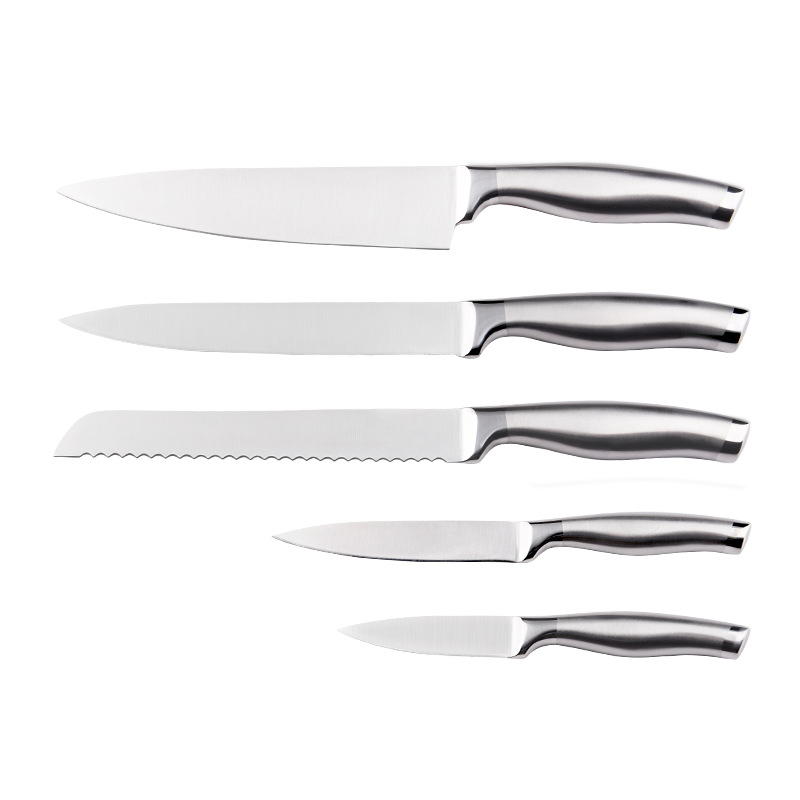
The chef's knife offers a different ergonomic experience. Its tapered point and curved blade profile are designed for rocking motions, which are highly effective for fine herb chopping and complex prep work. As Asian culinary styles continue to fuse with international techniques, professional chefs and home cooks alike are increasingly adding high-quality chef's knives to their collections to complement their traditional tools.
Wholesale buyers must navigate these contrasting yet complementary preferences. Success in the Asian market is rarely about choosing one over the other; it is about providing the right tool for the specific consumer segment.
- Traditional Commercial Kitchens: These buyers will almost exclusively prioritize high-quality, high-carbon steel Chinese cleavers. Durability, balance, and ease of sharpening are the top requirements.
- Urban Home Cooks: This growing segment is increasingly interested in variety. They often own a traditional cleaver for heavy-duty tasks but are actively looking for high-performance chef's or Santoku knives for everyday precision cutting.
- Modern Fusion Restaurants: Professional kitchens focusing on fusion or Western-influenced dishes are key targets for chef's knives, particularly those with Japanese-inspired steel alloys and ergonomic handles.
Regardless of the knife type, wholesale buyers should prioritize suppliers who understand the importance of metallurgy. In Asian markets, there is a strong appreciation for blades that hold a sharp edge for extended periods. Materials such as high-carbon stainless steel, Damascus steel patterns, and durable, ergonomic handle materials like G10 or hardwoods are highly valued and contribute significantly to brand loyalty and repeat wholesale orders.
The debate between the cleaver and the chef's knife is essentially a conversation about culinary evolution. While the Chinese cleaver remains the undisputed king of traditional efficiency and versatility, the chef's knife has successfully carved out its niche by offering distinct advantages in ergonomics and specialized prep work. For wholesale buyers aiming to capture the Asian market, the most successful strategy is to offer a comprehensive, high-quality inventory that respects these distinct cultural preferences while embracing the evolving needs of the modern culinary enthusiast. By focusing on quality, material performance, and understanding the specific end-user, buyers can curate a product selection that serves both the deeply ingrained traditions and the exciting, modern future of Asian cooking.
1. What is the primary difference in usage between a Chinese cleaver and a Western-style cleaver?
The Chinese cleaver is designed to be thinner and lighter, acting as an all-purpose tool for slicing and chopping, whereas a Western cleaver is typically thicker and heavier, specifically engineered for heavy-duty bone chopping.
2. Why are Asian wholesale buyers increasingly looking for high-performance steel in chef's knives?
As modern Asian kitchens adopt more international and fusion techniques, there is a higher demand for precision tools that maintain sharpness, similar to the quality standards found in high-end Japanese cutlery.
3. How does the surface area of a Chinese cleaver benefit professional chefs?
The large, flat surface area allows chefs to easily scoop and transfer prepared ingredients, such as minced garlic or chopped vegetables, directly from the cutting board into a hot wok.
4. Are chef's knives replacing traditional cleavers in Asian home kitchens?
No, rather than a total replacement, they are being adopted as complementary tools. Many home cooks maintain a traditional cleaver for heavy-duty tasks and add a chef's knife for specific fine-cutting and prep techniques.
5. What should wholesale buyers prioritize when selecting suppliers for Asian markets?
Buyers should prioritize suppliers who demonstrate expertise in metallurgy, offer consistent product quality, and understand the specific design nuances required by the local culinary culture, such as balance, weight, and edge retention.


