

Views: 280 Author: Site Editor Publish Time: 2026-04-23 Origin: Site


Content Menu
● H2: How chefs really think about steak knives
● H2: Why many chefs love straight‑edge steak knives
>> H3: Clean, smooth cuts and better texture
>> H3: Easier sharpening and consistent maintenance
>> H3: Presentation and plating control
● H2: Why some chefs tolerate or even like serrated steak knives
>> H3: How serrated knives feel at the table
>> H3: Convenience and lower maintenance
>> H3: Serrated knives for specific roles, not all steaks
● H2: Straight‑edge steak knives in professional kitchens
>> H3: Steakhouse and fine‑dining preferences
>> H3: Use of chef's knives and carving knives
● H2: Trade‑offs that chefs actually consider
>> H3: Taste, juiciness, and fiber damage
>> H3: User comfort and perceived "ease"
● H2: How to choose like a professional chef
>> H3: For home cooks who want a "chef‑style" setup
>> H3: When a serrated option still makes sense
● H2: Frequently asked questions (with answers)
When you sit down in a good steakhouse, you rarely notice the knife on the table—until it behaves badly. For professional chefs, the question "Do professional chefs prefer serrated or straight‑edge steak knives?" is not just about personal taste; it's about texture, presentation, and control. Many chefs will tell you, often without hesitation, that they lean strongly toward straight‑edge designs for their best cuts, sometimes with a subtle micro‑serrated option for casual or high‑volume settings.
What separates professional thinking from casual home use is this: chefs are trained to preserve the integrity of the meat, and they expect the knife at the table to reflect that standard.
A straight‑edge steak knife produces a smooth, uninterrupted slice through the steak, parting the muscle fibers instead of tearing them. Because the edge is continuous and finely ground, it glides along the grain and across it with minimal resistance. The result is a neat, even cross‑section that looks restaurant‑quality and feels more tender in the mouth.
Chefs care about this because a clean cut retains more juice and keeps the cell structure intact. When fibers are cleanly sliced rather than shredded, each bite feels juicier and more refined.
Straight‑edge blades are much simpler to sharpen and hone. A standard honing steel aligns the edge quickly, and most sharpening systems—stones, guided sharpeners, or even professional sharpening machines—work predictably on a straight profile. For a busy kitchen, this matters a lot: cooks can keep a fleet of steak knives in good condition without special tools.
Because chefs already sharpen chef's knives regularly, having straight‑edge steak knives fits neatly into that routine. The edge feels familiar and manageable, so it stays in a "ready‑to‑use" state.
A sharp straight‑edge knife lets a chef control the thickness and angle of each slice. Whether slicing a whole ribeye roast for sharing plates or carving a thick cut for an individual, the blade glides smoothly, producing uniform portions that look intentional and elegant. This level of control is harder to achieve with a heavily serrated blade that tends to saw and drag.
Many fine‑dining programs also match the knife to the overall tableware aesthetic. Straight‑edge steak knives often look sleeker and more refined than aggressively toothed serrated blades, which fits better with minimalist, modern table settings.
A serrated steak knife has teeth that dig into the crust and grip the surface, which can make cutting feel easier for guests who aren't used to using sharp knives. Executive chefs who set up high‑volume environments often choose micro‑serrated or lightly serrated blades specifically because they reduce the risk of customers struggling to cut through a seared crust.
In everyday restaurant use, serrated or micro‑serrated steak knives can feel more forgiving for casual diners, so they may stay in the flatware drawer even if the chef personally prefers straight‑edge blades.
From a practical standpoint, serrated steak knives have a reputation for staying sharp longer between sharpenings. Because the valleys between the teeth don't drag across the plate, only the tooth tips wear down, so the knife can feel "good enough" for months without proper sharpening. This is attractive in busy kitchens where maintenance time is limited.
However, many chefs also acknowledge that serrated blades are harder to restore properly once they do dull, and that the edge is less consistent than a straight‑edge profile.
Some chefs do use serrated steak knives, but usually in specific roles:
- For very crispy‑crusted sandwiches or grilled meats where the toothed edge grips the shell without squashing the interior.
- For high‑turnover casual steakhouses where guests may not be comfortable with a very sharp blade.
- As a cost‑effective, low‑maintenance option in large‑scale operations that prioritize durability over fine texture.
In these cases, the serrated knife is treated as a practical tool, not the ideal instrument for showcasing the best quality steak.
In many high‑end steakhouses and fine‑dining kitchens, the default steak knife is either straight‑edge or very lightly micro‑serrated. The reasoning is simple: straight‑edge knives slice cleanly, preserve the look and feel of the meat, and align with the kitchen's overall standard for precision. A clean, smooth cut on a medium‑rare ribeye is seen as a small but visible sign that the restaurant cares about details.
Some chefs will admit they personally would never choose a fully serrated steak knife for their own plate at home, even though they may keep them on the menu for less confident diners.
Behind the scenes, most professional chefs cut and portion steaks with chef's knives, carving knives, or slicing knives, all of which are straight‑edge. For breaking down large ribeyes or roasting racks, a long, thin straight‑edge blade is the natural choice. The same philosophy that guides these professional tools often extends to the table: a straight‑edge steak knife is simply the continuation of that mindset.
The diner's knife is, in effect, a mini chef's knife designed to preserve the work already done in the kitchen.
Chefs care deeply about juice retention and mouthfeel. Tests and experience show that serrated edges tend to tear more fibers and push out more juice, leading to slightly drier, chewier bites. Straight‑edge knives, when sharp, cut cleanly and limit fluid loss, so the steak tastes richer and more tender.
Because top‑quality steaks are expensive and carefully sourced, many chefs see using a serrated blade as a kind of wasted opportunity: you invest in great meat, then compromise it with a rough edge.
On the flip side, chefs also understand that not every diner is comfortable using a very sharp straight‑edge knife. Serrated or micro‑serrated blades can feel more forgiving and easier to use, especially on thick, well‑seared steaks. In family‑style or casual settings, this user comfort can outweigh the slight loss in texture.
This is why many chefs will acknowledge that both styles have a place, but they will clearly express a personal preference for straight‑edge in fine‑dining and premium steak experiences.
If you want to emulate professional preferences at home, a straight‑edge steak‑knife set is the strongest choice. Look for:
- A continuous, smooth edge that can be sharpened with standard tools
- A thin, well‑ground profile that glides through the steak
- Comfortable handles that feel balanced and secure
Pair this with a good chef's knife that you keep sharp, and you'll have a complete system that mirrors how chefs actually handle steak.
Serrated or micro‑serrated steak knives are still reasonable for:
- Casual family dinners where some guests may be uncomfortable with very sharp blades
- High‑crust, heavily grilled steaks where the toothed edge grips the sear
- Households that don't want to sharpen frequently, since serrated blades stay usable longer between sharpenings
Even in these cases, many chefs would still keep a straight‑edge option on hand for their best cuts and guests who care about texture and presentation.
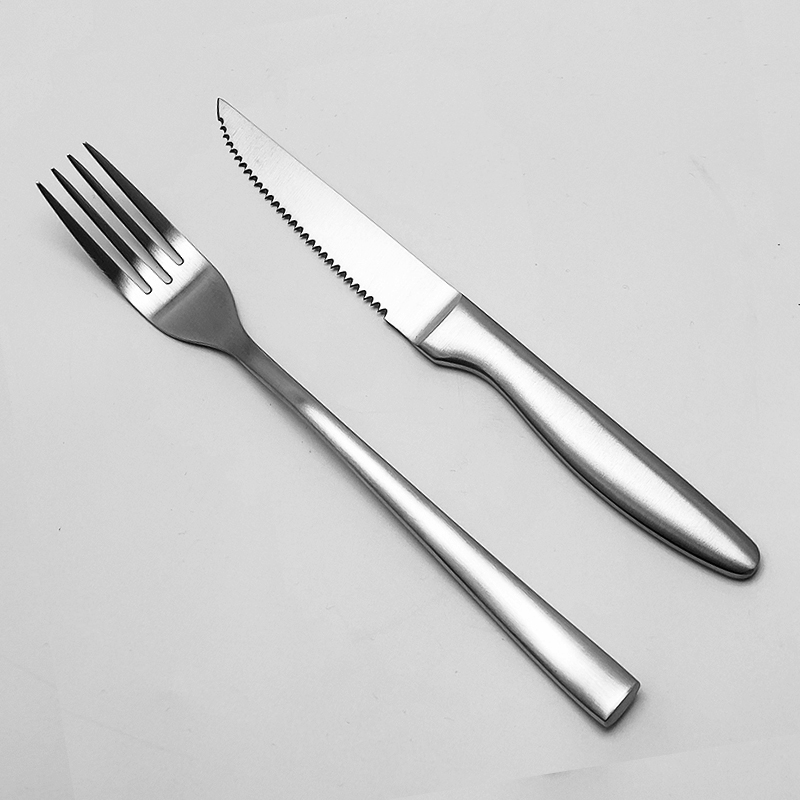
Q1: Do professional chefs really prefer straight‑edge steak knives?
Yes, many professional chefs and fine‑dining programs favor straight‑edge or micro‑serrated steak knives because they slice cleanly, preserve juices, and align with the precision they use in the kitchen.
Q2: Are serrated steak knives ever used in professional kitchens?
Yes, especially in high‑volume or casual steakhouses, where serrated or micro‑serrated knives make it easier for guests to cut through thick, seared steaks without much skill.
Q3: Why do chefs dislike heavily serrated steak knives for steak?
Chefs often dislike heavily serrated blades because they tear meat fibers, push out juice, and create ragged cuts that look less refined, which can undermine the quality of an expensive cut of meat.
Q4: Can a straight‑edge steak knife work for all kinds of steak?
Yes, a sharp straight‑edge steak knife can handle everything from thin hanger steak to thick ribeye, as long as it's kept honed and sharpened and used with smooth slicing motions.
Q5: Should I only buy straight‑edge steak knives if I cook like a chef at home?
If you care about texture, presentation, and knife maintenance, straight‑edge steak knives are the best choice. If you want low‑maintenance options for everyday use, a mix of straight‑edge and micro‑serrated knives can be practical.


