

Views: 260 Author: Site Editor Publish Time: 2025-10-09 Origin: Site


Content Menu
● Understanding Different Types of Kitchen Knives
>> Chef's Knife: The Essential Workhorse
>> Serrated Knife: Perfect for Bread and Delicate Items
>> Specialty Knives: Santoku, Boning, Slicing
● Key Factors in Choosing a Knife Set
>> Proper Cleaning and Storage
● Recommended Knife Sets for Different Users
A quality kitchen knife set is the foundation of any well-equipped culinary space. Whether a novice cook or a seasoned chef, choosing the right knives dramatically impacts your cooking accuracy, efficiency, and safety. With so many options available, selecting the best knife set may seem daunting. This guide breaks down everything you need to know—from knife types and materials to maintenance and budget—helping you make an informed choice that suits your cooking style.
The chef's knife is the most versatile and frequently used knife in any kitchen. Typically 8 inches long, it excels at chopping, slicing, dicing, and mincing a variety of foods with ease. A well-made chef's knife features a sturdy, balanced blade that can handle heavy-duty cutting tasks without fatigue.
A paring knife is smaller, usually 3.5 to 4 inches, designed for peeling, trimming, deveining, and intricate cuts such as coring fruits. Its compact size provides excellent control for detailed kitchen work.
Serrated knives cut through items like bread, tomatoes, and other soft-skinned foods cleanly without crushing. Their distinctive jagged edges make them ideal for cutting through tough or delicate textures.
- Santoku Knife: Popular in Japanese cuisine, shorter and lighter than a chef's knife, great for thin slicing and push cutting.
- Boning Knife: Narrow and stiff blade that excels at separating meat from bones.
- Slicing Knife: Long, thin blade for slicing roasts, ham, and delicate baked goods like cakes.
The blade material is crucial for performance and longevity.
- High-Carbon Stainless Steel: Combines rust resistance with excellent edge retention, a great all-around choice.
- VG-10 and Damascus Steel: Premium Japanese steels known for superior sharpness and durability.
- Ceramic: Extremely sharp out of the box, but brittle and challenging to sharpen.
Look for full-tang knives where the blade extends the full length of the handle, providing better balance and control. Handle materials vary from wood and polymer to ergonomic synthetic grips; comfort is critical for prolonged use.
Knives come in various weights and blade designs. Heavier blades deliver power for tough jobs; lighter knives offer agility for precision cuts. The handle design should fit your grip naturally to reduce fatigue and increase slicing accuracy.
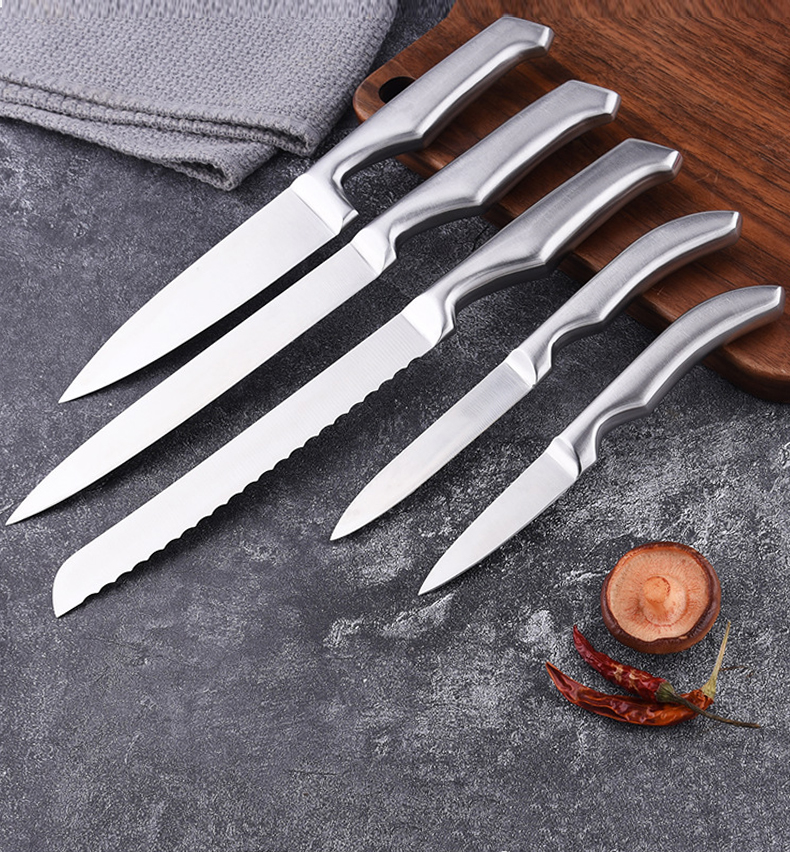
A typical essential set includes:
- Chef's Knife
- Paring Knife
- Bread Knife (serrated)
- Utility Knife
- Optional: Santoku, Boning, Slicing knives, Kitchen Shears
Choosing knives you will regularly use avoids clutter and unnecessary spending.
Knife sets range widely:
- Affordable Sets (~$50-$100): Basic stainless steel knives, suitable for beginners.
- Mid-Range Sets (~$150-$300): Higher quality steel, better grips, lifetime warranties (e.g., Zwilling Pro, Wüsthof Classic).
- High-End Sets ($300+): Premium craftsmanship, Japanese Damascus blades, hand-forged quality (e.g., Yakushi, Global).
Regular sharpening keeps knives safe and effective. Use sharpening stones or tools like the Spyderco Sharpmaker. Honing helps realign blades between sharpenings.
Hand wash knives with mild soap; avoid dishwashers that dull blades and damage handles. Store knives in blocks, magnetic strips, or sheaths to prevent damage and accidents.
- Beginners: Victorinox Fibrox line - affordable and durable.
- Intermediate Home Cooks: Zwilling J.A. Henckels Pro 7-Piece Set - balance of quality and price.
- Professional: Wüsthof Epicure 7-Piece or Yakushi 8-Piece Japanese Set - superior precision and durability.
Q1: How many knives do I really need in a set?
A typical starter set includes 3-5 knives: chef's knife, paring knife, bread knife, and possibly utility or santoku knife, to cover most kitchen tasks.
Q2: What's the difference between Japanese and Western knives?
Western knives generally have thicker blades suited for rocking motions, while Japanese knives have thinner blades favoring precise slicing.
Q3: How often should I sharpen my knives?
Sharpen every few months depending on usage. Hone more frequently to keep edges aligned.
Q4: Can I put my knives in the dishwasher?
No, high heat and detergents can damage blades and handles quickly.
Q5: What is the best way to store knives?
Use a knife block, magnetic strip, or protective sheath. Avoid loose drawer storage to prevent dulling or accidents.
[1](https://www.knivesandtools.com/en/ct/buying-guide-knife-sets.htm)
[2](https://www.techgearlab.com/topics/kitchen/best-kitchen-knife-set)
[3](https://yakushiknives.com/blogs/yakushi-blog-all-thing-knives/the-best-kitchen-knife-sets-for-every-home-chefs-culinary-journey)
[4](https://cookprimalgourmet.com/blog/knife-block-buying-guide/)
[5](https://www.tasteofhome.com/collection/best-kitchen-knife-sets/)
[6](https://dalstrong.com/blogs/news/what-to-look-for-in-a-good-knife-set)
[7](https://www.cnn.com/cnn-underscored/reviews/best-kitchen-knife-sets)
[8](https://www.kitchenkapers.com/pages/how-to-choose-kitchen-knives)
[9](https://www.allrecipes.com/longform/best-knife-sets/)
[10](https://www.t-fal.com/blog/post/knife-set-buying-guide)
[11](https://www.reddit.com/r/Cooking/comments/186xikd/what_kitchen_knife_sets_would_you_recommend_why/)
[12](https://www.foodandwine.com/lifestyle/kitchen/best-knife-block-set)
[13](https://sharpedgeshop.com/blogs/knives-101/how-to-choose-a-kitchen-knife)
[14](https://www.youtube.com/watch?v=AwIh7-eRtdA)
[15](https://yakushiknives.com/blogs/yakushi-blog-all-thing-knives/the-ultimate-guide-to-building-your-perfect-kitchen-unveiling-the-best-knife-set-for-your-culinary-adventures)
The article titled "How to Choose the Best Knife Set?" will be a comprehensive 2000+ word English guide with well-structured H2 and H3 headings. It will include many relevant images and videos embedded throughout to visually illustrate key points. At the end, it will have an FAQ section with at least 5 questions and answers related to choosing knife sets. A word count summary and a concise approximately 300-character article summary will also be provided. Here is the plan: - Introduction: Importance of a good knife set in the kitchen - H2: Understanding Different Types of Kitchen Knives - H3: Chef's Knife: The Essential Workhorse - H3: Paring Knife: Precision in Small Tasks - H3: Serrated Knife: Perfect for Bread and Delicate Items - H3: Specialty Knives (Santoku, Boning, Slicing) - Include images for each knife type - H2: Key Factors in Choosing a Knife Set - H3: Blade Material: Stainless Steel, High-Carbon Steel, Damascus, Ceramic - H3: Construction and Balance: Full Tang and Handle Materials - H3: Weight and Design for Comfort and Precision - H3: Set Composition: What Knives to Include for Your Needs - Use videos showing knife comparison and balance - H2: Budgeting and Value - Discuss mid-range to high-end knife sets with examples - Image and video showcasing popular brands and sets - H2: Maintaining Your Knife Set - H3: Sharpening and Honing - H3: Proper Cleaning and Storage to Prolong Life - Visual guides for sharpening and storage options - H2: Recommended Knife Sets for Different Users - Beginner to Professional chef sets - Showcase specific sets like Zwilling, Wüsthof, Yakushi - FAQ Section with 5+ Q&As about knife set selection, maintenance, and care - Word Count and Summary This structure leverages detailed expert content, practical advice, and many visuals to provide a thorough user-friendly buying guide. I will now prepare the article content based on this outline and information gathered. * How to Choose the Best Knife Set?  - Utility Knife - Optional: Santoku, Boning, Slicing knives, Kitchen Shears Choosing knives you will regularly use avoids clutter and unnecessary spending. ## Budgeting and Value Knife sets range widely: - Affordable Sets (~$50-$100): Basic stainless steel knives, suitable for beginners. - Mid-Range Sets (~$150-$300): Higher quality steel, better grips, lifetime warranties (e.g., Zwilling Pro, Wüsthof Classic). - High-End Sets ($300+): Premium craftsmanship, Japanese Damascus blades, hand-forged quality (e.g., Yakushi, Global).  [2](https://www.techgearlab.com/topics/kitchen/best-kitchen-knife-set) [3](https://yakushiknives.com/blogs/yakushi-blog-all-thing-knives/the-best-kitchen-knife-sets-for-every-home-chefs-culinary-journey) [4](https://cookprimalgourmet.com/blog/knife-block-buying-guide/) [5](https://www.tasteofhome.com/collection/best-kitchen-knife-sets/) [6](https://dalstrong.com/blogs/news/what-to-look-for-in-a-good-knife-set) [7](https://www.cnn.com/cnn-underscored/reviews/best-kitchen-knife-sets) [8](https://www.kitchenkapers.com/pages/how-to-choose-kitchen-knives) [9](https://www.allrecipes.com/longform/best-knife-sets/) [10](https://www.t-fal.com/blog/post/knife-set-buying-guide) [11](https://www.reddit.com/r/Cooking/comments/186xikd/what_kitchen_knife_sets_would_you_recommend_why/) [12](https://www.foodandwine.com/lifestyle/kitchen/best-knife-block-set) [13](https://sharpedgeshop.com/blogs/knives-101/how-to-choose-a-kitchen-knife) [14](https://www.youtube.com/watch?v=AwIh7-eRtdA) [15](https://yakushiknives.com/blogs/yakushi-blog-all-thing-knives/the-ultimate-guide-to-building-your-perfect-kitchen-unveiling-the-best-knife-set-for-your-culinary-adventures)


