

Views: 270 Author: Site Editor Publish Time: 2025-08-28 Origin: Site


Content Menu
● Understanding the Blade Quality
>> Blade Material and Sharpness
>> Blade Edge Type: Serrated vs Straight
>> Blade Construction and Tang
>> Construction Quality and Finish
● Craftsmanship and Overall Design
>> Visual Appeal and Uniqueness
>> Brand Reputation and Warranty
● Maintenance Tips for Wood Handle Steak Knives
● Popular Wood Types and Their Characteristics
>> Rosewood
>> Ebony
>> Cocobolo
>> Olive Wood
>> Pakkawood
● Real-World Examples of High-Quality Wood Handle Steak Knives
● Frequently Asked Questions (FAQs)
● Blade Quality and Construction
>> Blade Material and Sharpness
>> Edge Type: Serrated, Straight, and Micro-serrated
>> Full Tang Blade for Strength and Balance
● The Wood Handle: Material and Craftsmanship
>> Choosing Premium Wood Types
>> Comfort, Grip, and Ergonomics
>> Handle Construction and Finish
● Craftsmanship, Aesthetics, and Balance
>> Visual Appeal and Uniqueness
>> Brand Credibility and Warranty
● Maintenance Tips for Longevity
● Examples of High-Quality Wood Handle Steak Knives
High-quality wood handle steak knives blend aesthetic beauty, durability, and ergonomic design to enhance the dining experience. Identifying these knives involves evaluating the blade, handle material, craftsmanship, and overall balance. This comprehensive guide dives deeply into the crucial factors to consider and showcases examples and tips for making the smartest purchase.
A high-quality steak knife blade begins with the material. Premium options typically use high-carbon stainless steel or forged steel, prized for their sharpness retention, rust resistance, and ease of maintenance. The blade should be sharp straight out of the box and hold its edge well over time.
Steak knives usually come with serrated or straight edges. Serrated edges are excellent for cutting through tougher, fibrous meats without much effort. Straight edges provide cleaner cuts and are easier to sharpen at home. High-quality knives may even feature micro-serrated edges, blending the benefits of both.
Look for forged blades rather than stamped ones, as forged blades are generally stronger and better balanced. A full tang blade, where the steel extends completely through the handle, adds durability and balance to the knife, preventing handle breaks and enhancing control.
Wood handles should be crafted from hardwoods or stabilized woods for durability and moisture resistance. Common premium woods include rosewood, ebony, cocobolo, olive wood, and pakkawood (a resin-impregnated composite). Each wood offers unique grain patterns and colors, adding to the knife's individuality.
A well-made wood handle is shaped ergonomically to fit comfortably in your hand, reducing hand fatigue and preventing slippage when cutting. The texture of wood naturally aids grip, even when hands are wet. The handle's warmth compared to metal or plastic also gives a nicer tactile experience.
Check that the handle is attached securely to the tang with metal rivets or pins, ensuring longevity and stability. The finish should be smooth but not slippery, with no rough edges or cracks. Handles treated or stabilized with resin are preferable as they better resist moisture, preventing warping or cracking.
A quality steak knife feels well balanced in hand, with a smooth transition from handle to blade. The knife should neither be too heavy nor too light, allowing precise, controlled cuts. The balance often depends on the tang design and handle material.
High-end wood handle knives typically have an artisan touch. The natural wood grain patterns mean no two knives look alike. Elegantly finished handles paired with finely detailed blades provide both function and beauty.
Consider brands with a history of quality craftsmanship and solid reputations. Often, these brands offer warranties or guarantees on their knife sets, indicating confidence in their products' longevity and performance.
- Always hand wash and dry immediately to protect the wood from water damage.
- Regularly oil wood handles with food-safe mineral oil or beeswax to maintain moisture and prevent drying and cracking.
- Avoid prolonged soaking or dishwasher use; these are detrimental to wood.
- Sharpen blades regularly using appropriate methods for the blade type (serrated or straight edge).
A dense hardwood prized for dark reddish hues and durability. Rosewood handles are luxurious and elegant.
Famous for its deep black color and hardness. Ebony provides a sleek, contemporary look.
Exotic with rich, reddish-brown grain patterns. Cocobolo is resistant to moisture and stands up well to wear.
Known for striking swirling grain patterns and a warm yellowish tone.
Not a natural wood but stabilized wood impregnated with resins for water resistance and strength, combining beauty and practicality.
- The Le Thiers Pirou Prestige has Juniper wood handles with riveted full tang blades renowned for balance and aesthetics.
- Victorinox's Wood Steak Knife Set combines modified maple handles with sharp, precise blades designed for durability and comfort.
- TB Groupe's micro-serrated blades paired with stabilized wood handles offer functional luxury with easy maintenance.
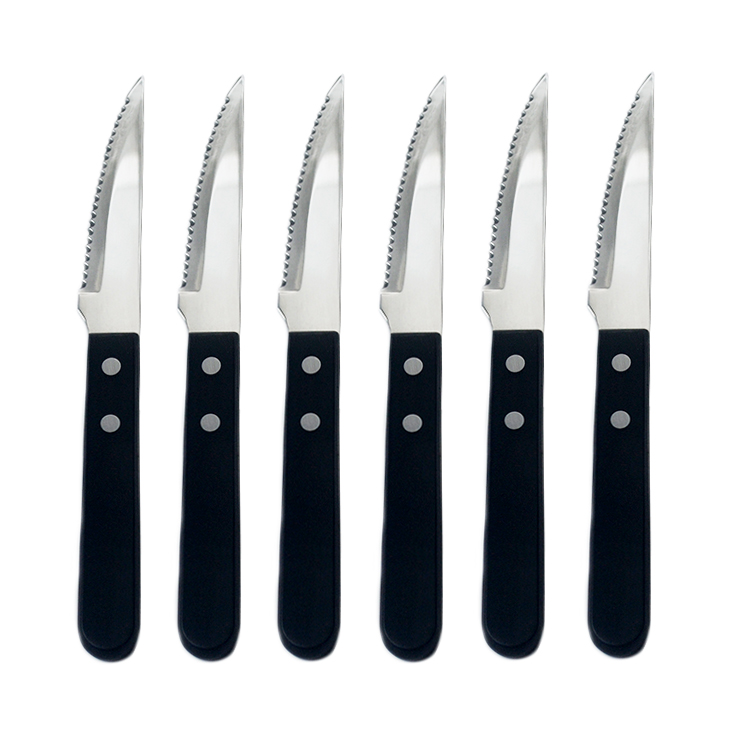
(Insert images of steak knives emphasizing wood grain, handle shape, blade edge types, and rivets)
(Insert videos demonstrating handling, cutting performance, and maintenance of wood handle steak knives)
1. How can I tell if the wood handle is real and high-quality?
Check for natural grain patterns, solid feel, smooth finish, and weight. Authentic hardwood handles are more substantial and finely finished than imitations.
2. Are full tang knives necessary for steak knives?
Yes, full tang knives offer better balance, strength, and safety compared to partial tang knives.
3. Which blade edge type is best for steak knives?
It depends on preference. Serrated edges cut tougher meats easily; straight edges provide cleaner cuts and are easier to sharpen.
4. How should I maintain the wood handle?
Hand wash, dry immediately, and periodically apply food-safe oil to prevent drying and cracking.
5. Can wood handle knives be put in the dishwasher?
No, dishwashers damage wood handles through heat and prolonged moisture exposure.
Identifying high-quality wood handle steak knives involves assessing blade material and construction, handle wood type and craftsmanship, ergonomics, balance, and proper care needs. The right knife not only offers durability and excellent cutting performance but also provides an attractive, comfortable grip that enhances the dining experience.
A top-tier steak knife blade is commonly made from high-carbon stainless steel or forged steel, offering superior edge retention and corrosion resistance. It should arrive razor-sharp and maintain cutting precision through repeated use. Blades made with care and quality materials ensure effortless slicing through different cuts of meat.
Steak knives are usually serrated or straight-edged. Serrated blades excel at slicing tougher or fibrous meats, while straight edges give cleaner cuts and are easier to sharpen. Micro-serrated edges offer a hybrid advantage, combining effective cutting power with relatively straightforward maintenance.
Full tang blades—where the blade's metal extends through the entire handle—are hallmarks of durability and excellent balance. They reduce the risk of the handle loosening or breaking and provide better control for precise cutting.
High-quality wood handles use hardwoods or stabilized woods that resist moisture and wear. Rosewood, ebony, cocobolo, olive wood, and pakkawood are popular choices. Each provides unique grain patterns and colors, making every knife visually distinctive.
A well-crafted wood handle feels warm and substantial in the hand. The natural texture improves grip and reduces slippage, even with moist hands. Ergonomic shaping minimizes hand fatigue during extended use and ensures controlled slicing motions.
Look for handles securely attached to the full tang with rivets or pins. The finish should be smooth but not slippery, without cracks or rough edges. Stabilized wood handles, treated with resin, offer enhanced moisture resistance and longevity.
A high-quality steak knife is well balanced, neither too heavy nor too light, with a smooth flow from handle to blade. This balance ensures steady control and comfortable cutting. The weight often depends on the tang design and handle material.
Natural wood grain ensures every handle is unique, often polished to highlight swirls, knots, or striking textures. Combined with finely crafted blades, these knives are both functional tools and artful additions to your table.
Trusted brands with strong reputations typically back their products with warranties, signaling confidence in quality and customer satisfaction.
- Always hand wash and dry knives immediately.
- Avoid soaking or dishwasher use to prevent wood damage.
- Regularly oil wooden handles with food-safe mineral oil or beeswax to maintain moisture and sheen.
- Sharpen blades periodically using appropriate tools for edge type.
- Rosewood: Dense, dark wood with rich hues and durability.
- Ebony: Black, hard wood prized for smooth texture.
- Cocobolo: Exotic with reddish-brown grains and water resistance.
- Olive Wood: Beautiful swirling light wood.
- Pakkawood: Resin-stabilized wood combining aesthetics and strength.
- Le Thiers Pirou Prestige with Juniper wood handles combines elegance and balanced riveted construction.
- Victorinox Wood Steak Knife Set uses modified maple handles with sharp, durable blades.
- TB Groupe's micro-serrated blades feature stabilized wood handles for easy care and sophistication.
1. How to verify the wood handle is genuine and good quality?
Look for natural grain patterns, a solid yet smooth finish, and a sturdy feel. Quality hardwoods have weight and durability that inferior imitations lack.
2. Are full tang knives important for steak knives?
Yes, full tang provides greater strength, balance, and safety over partial tang designs.
3. Which edge type works best for steak knives?
It depends on preference; serrated blades cut tougher meat easily while straight edges give cleaner cuts and are easier to sharpen.
4. How do I maintain wood handles?
Hand wash, dry immediately, and apply mineral oil regularly to preserve wood moisture and prevent cracking.
5. Can wood handle knives go in the dishwasher?
No, this can cause wood swelling, warping, and early deterioration.
[1](https://www.koiknives.com/blogs/australian-steak-knives/steak-knife-handles-exploring-the-best-materials-for-aesthetic-appeal-and-comfort)
[2](https://www.wiseguyshhi.com/what-to-look-for-in-a-quality-steak-knife-set/)
[3](https://kyokuknives.com/blogs/kyoku-chef-blog/what-makes-a-good-steak-knife)
[4](https://www.victorinox.com/en-US/Products/Cutlery/Steak-Knives/Wood-Steak-Knife-Set-2-pieces/p/5.1230.12G)
[5](https://www.tb-1648.com/en/products/couteau-a-steak-brigade-bois-stabilise)
[6](https://www.insight-kitchenknife.com/what-are-the-key-features-to-look-for-in-a-steak-knife.html)
[7](https://www.reddit.com/r/chefknives/comments/1fqys7b/looking_for_steak_knives_with_a_certain_set_of/)


