

Views: 290 Author: Site Editor Publish Time: 2026-08-28 Origin: Site


Content Menu
>> More Attractive Table Presentation
● The Main Types of Salad Servers
>> Stainless-Steel Salad Servers
>> Ceramic and Porcelain Salad Servers
>> Resin and Acrylic Salad Servers
>> Combination-Material Salad Servers
● How to Choose the Right Salad Servers
>> Assess the Weight and Balance
>> Review Cleaning Instructions
● Salad Servers for Different Occasions
>> Gifting
● How to Use Salad Servers Correctly
>> Keep the Servers with the Bowl
● Salads That Work Especially Well with Salad Servers
>> Pasta Salad
>> Grain Salad
>> Fruit Salad
>> Potato Salad
>> Caesar Salad
● Caring for Wooden Salad Servers
● Caring for Stainless-Steel Salad Servers
>> Store Separately When Needed
● Caring for Silicone and Decorative Handles
>> Using One Pair for Multiple Dishes
>> Leaving Servers in the Bowl
>> Choosing Style Over Function
● How to Build a Beautiful Salad Serving Station
● Pairing Salad Servers with Bowl Materials
>> Glass Bowls
>> Wooden Bowls
● Sustainability Considerations
● A Practical Buying Checklist
>> What are salad servers used for?
>> Are wooden salad servers better than stainless steel?
>> Can salad servers go in the dishwasher?
>> How long should salad servers be?
>> Can salad servers be used for pasta salad?
>> Are bamboo salad servers environmentally friendly?
>> How do you prevent wooden salad servers from cracking?
>> Can salad servers be used with hot food?
>> Why do salad servers come as a spoon and fork?
>> What is the best salad server set for a gift?
A beautiful salad deserves more than an ordinary spoon and fork. The right salad servers make it easier to toss delicate leaves, distribute dressing evenly, serve generous portions, and create a polished dining experience. Whether you are preparing a quick weekday lunch, hosting a formal dinner, or looking for a thoughtful housewarming gift, a well-designed pair of salad servers can become one of the most useful tools in your kitchen.
Salad servers generally consist of two utensils: a serving spoon and a serving fork. Their broad surfaces and extended handles are designed to lift, mix, and portion salad without crushing ingredients. Today, salad servers are available in wood, stainless steel, bamboo, silicone, ceramic, resin, glass, and combinations of several materials.
The best pair is not necessarily the most expensive. It should match your bowl, serving style, cleaning habits, table setting, and the types of salad you prepare most often. This guide explains everything you need to know, from materials and shapes to practical use, maintenance, entertaining ideas, and frequently asked questions.
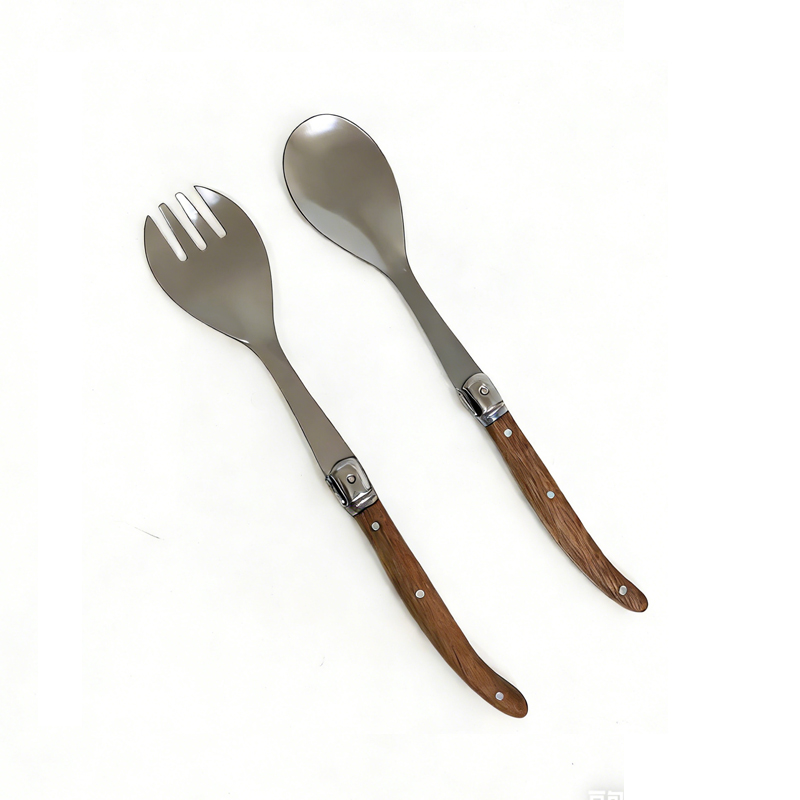
Salad servers are specialized utensils used to combine and serve salads. A traditional set includes:
- A serving spoon: The spoon gathers leafy greens, grains, pasta, vegetables, and dressing.
- A serving fork: The fork grips slippery ingredients and helps separate individual portions.
- A coordinated pair: Matching utensils usually provide balanced handling and a more attractive presentation.
Unlike regular cutlery, salad servers are larger and more open in shape. Their size allows users to lift a substantial amount of salad while keeping the ingredients intact. The fork may have two or three broad prongs rather than the narrow teeth found on a table fork.
The design also prevents guests from repeatedly touching food with personal cutlery. This is especially important when serving a shared bowl at family meals, buffets, picnics, and celebrations.
A salad should be mixed gently rather than stirred aggressively. Salad servers provide a broad, balanced grip that allows you to lift ingredients from the bottom of the bowl and fold them over the top.
This technique distributes dressing, herbs, nuts, cheese, and vegetables more evenly. It also reduces the chance of bruising lettuce or breaking fragile ingredients such as avocado, soft fruit, and roasted vegetables.
Using dedicated salad servers is more hygienic than serving with personal forks or spoons. Guests can portion food without placing used utensils into the communal dish.
Long handles are especially helpful when serving from a deep bowl. They keep hands away from the food and provide better control when the bowl is full.
A coordinated pair of salad servers adds visual balance to a table. Wooden servers create a warm, rustic feeling, while polished stainless steel looks contemporary and formal.
Because salad is often colorful and visually prominent, the serving utensils become part of the overall presentation. A well-chosen pair can make a simple bowl of greens feel more intentional.
A broad serving spoon gives guests a consistent way to select portions. The fork helps lift greens while allowing excess dressing to drain back into the bowl.
For buffet service, this reduces spills and makes it easier for guests to build balanced portions.
Wooden salad servers remain popular because they are lightweight, comfortable, and visually warm. Common woods include acacia, olive wood, teak, beech, maple, and bamboo.
Advantages include:
- Comfortable grip
- Naturally warm appearance
- Low risk of scratching ceramic or glass bowls
- Lightweight construction
- Suitable for rustic and casual tables
Wood does require more care than stainless steel. It should generally be washed by hand, dried promptly, and occasionally conditioned with food-safe mineral oil.
Wooden servers are particularly suitable for green salads, grain salads, pasta salads, and outdoor meals.
Bamboo is technically a grass rather than a traditional hardwood. It is valued for its light weight, smooth finish, and relatively affordable price.
Bamboo salad servers often come as part of complete serving sets that include a bowl, lid, or storage ring. They work well in kitchens that favor natural materials and casual entertaining.
However, bamboo can absorb moisture if left submerged. It should be washed quickly and dried thoroughly.
Stainless-steel salad servers are durable, hygienic, and easy to coordinate with other cutlery. They are a practical choice for households that prefer dishwasher-safe utensils.
Advantages include:
- High resistance to staining
- Strong construction
- Easy cleaning
- Modern appearance
- Good resistance to acidic dressings
Polished steel suits formal dining, while brushed or sandblasted steel creates a softer contemporary look. Some premium stainless-steel designs use special surface finishes intended to resist scratches and everyday wear.
The main drawback is that metal may scratch delicate bowls, especially unglazed ceramic, painted surfaces, or certain finishes. If your serving bowl is precious or easily marked, wood or silicone may be safer.
Silicone servers are flexible, colorful, and gentle on cookware and bowls. They are useful for salads containing soft ingredients because the edges can conform to the shape of the bowl.
They are also a good choice for households with nonstick cookware or serving dishes that require a soft utensil surface.
When choosing silicone, look for thick, food-grade material and a firm internal core. Very flexible servers may bend too much when lifting a heavy pasta or potato salad.
Ceramic or porcelain-handled servers can provide a refined, decorative appearance. They are often paired with stainless-steel heads for strength and easy food contact.
These sets are attractive for formal dining and coordinated tableware collections. Their weakness is that the handles can chip or break if dropped.
Resin and acrylic designs are available in many colors, patterns, and translucent finishes. They can complement modern interiors, colorful table settings, or seasonal entertaining themes.
They are usually lightweight and decorative. However, the care instructions vary considerably. Some should not be exposed to high dishwasher temperatures, while others may become cloudy or scratched over time.
Many modern designs combine stainless steel with wood, resin, ceramic, or composite handles. This allows manufacturers to combine durability with visual character.
A combination set may be ideal when you want metal serving heads but prefer a warmer or more comfortable handle.
The bowl and servers should work together physically and visually.
For a deep bowl, choose handles long enough to reach the bottom without placing your fingers close to the food. For a wide, shallow bowl, shorter servers can provide better control.
The head of each utensil should fit comfortably inside the bowl. Oversized servers may be awkward in a small dish, while tiny servers may struggle with a large family-sized salad.
A useful pair should feel balanced when held from the end of the handle. If the handle is too short, your hand may touch the rim or ingredients. If it is too long, the utensil may feel difficult to control.
For everyday use, medium-length handles are usually the most versatile. Large entertaining bowls benefit from longer handles.
A serving spoon should have enough depth to lift ingredients without allowing them to slide away. A shallow spoon is useful for delicate leaves but may be less effective for pasta or grain salads.
Look for a smooth transition between the handle and spoon head. Sharp edges or rough seams can make serving uncomfortable and may collect food residue.
The serving fork should grip greens and larger ingredients without piercing them aggressively. Wide, rounded prongs are generally more useful than narrow, sharp prongs.
For salads containing noodles, roasted vegetables, or fruit, a fork with broad spacing can help lift ingredients while allowing excess dressing to fall away.
A pair that is too light may feel flimsy. A pair that is too heavy may be tiring during a large gathering.
Hold both utensils together if possible. They should feel balanced, with enough weight in the head to help lift food but not so much that the handle becomes difficult to control.
If you use salad servers every day, cleaning convenience matters. Stainless steel is often the simplest option for dishwasher users. Wood, some resin, and certain decorative handles usually benefit from hand washing.
Never assume that a product is dishwasher-safe solely because the serving heads are metal. The handle material and adhesive construction may determine the actual care requirements.
Your servers can reinforce the mood of a meal:
- Wood: Rustic, natural, farmhouse, Mediterranean, or casual.
- Stainless steel: Contemporary, minimalist, formal, or professional.
- Bamboo: Light, relaxed, eco-conscious, or outdoor.
- Ceramic: Decorative, artistic, coordinated, or traditional.
- Colorful resin: Playful, seasonal, modern, or family-friendly.
A neutral set is generally more versatile, while a distinctive set can become a conversation piece.
For regular use, prioritize durability, easy cleaning, and comfort. Stainless steel, bamboo, or sturdy wood are practical choices.
The set should be easy to store near your serving bowls. If it is difficult to retrieve, you may be tempted to use ordinary cutlery instead.
Dinner parties provide an opportunity to select servers that coordinate with plates, glassware, and the centerpiece.
Polished metal works well with formal place settings. Wood can soften a modern table, and ceramic handles can echo the colors of the dinnerware.
For picnics, barbecues, and garden gatherings, lightweight materials are convenient. Bamboo, wood, and durable plastic or silicone are easy to carry.
A serving set with a loop, storage ring, or fitted bowl can reduce the chance of losing one utensil during transport.
Buffet service benefits from long handles and large utensil heads. Guests should be able to reach the bottom of the bowl without knocking the bowl or spilling the salad.
If several salads are being served, use clearly different pairs of servers for each dish. This prevents ingredients and dressings from being transferred between bowls.
A salad server set is a useful gift for weddings, housewarmings, birthdays, and holiday celebrations.
For a gift, consider packaging and versatility. A coordinated bowl-and-server set may create a stronger presentation, while a premium standalone pair may offer better long-term value.
Place the spoon and fork beneath the salad rather than pressing down from the top. Lift a portion gently, turn it over, and release it back into the bowl.
Repeat this motion around the bowl until the dressing and toppings are distributed.
Do not pour all the dressing into one place. Drizzle it across the surface, then toss carefully.
If the dressing is thick, use the spoon to scoop from the bottom while the fork guides ingredients into the fold. This method helps prevent heavy ingredients from sinking.
Overmixing can wilt greens, break tomatoes, crush avocado, and make croutons soggy. Stop when the ingredients look evenly coated.
For delicate salads, serve the dressing separately or add it immediately before eating.
Use the fork to gather leaves and larger ingredients while the spoon supports them from underneath. This creates a stable scoop and reduces spills.
When serving pasta or grain salads, the spoon usually carries most of the weight, while the fork helps guide pieces into the portion.
Do not place salad servers on the table far from the bowl. A small side plate or utensil rest can keep them clean between uses and prevent dressing from reaching the tablecloth.
A mixture of lettuce, cucumber, tomato, radish, and herbs is light and easy to lift. Wooden or silicone servers are gentle on tender leaves.
For best texture, dry the greens thoroughly before dressing. Excess water dilutes the dressing and makes the salad less flavorful.
Pasta salad is heavier than a leafy salad and benefits from sturdy servers. A deep spoon helps scoop pasta, while a broad fork separates pieces.
Choose servers with strong joints and a comfortable grip, especially when the salad contains cheese, beans, or roasted vegetables.
Quinoa, couscous, farro, rice, and barley salads can be dense. A broad spoon is particularly useful for collecting grains from the bottom of the bowl.
A serving fork helps lift leafy herbs, greens, and roasted vegetables that may otherwise remain at the surface.
Fruit can be slippery, soft, and easily bruised. Silicone or wood is often preferable to sharp metal.
Use a gentle lifting action rather than stabbing individual pieces. Servers with smooth, rounded edges are ideal.
Potato salad requires support because cooked potatoes can break apart. Use a broad spoon and a fork with rounded prongs.
Avoid aggressive tossing after the dressing has been added. Fold the mixture carefully to preserve the shape of the potatoes.
Caesar salad contains romaine leaves, croutons, cheese, and thick dressing. Long servers with a strong spoon are useful for reaching the bottom of a deep bowl.
Toss just enough to coat the lettuce. Excessive mixing can make the croutons lose their crispness.
Wash wooden servers with warm water and mild dish soap soon after use. Do not leave them soaking in a sink.
Extended exposure to water can cause swelling, cracking, warping, or rough patches.
Wipe the servers immediately and allow them to air-dry completely before storing them.
Do not place damp wood in a closed drawer or container. Trapped moisture can create unpleasant odors and encourage surface deterioration.
Occasional conditioning helps slow drying and keeps the surface smooth. Use a food-safe mineral oil or a product specifically designed for wooden kitchen utensils.
Apply a thin coat, allow it to absorb, and wipe away any excess. Avoid cooking oils that can become rancid.
Bleach, abrasive powders, and strong solvents can damage the finish and leave unwanted residues.
If odors develop, a gentle paste of baking soda and water may help. Rinse and dry the servers afterward.
Dressings containing lemon juice, vinegar, mustard, or tomato can leave residue if allowed to dry. Rinse the servers after use, even if they will later go into the dishwasher.
Drying stainless steel after washing can reduce water marks. A soft cloth is usually enough.
Steel wool and harsh scouring pads may create fine scratches. Use a nonabrasive sponge for routine cleaning.
If the servers have a polished finish, storing them against rough metal tools may cause scratches. A utensil drawer divider or storage ring can help protect them.
Inspect silicone regularly for cuts, peeling, or separation from the internal core. Damaged silicone may trap food particles.
For resin, acrylic, ceramic, and painted handles, follow the manufacturer's cleaning recommendations. Avoid sudden temperature changes with ceramic components, since thermal shock can lead to cracking.
Do not use decorative servers for cooking unless they are specifically designed to withstand high heat. Salad servers are intended for cold or room-temperature foods, not hot pans.
Using the same servers for several bowls can transfer dressing, allergens, and strong flavors. Provide a separate pair for each communal dish.
Leaving the utensils buried in dressing can make handles sticky and unpleasant to hold. Place them across the rim or on a clean rest when practical.
An attractive pair may still be uncomfortable, fragile, or too short. Check the dimensions, weight, material, and care instructions before buying.
A beautiful shallow set may be frustrating in a tall bowl. Always consider where and how the servers will be used.
Even the best salad servers cannot prevent spills when a bowl is too full. Leave enough space for tossing and serving.
A serving station does not need to be complicated. Place the salad bowl near the plates, forks, and dressing. Position the salad servers on a small dish or rest.
For a casual gathering, add sliced bread, grilled vegetables, roasted chicken, or soup nearby. For a formal meal, coordinate the servers with the serving bowl and other utensils.
A simple arrangement might include:
- One large salad bowl
- One pair of salad servers
- Individual plates or shallow bowls
- Extra dressing in a small pitcher
- Toppings in separate dishes
- Napkins and a utensil rest
Keeping toppings separate allows guests to customize their servings and helps preserve the texture of crunchy ingredients.
Glass highlights the color and layers of a salad. Wood and silicone servers reduce the risk of scratching, while stainless steel gives a crisp, modern appearance.
Ceramic bowls pair well with both wood and metal. If the interior has a delicate glaze, choose smooth-edged servers.
Wooden servers create a coordinated natural look. The materials also tend to feel comfortable together and are well suited to casual dining.
Metal servers provide a unified professional appearance. Use a softer material if the bowl has a decorative or easily scratched finish.
Stoneware is usually sturdy, but rough or unglazed surfaces may mark metal. Wood, bamboo, or silicone can be safer choices.
When purchasing salad servers, consider durability rather than choosing solely by material label. A long-lasting product that is used for many years may be more practical than a cheap set that must be replaced repeatedly.
For wood and bamboo, look for clear information about sourcing and finishes. Avoid products with strong chemical odors or unclear food-contact claims.
Stainless steel can be durable and recyclable, although production has an environmental cost. Replacing a damaged item rather than an entire set can also reduce waste.
The most sustainable choice is often the pair that fits your routine, remains useful, and is cared for properly.
Before purchasing salad servers, ask yourself:
- Where will they be used? Everyday meals, formal dining, outdoor events, or buffet service?
- What is the bowl like? Deep, wide, glass, ceramic, wood, or metal?
- What foods are served most often? Leafy greens, pasta, fruit, potatoes, grains, or mixed vegetables?
- How will they be cleaned? Hand washing or dishwasher use?
- Do they feel balanced? Can you lift a full portion comfortably?
- Are the edges smooth? Rough seams can affect comfort and hygiene.
- Will the material age well? Wood may develop character, while polished metal may show scratches.
- Does the style match your table? Choose a design that will remain attractive beyond one occasion.
A thoughtful answer to these questions usually leads to a better choice than shopping based only on appearance.

Salad servers are used to toss, mix, lift, and portion salad. A typical set contains a serving spoon and serving fork, which work together to handle leafy greens and heavier ingredients.
Neither material is universally better. Wood is lightweight, attractive, and gentle on bowls, but it usually requires hand washing. Stainless steel is durable and easy to clean, but it may scratch delicate surfaces and can feel less warm visually.
Some stainless-steel and silicone sets are dishwasher-safe, but wood, ceramic, resin, and decorative handles may not be. Always check the product's care instructions before using a dishwasher.
The ideal length depends on the bowl. Medium-length servers suit most household bowls, while longer handles are more practical for deep or extra-large serving bowls.
Yes. Pasta salad is one of the foods that benefits from sturdy salad servers. Choose a broad spoon and a strong fork capable of lifting heavier ingredients without bending.
Bamboo grows quickly and is a renewable material, but environmental impact also depends on sourcing, processing, adhesives, coatings, packaging, and product lifespan. Choose durable products from transparent manufacturers.
Avoid soaking them, dry them immediately after washing, keep them away from extreme heat, and occasionally apply food-safe mineral oil to maintain the surface.
Most salad servers are designed for cold or room-temperature foods. Do not use them in hot pans or on high heat unless the manufacturer specifically states that they are heat-resistant.
The spoon supports and carries ingredients, while the fork grips and separates them. Together, they provide better control than using two spoons or ordinary table cutlery.
A gift set should be attractive, durable, easy to use, and suitable for different bowls and occasions. A coordinated bowl-and-server set creates a strong presentation, while a high-quality standalone pair may offer greater everyday usefulness.
The best salad servers combine practical performance with personal style. Wooden and bamboo sets offer warmth and comfort, stainless steel provides durability and easy maintenance, while silicone and decorative materials add flexibility or visual character. Choose a pair that matches your bowl, serving habits, cleaning routine, and preferred table aesthetic.
With gentle tossing, thoughtful storage, and appropriate care, a good pair of salad servers can improve both everyday meals and special occasions for years.


