

Views: 290 Author: Site Editor Publish Time: 2026-07-13 Origin: Site


Content Menu
>> The Allure of High-Carbon Stainless Steel
>>> Why Professionals Avoid the Dishwasher
>> The Reality of Dishwasher-Safe Sets
>>> The Trade-Offs
>> Key Factors for Your Decision
>> Maintenance Tips for Every Knife
When outfitting a kitchen, the knife set is often the most significant investment you will make. These tools are the heartbeat of your culinary workspace, dictating how quickly, safely, and enjoyably you can prepare meals. As you browse catalogs or roam the aisles of a home goods store, a common dilemma arises: do you prioritize the high-performance aesthetics of professional-grade stainless steel, or the undeniable convenience of a dishwasher-safe set? Understanding the trade-offs between material science, maintenance, and longevity is essential for making an informed decision that suits your lifestyle.

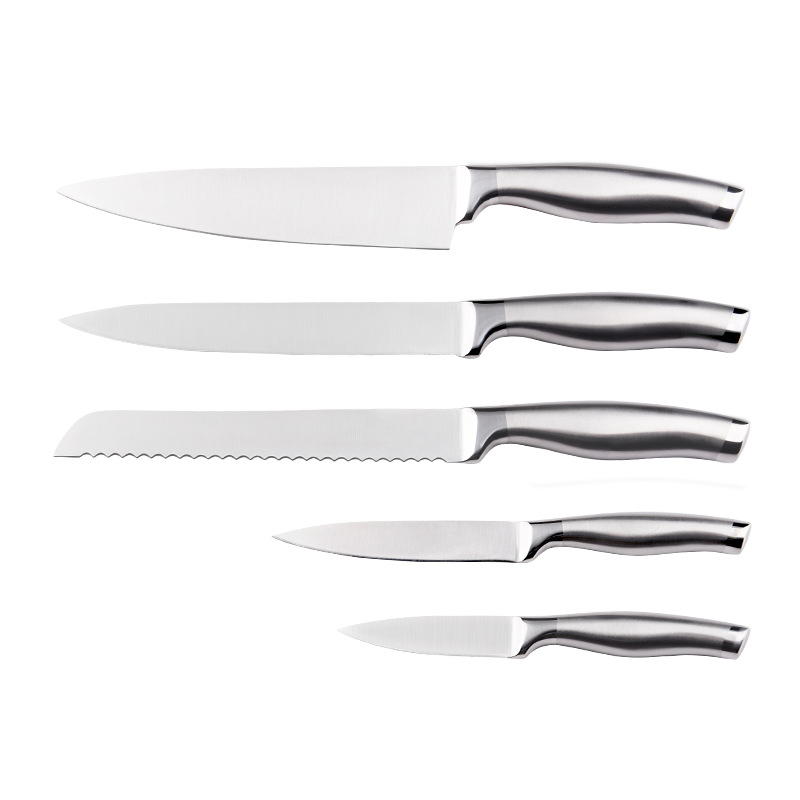
For the passionate home cook or aspiring chef, the term "stainless steel" usually refers to high-carbon stainless alloys. These are the knives that define the professional experience. They are engineered to hold an incredibly sharp edge, allowing for surgical precision when julienning vegetables or deboning poultry.
The most critical factor to understand is that "stainless" does not mean "indestructible." High-performance stainless steel knives are typically heat-treated to achieve a specific hardness—measured on the Rockwell scale. When you subject these blades to the high-heat, high-pressure, and abrasive environment of a dishwasher, you are essentially attacking the edge of the knife.
- Detergent Abrasiveness: Modern dishwasher detergents are often gritty and chemically aggressive, designed to strip grease. This chemical action can cause pitting on a fine-tuned blade surface, while the physical grit acts like sandpaper on the cutting edge.
- Heat Cycles: The extreme heat causes the steel to expand and contract, which can compromise the structural integrity of the handle-to-blade connection.
- Micro-Collisions: In a dishwasher rack, knives are prone to knocking against other silverware. This dulls the microscopic teeth of a sharp blade instantly, undoing the work of a professional sharpening session.
Marketing campaigns often push "dishwasher-safe" as the ultimate badge of quality, but it is important to deconstruct what this actually means. Generally, these sets are constructed from softer stainless steel alloys. While they are resilient enough to survive the dishwasher, they lack the edge retention of their high-carbon counterparts.
Choosing a dishwasher-safe set is, fundamentally, a trade-off between performance and convenience. These knives are designed to be "workhorses" that require little maintenance. However, you will find yourself needing to sharpen them far more frequently, as softer steel rolls and dulls quickly under normal use. They are perfect for busy households where time is limited and the convenience of a quick clean-up outweighs the need for razor-sharp precision.
Before you commit to a purchase, reflect on how you actually use your kitchen. If you love the craft of cooking—spending time prepping ingredients, practicing knife skills, and enjoying the process—a high-end, hand-wash-only stainless set is the only logical choice. The longevity and performance gain far exceed the minor inconvenience of washing a few knives by hand immediately after use.
Conversely, if your kitchen is a high-traffic zone where multiple family members might handle the tools, or if you prefer a "set it and forget it" cleaning routine, a durable dishwasher-safe set might prevent frustration. Always look for full-tang construction—even in dishwasher-safe sets—to ensure the handle does not snap off over time.
Regardless of the set you choose, taking care of your tools is paramount to their lifespan. Even dishwasher-safe knives benefit from being hand-washed, as it keeps the handles looking new and the blades free from potential rust spots caused by standing water in the bottom of a machine. Invest in a wooden block or a magnetic wall strip for storage; throwing loose knives into a drawer is the fastest way to ruin even the most expensive blades.
1. Question: Why do professional chefs insist on hand-washing their knives?
Answer: Hand-washing prevents the abrasive detergents and extreme heat of dishwashers from dulling the blade and damaging the handle materials, ensuring the knife maintains its factory-level sharpness for much longer.
2. Question: Are dishwasher-safe knives inherently lower quality?
Answer: Not necessarily, but they are typically forged from softer steel alloys to survive the harsh dishwasher environment, which means they lose their edge faster than high-carbon steel knives.
3. Question: Does "stainless steel" mean the knife will never rust?
Answer: No; "stainless" is a relative term. Even the best knives can rust if left submerged in water, exposed to acidic foods for too long, or subjected to harsh dishwasher cycles.
4. Question: Can I sharpen dishwasher-safe knives just like other knives?
Answer: Yes, they can be sharpened, but because the steel is often softer, you will need to hone and sharpen them much more frequently to maintain a decent cutting performance.
5. Question: What is a "full-tang" knife, and why does it matter?
Answer: A full-tang knife means the metal blade extends all the way into the handle. This provides superior balance, stability, and prevents the handle from breaking off under pressure.


