

Views: 270 Author: Site Editor Publish Time: 2026-04-16 Origin: Site


Content Menu
● What Makes Serrated Edges Special
● Why Stainless Steel Excels Here
● Advantages Over Straight Blades
>> Performance on Various Foods
● Construction Quality Features
>> Common Misconceptions Cleared
● Related Questions and Answers
>> 1. Do stainless serrated knives rust easily?
>> 2. How do you clean serrated edges?
>> 3. Are they better than straight for steak?
>> 4. Can you sharpen them at home?
>> 6. Are full-tang versions worth extra cost?
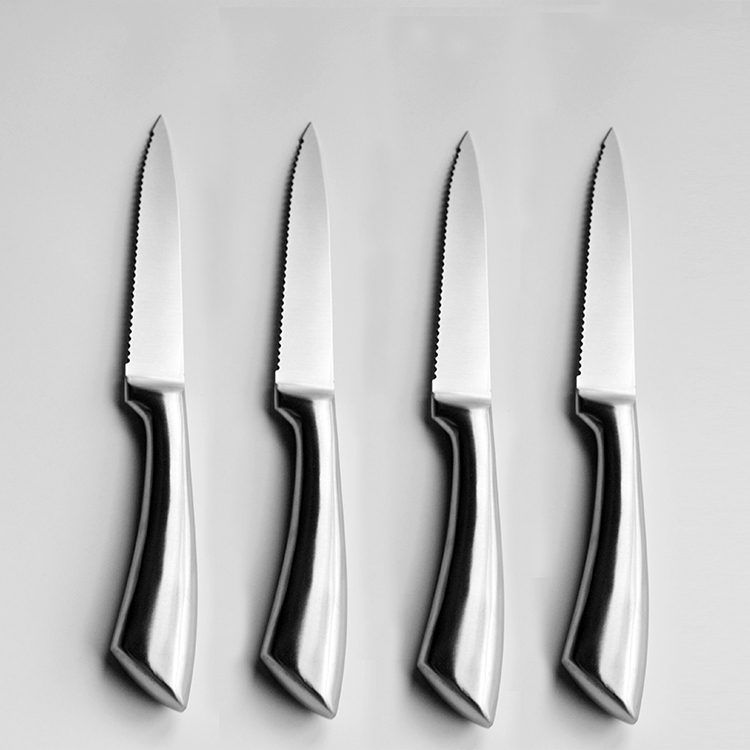
Stainless steel serrated knives combine the durability of high-quality steel with teeth-like edges that grip and slice effortlessly through tough textures. These knives excel at cutting seared steaks, crusty bread, and fibrous meats without tearing, making them a staple for home cooks and professional kitchens alike.
Serrated blades feature scalloped or wavy teeth that saw through food using a back-and-forth motion. Unlike straight edges, they maintain cutting power longer because the individual serrations stay sharp independently.
Stainless steel enhances this design with rust resistance and strength, ensuring the blade holds up under repeated use. The material's chromium content forms a protective layer that prevents corrosion from juices or moisture.
Fine micro-serrations offer precision for delicate slicing, while broader teeth tackle thicker cuts like roasts. Low-frequency serrations provide smoother results on tender meats.
Granton edges with alternating teeth reduce food sticking, ideal for sticky proteins.
Close-up of stainless steel serrated edge showing individual teeth.
High-carbon stainless steel grades like 440C or 5Cr15MoV deliver hardness above 56 HRC without brittleness. This balance keeps serrations effective through years of dining.
The steel resists pitting from acidic marinades or dishwasher detergents, unlike carbon steel alternatives.
18/10 stainless offers premium shine and corrosion resistance for handles and blades. 430 grades suit budget sets with solid performance.
Full-tang construction runs steel from tip to end for perfect balance.
Demonstration of serrated stainless knife slicing ribeye effortlessly.
Serrated edges grip crusty exteriors while penetrating soft interiors cleanly. They require less pressure, reducing hand fatigue during meals.
Straight blades dull faster on fibrous foods; serrated ones self-sharpen through use.
Side-by-side cut comparison: serrated vs straight on grilled steak.
Perfect for well-marbled steaks where teeth catch fat layers. Also ideal for tomatoes, citrus, and breads without squishing.
Triple-riveted handles ensure stability; ergonomic shapes fit various grips. Forged blades taper for better food release.
Stamped versions offer value without sacrificing core strength.
Stainless handles provide sleek uniformity; pakkawood adds warmth and grip. POM resin resists moisture in humid climates.
Set of stainless serrated knives with wooden handles on display.
Dishwasher-safe for most sets, though hand washing preserves finish. Wipe dry to avoid spots; serrations clean easily under running water.
No oiling needed, unlike reactive steels.
Use tapered rods or diamond files for teeth; professional services handle complex patterns. Edges last years between touch-ups.
Step-by-step sharpening of stainless serrated steak knife.
Family barbecues benefit from rust-proof reliability. Formal dinners showcase polished aesthetics.
Outdoor camping holds up without special care.
Serrated knife cutting steak at outdoor grill setup.
Ribeye's crust loves deep serrations; filet mignon needs fine teeth for tenderness.
4-piece for couples; 8-piece for families. Wooden blocks or magnetic strips protect edges.
Individual sheaths suit travel.
Gift boxes elevate sets for holidays. Matching bread knives complete collections.
Unboxing a premium 6-piece stainless serrated set.
Blades withstand banging against plates; teeth grip frozen surfaces if needed. Heat resistance prevents warping.
Longevity outpaces ceramic or plastic alternatives.
Durability test: knife after 1000 cuts on tough meat.
Brushed finishes hide fingerprints; mirror polishes gleam under lights. Sets unify flatware looks.
Black-coated blades add modern edge; Damascus layers create stunning patterns.
Elegant table setting with serrated stainless knives.
Budget sets under $40 deliver everyday function. Mid-range $60-120 adds forging. Premium $150+ boasts heirloom quality.
Value scales with steel grade and tang design.
Budget vs luxury serrated knife performance comparison.
Smooth steel resists bacteria; serrations reduce slipping on wet foods. Finger guards on some models enhance control.
Shorter blades with rounded tips suit young users learning table manners.
Matches stainless pans for uniform care. Complements cast iron without reactions.
Full kitchen setup featuring serrated knives with matching tools.
German precision forging leads; Japanese tech refines micro-serrations. Solingen and Seki produce top sets.
Zwilling offers pro-grade; Messermeister excels in ergonomics.
Factory tour of stainless serrated knife production.
Cryogenically treated steel boosts toughness. Nano-coatings repel stains.
Self-cleaning handles emerge for ultimate ease.
Next-gen serrated blade with advanced coating.
Summer grills demand grip on charred surfaces; winter roasts need penetration power.
All-weather performers.
Pre-set places with knives for seamless service. Polished sets impress guests.
Holiday dinner prep using serrated stainless knives.
Engraved initials personalize gifts. Modular handles swap for preferences.
Custom-engraved serrated knife set.
Not just for steak; versatile across proteins. Sharper than perceived when quality-built.
Serrations don't tear good meat; they enhance texture.
Recyclable steel reduces waste. Long lifespan means fewer replacements.
Sustainable sourcing grows standard.
Sustainable production process for stainless knives.
Pros favor serrated for service speed. Home testers praise consistency.
Chef slicing with professional serrated tool.
Check HRC rating, tang type, and warranty. Test balance in-store if possible.
Sets with covers add protection.
Hybrid edges blend serrated and straight. Smart materials adapt sharpness.
Emerging knife tech preview.
No, high-chromium alloys provide excellent resistance; dry promptly for best results.
Rinse under water, brush teeth gently, air dry. Dishwasher safe for most.
Yes, teeth grip crust without mangling tender parts.
Yes, with proper rods; pros for complex patterns.
4-5 inches for steaks; longer for bread companions.
Yes, superior balance and durability pay off long-term.


