

Views: 290 Author: Site Editor Publish Time: 2026-03-20 Origin: Site


Content Menu
● What Makes a Great Steak Knives Set
>> Why You Should Invest in a Steak Knives Set
>> Ideal Situations to Use Steak Knives
>> Blade Material and Construction
>> Handle Materials and Comfort
>> Storage: Blocks, Cases, and In‑Drawer Solutions
● How to Choose the Right Set for Your Home
>> Decide How Many Knives You Need
>> Match Style to Your Tableware
>> Consider Maintenance and Dishwashing
>> Proper Cutting Technique at the Table
>> Protecting Plates and Knife Edges
>> Serving Tips for a Steakhouse Experience
● Care, Cleaning, and Sharpening
>> Long‑Term Maintenance and Storage
● Visual and Video Ideas for Your Article or Store
>> Suggested Images in the Body
● Frequently Asked Questions About Steak Knives Sets
>> 1. How many steak knives should I buy in a set?
>> 2. Are serrated steak knives better than straight‑edge knives?
>> 3. Can I put my steak knives in the dishwasher?
>> 4. How often should I sharpen my steak knives?
>> 5. What makes a steak knife feel comfortable in the hand?
>> 6. Do I really need a dedicated steak knives set if I already have sharp kitchen knives?
A steak knives set is more than a group of sharp blades; it is a mix of cutting performance, comfort, safety, and style that upgrades every steak dinner. High‑quality sets focus on blade material, edge design, handle ergonomics, and long‑term durability.
A dedicated steak knives set lets you slice meat cleanly without tearing the fibers, so every bite stays juicy and tender. It also protects your main kitchen knives, keeping chef's knives for prep while steak knives handle serving at the table.
Modern steak knife sets often come in matching designs that coordinate with your cutlery and tableware, making your whole table setting look more professional and cohesive. Many premium sets include storage blocks or gift boxes, which make them suitable as presents for weddings, house‑warmings, or holidays.
You will use steak knives most often with grilled steak, roast beef, lamb chops, pork chops, or any meat with a browned, slightly tougher exterior and tender interior. They also shine when serving burgers, thick sandwiches, and even crisp‑crust pizza, where a table knife would struggle.
A good set is especially valuable when hosting guests; everyone can cut with ease instead of sawing at their plate. In casual weeknight meals, having the right steak knife on hand makes even a simple pan‑fried steak feel like a steakhouse experience at home.
Choosing the right steak knives set starts with understanding the major components that influence performance: blade material, edge type, tang construction, handle design, and storage.
Most quality steak knives use stainless steel, because it resists rust, staining, and corrosion from acidic foods and dishwashing. High‑carbon stainless steel blends edge retention with toughness, helping the blade stay sharp longer without becoming too brittle.
Some premium sets feature precision‑forged blades, which are made from a single piece of steel for extra strength and balance. Thicker forged blades support durability when cutting tougher meats, while still being ground thin enough at the edge for effortless slicing.
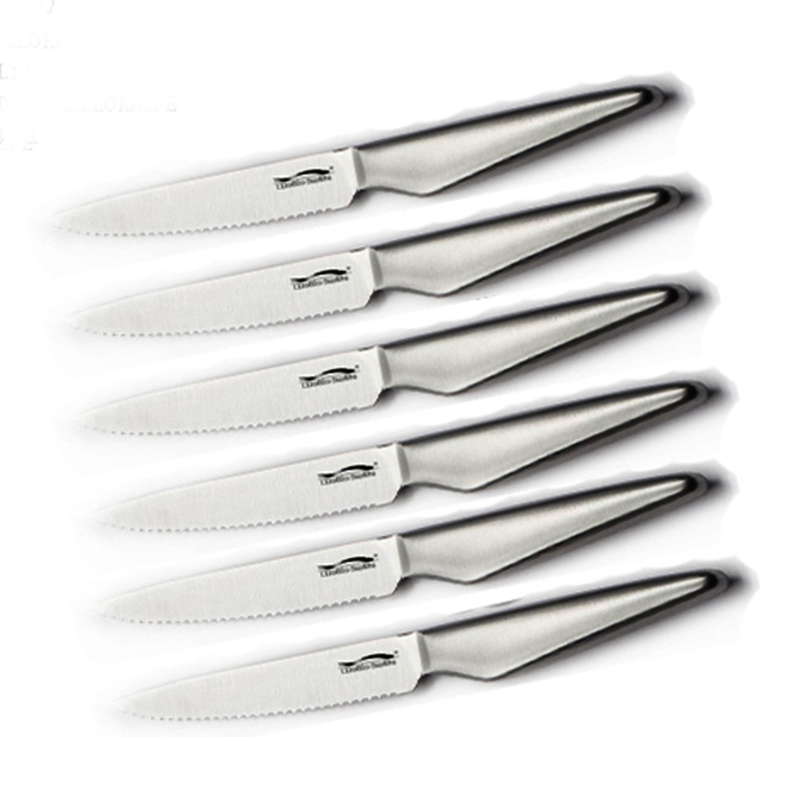
Serrated steak knives have small "teeth" along the edge that grip and cut through crusty or seared surfaces with less pressure. They excel on steaks with a charred exterior and soft, juicy center, often staying functional longer between sharpenings because the teeth wear slowly.
Straight‑edge (non‑serrated) steak knives cut more like a chef's knife, creating clean, smooth slices without shredding the meat fibers. They are ideal if you care about presentation, want precise slices, and are comfortable sharpening knives regularly at home.
In many households, a mixed set or personal preference rule works best: some people favor serrated blades for rugged cutting and others prefer straight edges for a clean cut. When buying, consider how often you want to sharpen and how "perfect" you want your slices to look.
A full‑tang knife has the steel of the blade running all the way through the handle, often visible as a strip of metal with rivets along both sides. This construction improves strength and stability, reducing the risk of the blade snapping at the handle under heavy pressure.
Full‑tang knives usually feel more balanced because the weight is evenly distributed from blade tip to handle end. Better balance helps you control the knife more easily, reducing fatigue in your hand and wrist during long meals or when carving large cuts at the table.
Common handle materials include:
- Wood: Warm, classic look, comfortable feel, but needs more care to avoid cracking or swelling.
- Plastic or ABS: Durable, resistant to moisture, available in many colors, often used in modern or restaurant‑style sets.
- Composite or resin: Combines the look of wood with improved durability and water resistance.
An ergonomic handle should fill your grip comfortably, with contours that guide your fingers into a secure position. A slight texture or subtle ridges on the handle can improve grip, especially if your hands are damp from cooking or serving.
Storage matters because it protects the edges and keeps knives safe and organized. Many steak knives sets include:
- Wooden or bamboo blocks that sit on the countertop.
- Presentation or gift boxes with fitted slots, ideal for storing in a cabinet or giving as a present.
- In‑drawer trays that keep knives flat and separate, freeing up counter space.
Proper storage prevents blades from banging into each other, which can cause chips and dullness. It also keeps sharp edges out of reach of children and reduces the chance of accidents when you reach into drawers.
With so many options, it helps to match your steak knives set to your eating habits, table size, and aesthetic preferences.
Common set sizes range from four to eight knives. A four‑piece set suits small households or couples who entertain occasionally, while six‑ or eight‑piece sets work better for families or frequent hosts.
If you enjoy large dinner parties, you may prefer two identical sets that can be combined, so every guest gets a matching knife. For small kitchens, a compact four‑piece set in a slim storage case might be easier to manage than a large block.
Steak knives come in classic, rustic, minimalist, and high‑end steakhouse styles. Consider the look of your existing flatware, plates, and glassware so your new set blends in rather than clashing.
For example, wooden‑handled steak knives pair well with farmhouse or rustic tables, while sleek stainless or black‑handled designs suit modern or minimalist settings. A coordinated look helps your table feel intentional and well designed.
Some steak knives are labeled dishwasher‑safe, but handwashing usually preserves sharpness and finish for much longer. Heat, steam, and abrasive detergents in the dishwasher can dull edges and damage wood or glued joints over time.
If you know you will usually use a dishwasher, look for stainless steel blades with synthetic handles and sturdy construction. If you do not mind handwashing, you can choose more delicate finishes or natural wood handles that add character but require gentle care.
Good technique protects both your knives and your plates while making cutting easier and more enjoyable.
Hold the knife with a firm but relaxed grip, thumb and index finger guiding the handle near the bolster or front of the handle. Use gentle sawing motions for serrated knives, letting the teeth do the work rather than pressing hard.
For straight‑edge knives, cut with smooth forward strokes rather than pushing straight down, which can crush the fibers. Always cut against a stable surface on the plate, not in mid‑air, to keep control and avoid slipping.
Very hard plates, like thick stoneware, can be rough on knife edges if you press aggressively. Try to keep the angle shallow and avoid grinding the blade into the plate surface.
If you often serve steak on very hard plates or boards, consider using steak boards or wooden serving platters under the meat to reduce wear on the edge. This small habit can extend the sharpness life of your knives significantly.
To create a steakhouse feel at home, place a matching steak knife at each setting, blade facing inward, to the right of the plate. Present the steak already rested, so juices stay inside when guests begin to cut.
You can warm plates slightly before serving and pair your knives with cloth napkins and a small sauce or butter dish. Details like these, combined with sharp, well‑designed knives, transform a simple meal into an occasion.
Proper care keeps your steak knives set performing like new and prevents rust, stains, and loose handles.
After each use, rinse off food residue promptly so acids and salts do not linger on the blade. Wash with warm water, mild dish soap, and a soft sponge, then rinse thoroughly.
Dry each knife immediately with a soft towel rather than letting it air‑dry, especially if it has wood handles. Standing moisture can cause spotting on blades and swelling or cracking in wooden handles over time.
Check your knives regularly for loose rivets, cracks, or rough spots, and stop using any knife that feels unstable until it is repaired or replaced. Lightly oil wood handles from time to time with food‑safe mineral oil to keep them from drying out.
Store knives in a block, fitted case, or in‑drawer tray where blades do not contact one another or other metal objects. Avoid tossing steak knives loosely into a utensil drawer, which dulls the edge and increases the risk of cuts when you reach in.
Serrated steak knives do not need sharpening as often as straight‑edge models, but eventually even serrations can dull. Many people send serrated knives to a professional sharpener who has the right tools to refresh each tooth without damaging the profile.
Straight‑edge steak knives can be honed regularly with a honing steel to realign the edge. When they feel noticeably dull or start tearing rather than slicing, sharpen them with a whetstone or a guided sharpening system, or have them serviced professionally.
Since you want as many images and videos as possible in your content, it helps to plan specific scenes that show how your steak knives set looks and performs.
Here are useful image ideas you can sprinkle throughout an article or product page:
- A top‑down shot of the full steak knives set arranged beside a juicy steak on a cutting board.
- Close‑up of serrated vs straight‑edge blades side by side, highlighting tooth pattern and polish.
- Detail shot of the handle, showing rivets, grain (if wooden), or textured grip.
- Image of the storage solution: wood block on a counter, or an open gift box displaying the knives.
- Lifestyle shot of a family or group of friends cutting into steaks at a dinner table, each with a matching knife.
Placing these images near relevant sections (e.g., blade discussion, handle discussion, storage tips) helps readers connect text with visuals.
Video is especially effective for demonstrating sharpness and ease of use. You can embed or create:
- A slicing demo: chef or home cook cutting through a medium‑rare steak in slow motion to show clean cuts.
- A side‑by‑side comparison of serrated and straight‑edge knives on the same cut of meat.
- A short maintenance tutorial showing safe washing, drying, and storage in a block or case.
- A quick sharpening or honing demonstration for straight‑edge steak knives.
- An unboxing video showing the gift box and each knife removed in sequence.
Keep videos short and focused, with clear close‑ups and simple voice‑over or on‑screen text, so viewers immediately see the benefits of the steak knives set.
Most households do well with a four‑ or six‑piece set, which covers everyday meals plus a couple of guests. If you frequently host larger dinners, an eight‑piece set or two matching four‑piece sets gives you more flexibility.
Neither is universally better; each suits different priorities. Serrated knives cut easily through crusty or seared surfaces and need sharpening less often, while straight‑edge knives provide smoother, cleaner slices but require regular maintenance.
Some sets are labeled dishwasher‑safe, especially those with stainless blades and synthetic handles, but dishwashers can still shorten the life of the edge and finish. Handwashing with mild soap and promptly drying the knives will almost always keep them sharper and better‑looking for longer.
For straight‑edge steak knives used regularly, light honing every few uses and sharpening a few times a year is usually enough. Serrated knives can go much longer between sharpenings, and many people only have them professionally serviced when they noticeably start tearing rather than cutting.
Comfort comes from a balanced combination of weight, handle shape, and grip texture. A well‑designed handle fills your palm without sharp corners, while a balanced full‑tang construction keeps the knife from feeling too blade‑heavy or handle‑heavy.
You can cut steak with a chef's knife, but a dedicated steak knives set is safer and more convenient for seated dining. It also preserves your main kitchen knives for prep work and adds visual polish to your table setting.


