

Views: 290 Author: Site Editor Publish Time: 2026-04-20 Origin: Site


Content Menu
● Introduction to Cheese Cutting Knife
● Why a Cheese Cutting Knife Matters
● Types of Cheese Cutting Knives
>> Parmesan Knife (Spade Knife)
● How to Choose the Right Cheese Cutting Knife
>> Cheese Type
● Techniques for Cutting Cheese Properly
>> Cutting Cheese for Presentation
● Video: How to Use a Cheese Cutting Knife
● Maintaining Your Cheese Cutting Knife
● Building the Perfect Cheese Board
>> What is the best knife for cutting soft cheese?
>> Can I use a regular kitchen knife for cheese?
>> How do I clean a cheese cutting knife?
>> Why do some cheese knives have holes?
>> What is the purpose of a forked tip on cheese knives?
A cheese cutting knife is more than just a kitchen tool—it is an essential instrument designed to enhance both the presentation and flavor experience of cheese. Whether you are a casual cheese lover or a dedicated connoisseur, using the right knife ensures clean cuts, preserves texture, and prevents unnecessary crumbling or sticking.
Cheese comes in a wide variety of textures, from soft and creamy to hard and crumbly. Each type requires a specific blade design to achieve the best results. This guide explores everything you need to know about cheese cutting knives, including their types, uses, techniques, and maintenance.
Using a standard kitchen knife for cheese often leads to uneven cuts, sticking, or even ruining delicate textures. A cheese cutting knife is designed with features that address these issues.
- Prevents cheese from sticking to the blade
- Maintains the integrity of soft and hard cheeses
- Enhances presentation for serving
- Improves safety and control while cutting
A well-chosen knife can transform a simple cheese platter into a professional-looking arrangement.
Soft cheese knives typically feature holes in the blade. These holes reduce surface contact, preventing cheese from sticking.
Best for:
- Brie
- Camembert
- Fresh mozzarella
Hard cheese knives have a sturdy blade and sharp edge to cut through dense cheeses.
Best for:
- Parmesan
- Aged cheddar
- Pecorino
This knife resembles a mini cleaver and is ideal for cutting semi-hard cheeses into chunks.
Best for:
- Gouda
- Edam
A wire cutter slices through cheese smoothly without applying too much pressure.
Best for:
- Soft to semi-soft cheeses
- Creating uniform slices
This knife has a short, pointed blade designed to break hard cheeses into chunks.
Best for:
- Parmesan
- Grana Padano
Choosing the right knife depends on several factors:
Match the knife to the texture:
- Soft cheeses need non-stick blades
- Hard cheeses need strong, sharp edges
High-quality stainless steel is preferred because it resists corrosion and maintains sharpness.
Ergonomic handles provide better control and reduce fatigue during use.
Look for:
- Holes in blades for soft cheese
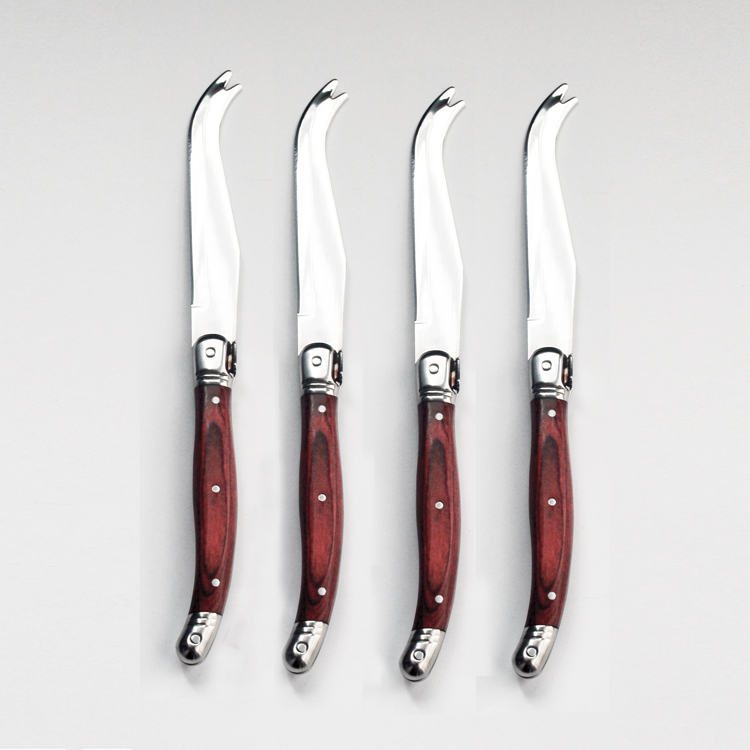
- Forked tips for serving
- Thin blades for precision
Use a gentle sawing motion to avoid crushing the cheese. A wire cutter or perforated blade works best.
Apply steady pressure with a sharp knife. For very hard cheeses, break them into chunks instead of slicing.
Cut cheese into uniform pieces to create a visually appealing platter. Consider different shapes like wedges, cubes, and slices.
Here's a helpful demonstration showing different techniques:
Proper maintenance ensures longevity and performance.
- Wash by hand instead of using a dishwasher
- Dry immediately to prevent rust
- Store in a knife block or protective sheath
- Sharpen regularly using a honing tool
- Using the wrong knife for the cheese type
- Applying too much pressure on soft cheese
- Not cleaning the knife between different cheeses
- Storing knives improperly
Avoiding these mistakes will improve both safety and results.
A cheese cutting knife plays a key role in assembling a cheese board.
Include:
- A variety of cheeses (soft, semi-hard, hard)
- Appropriate knives for each cheese
- Fruits, nuts, and crackers
- Balanced arrangement for visual appeal
Cheese should be served at room temperature for optimal flavor and texture.
Clean cuts prevent mixing flavors between different cheeses.
Each cheese should have its own knife to preserve its unique taste.
A soft cheese knife with holes in the blade is ideal because it prevents sticking and maintains the cheese's shape.
Yes, but it is not recommended. Regular knives can crush soft cheese and struggle with hard varieties.
Wash it with warm water and mild soap, then dry it immediately to prevent rust.
The holes reduce friction and prevent soft cheese from sticking to the blade.
Forked tips allow you to pick up and serve cheese slices without needing a separate utensil.


