

Views: 290 Author: Site Editor Publish Time: 2026-04-11 Origin: Site


Content Menu
● What Is a Cheese Serving Knife?
● Types of Cheese Serving Knives
● Blade Materials and Design Features
● Handle Materials: Comfort Meets Style
● How to Properly Use a Cheese Serving Knife
>> Step 1: Select the Right Knife
>> Step 2: Use Gentle Pressure
>> Step 3: Warm or Chill Accordingly
>> Step 4: Clean Between Cheeses
● How to Build a Perfect Cheese Board
● Recommended Brands and Buying Tips
● Sustainable and Modern Innovations
● Pairing Cheese Knives with Wine and Serving Etiquette
Cheese is a culinary art form — smooth, sharp, creamy, or aged to perfection. But even the finest cheese can lose its magic without the right knife. The cheese serving knife is the unsung hero of the cheese board, turning an ordinary snack into a gourmet experience.
In this guide, we'll explore the history, types, materials, uses, and care tips for cheese knives, supported by images and videos to enhance your understanding.
A cheese serving knife is specifically designed for cutting, slicing, and serving various types of cheese. Unlike standard kitchen knives, it often has unique blade shapes with holes or curved tips to prevent cheese from sticking and to allow easy serving.
The tradition of using tailored knives for cheese dates back centuries. European cheesemakers, particularly in France and Italy, developed specialized tools to handle different textures—soft, semi-soft, hard, and crumbly cheeses. By the 19th century, the cheese serving knife became an essential part of formal dining culture.
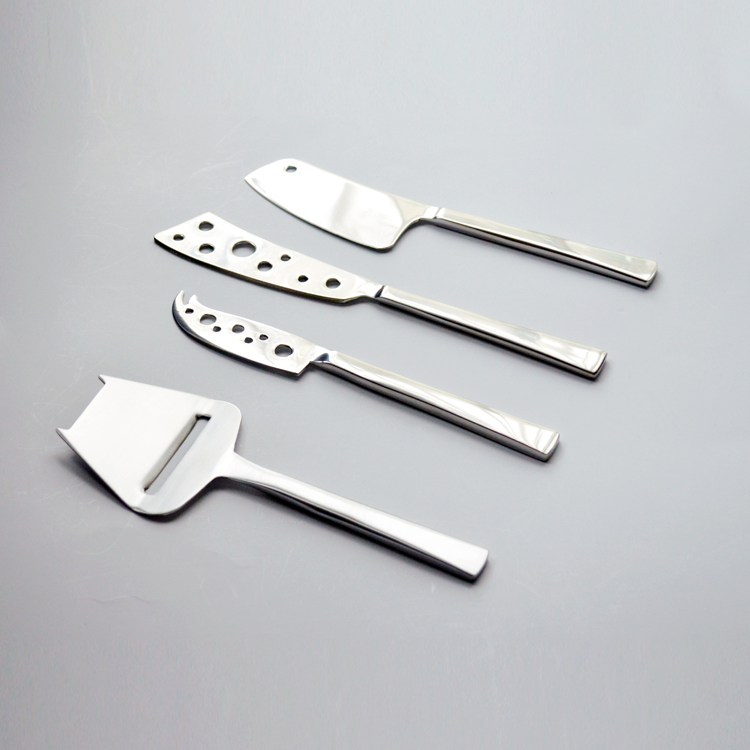
Different cheeses require different blades. Knowing which knife to choose enhances flavor and appearance.
Soft cheeses like Brie and Camembert need thin blades with holes to reduce sticking. Many have offset handles for cleaner cuts.
Hard cheeses such as Parmesan or aged Cheddar need strong, sturdy blades. Some have pointed tips for breaking and prying chunks apart.
Used mainly for creamy or semi-soft cheeses, spreader knives have blunt, rounded blades, ideal for spreading cheese on crackers or bread.
Cheese cleavers handle firm blocks, providing leverage for thicker slices. They have short, heavy blades for precise cuts.
These dual-purpose knives cut and serve. The pointed ends make it easy to pick up cheese slices neatly.
Durable, rust-resistant, and easy to clean—stainless steel is the classic choice. High-carbon versions maintain sharpness longer.
Ceramic blades add elegance and resist odor transfer. However, they're more fragile and best for soft cheeses.
Some cheese knives feature non-stick coatings like titanium or Teflon to enhance slicing and effortless cleaning.
The handle design determines both comfort and balance.
- Wood: Rustic charm, available in walnut, oak, or olive wood.
- Acrylic or Resin: Modern look with versatile color options.
- Stainless Steel: Sleek, hygienic, great for minimalist kitchens.
- Bamboo: Eco-friendly and lightweight, ideal for casual serving.
Mastering the technique can make a huge difference in your presentation.
Match blade type to cheese firmness. A wrong knife can crush or distort texture.
For soft cheese, slice with smooth, steady motions to avoid tearing.
Slightly warming soft cheeses or chilling harder ones can make cutting easier.
Wipe the blade after each slice to avoid mixing flavors or residues.
A proper cheese board pairs taste, texture, and visual appeal.
- Choose 3–5 cheeses of different textures.
- Add accompaniments: nuts, fruits, honey, and charcuterie.
- Label each cheese with its name and style.
- Use distinct knives for each cheese.
Keeping your cheese serving knives in great shape ensures lasting quality.
- Hand wash only with mild soap and warm water.
- Dry immediately to prevent staining or rust.
- Sharpen occasionally if the blade allows it.
- Store safely in a drawer organizer or magnetic strip.
When choosing a cheese serving knife set, consider both function and design. Popular brands include:
- Laguiole (France): elegant craftsmanship and signature bee logo.
- Boska (Netherlands): high-quality stainless knives for professionals.
- Zwilling (Germany): durability and ergonomic comfort.
- Jean Dubost (France): classic charm with handcrafted finishes.
When shopping, prioritize comfort, weight, and the knife's compatibility with your most-used cheeses.
Eco-conscious consumers are driving a wave of sustainable knife designs. Recycled steel, bamboo handles, and biodegradable packaging are common. Smart knives even integrate removable tips or dual-sided functions for compact storage.
Your tools should complement the moment.
- Use matching cheese knives and serving boards for a cohesive look.
- Offer each guest their own knife for hygiene.
- Pair hard cheeses with robust reds, soft cheeses with crisp whites.
- Using one knife for all cheeses.
- Forgetting to clean blades between cuts.
- Serving hard cheese with a dull knife.
- Ignoring cheese temperature before cutting.
1. What's the difference between a cheese knife and a regular kitchen knife?
A cheese knife has a thinner blade, often perforated or fork-tipped, designed to reduce sticking and preserve the cheese's texture.
2. Can I use a cheese knife for other foods?
Yes, for soft spreads or butter, but it's best reserved for cheese to maintain flavor purity.
3. How often should I sharpen my cheese serving knives?
Typically every few months, depending on frequency of use and blade material.
4. What's the best knife for a cheese enthusiast's starter set?
A soft cheese knife, a hard cheese cleaver, and a fork-tipped knife make a balanced trio.
5. How should I store my cheese knives safely?
Use a wooden block, a magnetic strip, or individual blade covers to protect edges and fingers.


