

Views: 290 Author: Site Editor Publish Time: 2026-05-26 Origin: Site


Content Menu
>> Why Choose Stainless Steel for Your Steak Knives?
>> Essential Features to Look for in a Steak Knife Set
>>> Blade Design: Serrated vs. Straight Edge
>>> Balance, Weight, and Handle Ergonomics
>> Maintenance and Longevity: Keeping Your Set Like New
>> Understanding the Investment
For any culinary enthusiast or home chef, the dining experience is defined not only by the quality of the ingredients but also by the tools used to enjoy the meal. A premium stainless steel steak knives set acts as the bridge between a perfectly seared piece of meat and a truly effortless dining moment. Far beyond mere functional cutlery, the right set elevates the aesthetics of your dining table while ensuring that every slice is clean, precise, and respectful of the culinary preparation you have invested in.
When you begin searching for the ideal set, you will quickly find that material science plays a crucial role in performance. Stainless steel is the industry standard for high-quality cutlery for several distinct reasons. First and foremost is its exceptional durability. Unlike carbon steel, which demands rigorous care to prevent oxidation, high-quality stainless steel provides significant corrosion resistance. This is vital because steak knives are frequently exposed to the acidic juices of cooked proteins and the moisture of a dinner setting.
Furthermore, modern stainless steel alloys, especially those labeled as high-carbon stainless, have evolved to offer superior edge retention. This means your knives stay sharp for longer periods, even with regular use. The non-porous nature of the metal ensures that bacteria cannot easily find a foothold, which is a major advantage for both food safety and cleaning efficiency.
Before finalizing your purchase, you must evaluate several key design characteristics. While the material is foundational, the execution of the blade and handle determines the actual "feel" and efficacy of the tool.
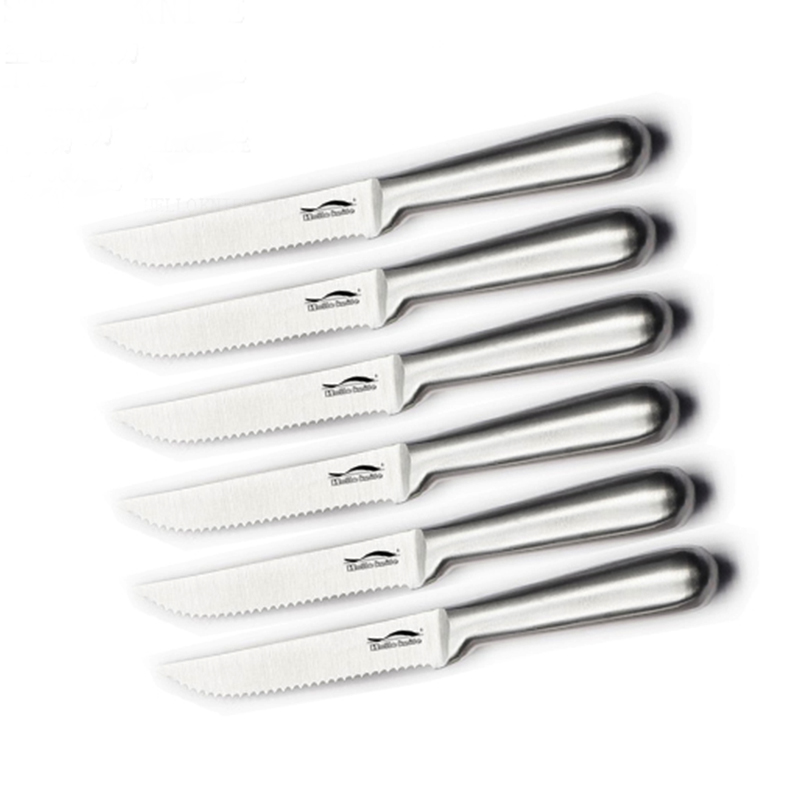
One of the most debated topics in the world of cutlery is the choice between serrated and straight edges. Serrated blades feature small teeth that grip the meat fibers, making them particularly useful if your cooking technique results in tougher crusts or if you are cutting through meat with a significant amount of connective tissue. However, a finely honed straight-edge blade offers a cleaner cut, allowing you to slice through tender cuts of meat without tearing the delicate fibers. Many professionals prefer the precision of a high-quality straight edge, provided it is kept well-sharpened.
A knife should feel like an extension of your hand. Look for a full tang construction, where the metal of the blade extends through the entire length of the handle. This provides balance, stability, and longevity. The handle material can range from polished wood to synthetic polymers or brushed steel. An ergonomic design is essential to prevent fatigue during a long dinner, ensuring a secure and comfortable grip for various hand sizes.
Investing in a premium set of knives is only the first step. To ensure they perform at their best for decades, proper maintenance is required. Regardless of how high-quality the stainless steel is, machine washing is generally discouraged. The high heat, harsh detergents, and the abrasive action of the dishwasher cycle can dull the edges and potentially damage the handle material over time.
Hand washing with mild soap and immediately drying the blades with a soft cloth is the best practice to prevent water spots and keep the finish pristine. For sets that require sharpening, invest in a good quality whetstone or a sharpening system tailored to your specific blade type. Regular maintenance will preserve the edge geometry and ensure that every dining experience is as satisfying as the first.
When you host guests, your steak knife set is one of the few pieces of kitchen equipment that is seen and handled by others. Choosing a set that reflects your personal style—whether it is a classic, rustic wooden handle or a modern, industrial, all-steel aesthetic—adds a personal touch to your table settings. For a typical household, a set of eight is generally considered the minimum requirement for hosting dinner parties, though sets of four are excellent for intimate meals. Remember, a good knife is a long-term companion in the kitchen and at the dining table, making it a purchase where quality should always take precedence over quantity.
Q: Can I put my stainless steel steak knives in the dishwasher?
A: It is strongly recommended to wash them by hand. Dishwashers can cause microscopic damage to the edge and degrade the handle material over time, shortening the lifespan of your knives.
Q: What is the difference between stamped and forged steak knives?
A: Forged knives are created from a single piece of metal that is heated and hammered into shape, resulting in a heavier, more balanced tool with a bolster. Stamped knives are cut from a sheet of steel, making them lighter, often more affordable, and sometimes quite sharp, though they lack the heft and bolster of forged options.
Q: How often should I sharpen my steak knives?
A: This depends on usage, but generally, a light hone before use or after a few meals can keep the edge performing well. If you notice the knife tearing meat rather than slicing, it is time for a proper sharpening session.
Q: Why do some steak knives have serrated blades?
A: Serrations are designed to "saw" through a tougher crust or exterior, which can be helpful if you are cutting through heavily seared steaks or tough proteins. They hold their sharpness longer because the edge teeth touch the cutting board less frequently than a straight blade.
Q: What does "full tang" mean in a knife description?
A: A full tang means the metal blade extends through the entire length of the handle. This construction is highly desired because it provides superior strength, balance, and stability, reducing the risk of the handle snapping off from the blade under pressure.


