
Views: 290 Author: Site Editor Publish Time: 2025-12-22 Origin: Site


Content Menu
● Understanding Carving Knives
● Key Considerations When Choosing a Carving Knife Set
● Benefits of a Good Carving Knife Set
>> 2. Safety
● Tips for Maintaining Your Carving Knife Set
>> 4. Avoid Cutting on Hard Surfaces
Choosing the right carving knife set is essential for anyone who enjoys cooking, especially during special occasions like holidays or family gatherings. A good carving knife set not only enhances your culinary experience but also ensures that you can serve beautifully sliced meats with ease. In this article, we will explore various tips and considerations for selecting the perfect carving knife set, including the types of knives available, materials, ergonomics, and maintenance.
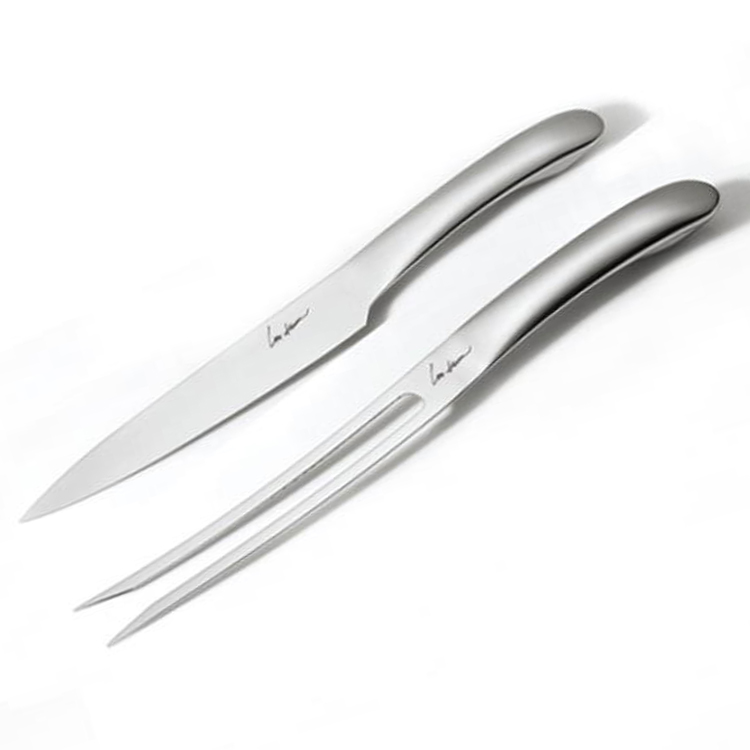
A carving knife is a long, thin knife designed specifically for slicing cooked meats. Its sharp blade allows for precise cuts, making it easier to serve beautiful portions of meat. Carving knives often come with a fork to help hold the meat in place while slicing.
1. Traditional Carving Knife: Typically features a straight blade and is ideal for slicing roasts and poultry.
2. Sujihiki: A Japanese-style carving knife with a long, thin blade, perfect for slicing cooked meats and fish.
3. Electric Carving Knife: Offers convenience and speed, making it easier to carve through tougher cuts of meat.
The material of the blade significantly impacts the knife's performance and durability. Here are some common materials:
- Stainless Steel: Resistant to rust and easy to maintain, making it a popular choice for many chefs.
- High-Carbon Steel: Holds a sharper edge longer but requires more maintenance to prevent rust.
- Damascus Steel: Known for its beautiful patterns and exceptional sharpness, often used in high-end custom knives.
The handle of a carving knife can be made from various materials, each offering different benefits:
- Wood: Provides a classic look and feel, with options like walnut, cherry, or exotic woods like koa.
- Plastic: Lightweight and easy to maintain, often available in various colors.
- Metal: Offers durability and a modern aesthetic, but can be cold to the touch.
The design of the blade can also be customized:
- Straight Edge: Ideal for clean, precise cuts.
- Serrated Edge: Useful for slicing through tougher crusts or skins.
- Grantons: Features hollowed-out areas along the blade to reduce friction and prevent food from sticking.
Comfort is crucial when using a carving knife, especially during long cooking sessions. Look for knives with ergonomic handles that fit comfortably in your hand. A good grip can reduce fatigue and improve control while carving.
The length of the blade should match the size of the meat you typically carve. A longer blade is better for larger cuts, while a shorter blade may be more manageable for smaller tasks. Additionally, consider the flexibility of the blade; a more flexible blade can help with intricate carving tasks.
A high-quality carving knife allows for precise cuts, which is essential for presentation. Whether you're slicing a roast or carving a turkey, a sharp knife will make the process smoother and more enjoyable.
A sharp knife is safer than a dull one. Dull knives require more force to cut through food, increasing the risk of slipping and causing injury. Investing in a good carving knife set can enhance safety in the kitchen.
Many carving knife sets come with additional tools, such as carving forks or sharpening tools, making them versatile for various tasks beyond just carving.
A beautifully designed knife set can enhance the visual appeal of your kitchen. Custom knives can feature intricate designs, unique handle materials, and personalized engravings, making them not just tools but also works of art.
Keeping your knives sharp is essential for performance and safety. Invest in a good sharpening tool or take your knives to a professional for sharpening. Regular maintenance will prolong the life of your knives.
Always hand wash your knives with mild soap and water. Avoid putting them in the dishwasher, as the heat and moisture can damage the blades and handles. Dry them immediately to prevent rust.
Store your knives in a knife block, magnetic strip, or protective sheaths to keep them safe and prevent damage. Avoid tossing them in a drawer where they can get nicked or dulled.
Use a cutting board made of wood or plastic to protect the blade's edge. Cutting on hard surfaces like glass or stone can dull the knife quickly.
Choosing the right carving knife set is a crucial step for anyone who enjoys cooking. By considering factors such as blade material, handle ergonomics, and maintenance, you can select a set that not only meets your culinary needs but also enhances your cooking experience. A good carving knife set will serve you well for years to come, making every meal a special occasion.
1. What is the best material for a carving knife blade?
High-carbon stainless steel is often recommended for its sharpness and durability.
2. How often should I sharpen my carving knife?
It depends on usage, but generally, you should sharpen your knife every few months or whenever it feels dull.
3. Can I put my carving knife in the dishwasher?
No, it is best to hand wash your carving knife to prevent damage.
4. What length of carving knife should I choose?
The length should match the size of the meat you typically carve; longer blades are better for larger cuts.
5. How should I store my carving knife set?
Store your knives in a knife block, magnetic strip, or protective sheaths to keep them safe and sharp.


