

Views: 280 Author: Site Editor Publish Time: 2026-06-01 Origin: Site


Content Menu
>> The Anatomy of the Bread Knife
>>> Blade Length and Flexibility
>> The Versatility of the Serrated Blade
>>> Mastering Produce with Tough Skins
>> Selecting the Right Blade for Your Needs
>>> Choosing Between Pointed Teeth and Scallops
>>> Handle Ergonomics and Grip
>> Essential Maintenance and Sharpness
>> Advanced Techniques for Professional Results
In the culinary world, where precision and finesse are often the hallmarks of success, the bread knife stands out as a unique and indispensable instrument. Often relegated to the background in favor of the chef's knife, the bread knife is, in reality, a marvel of specialized engineering. To truly excel in the kitchen, one must move beyond simply owning this tool to truly understanding the bread knife: how it works, why it is shaped the way it is, and how to harness its power for tasks that go well beyond the bakery.
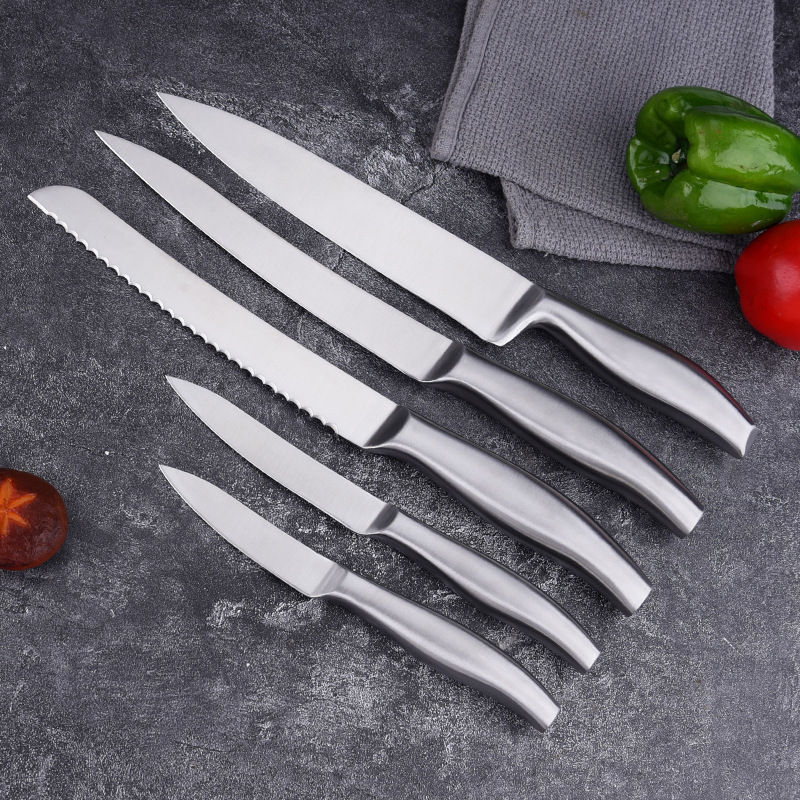
To understand the bread knife, you must first examine its physical structure. Unlike the straight-edged blade of a paring or chef's knife, the bread knife features a serrated edge—a series of teeth or scallops designed to grip and tear through tough textures.
The primary purpose of the serrated edge is to create traction. When you encounter a loaf of artisan bread with a thick, caramelized crust, a straight blade often slides off the surface, requiring significant force to break through. This force inevitably compresses the soft crumb inside, leading to uneven, squashed slices. The bread knife solves this by using its points to puncture the crust, followed by the valleys of the serrations, which act as miniature saw blades to gently cut through the structure.
Most high-quality bread knives are quite long, usually ranging from nine to twelve inches. This length is intentional. A longer blade allows for a longer, more fluid sawing motion. Instead of having to chop down, you can use the entire length of the blade to glide through the loaf. This reduces physical fatigue and results in much cleaner, more aesthetically pleasing slices. Furthermore, a slightly flexible blade can be beneficial when working with delicate sponges or cakes, allowing the user to follow the curvature of the pastry.
While the name implies a single purpose, the bread knife is one of the most versatile tools in a kitchen. Once you grasp the mechanics of the serrated edge, you will find yourself reaching for it for a wide variety of tasks.
The bread knife is the ultimate tool for tomatoes. The secret to slicing a tomato without turning it into mush lies in the serrations. They bite into the tomato's tough, waxy skin instantly, allowing the knife to pass through the soft interior without applying crushing pressure. This results in perfect, translucent slices that are impossible to achieve with a dull or even a sharp straight-edged knife.
For the home baker, a bread knife is a savior. When leveling a layer cake, the serrated edge acts as a precision tool. It grabs the sponge, allowing you to slice perfectly horizontal layers without tearing the crumb. It is also exceptional for scoring the tops of puff pastry or slicing through delicate meringues that would shatter under the weight of a standard blade.
Not all bread knives are built the same. When you are looking to purchase one, there are specific factors to keep in mind to ensure you are getting a tool that will last a lifetime.
You will likely see two main types of serrations on the market: sharp, pointed teeth and smooth, scalloped edges. Sharp, pointed teeth are very aggressive and excellent at piercing extremely hard crusts, but they can be more difficult to sharpen and tend to tear softer breads. Scalloped edges are much more forgiving. They provide a cleaner cut with fewer crumbs and are generally easier to maintain. For the average home cook, a scalloped design is almost always the superior choice.
Since using a bread knife often requires repetitive motion, the handle must be comfortable. Look for a handle that fits your hand naturally and provides a slip-resistant surface. Many professionals prefer handles with a full tang, meaning the metal of the blade extends all the way through the handle, providing superior balance and durability.
One of the biggest myths surrounding the bread knife is that it cannot be sharpened. While it is true that you cannot sharpen them on a standard stone, they do not require frequent sharpening because the teeth are protected from direct contact with the cutting board.
* Avoid Dishwashers: Never put your bread knife in the dishwasher. The extreme heat and detergent will damage the handle and dull the edge.
* Use Proper Surfaces: Always use a wooden or plastic cutting board. Avoid glass or granite countertops at all costs, as they will destroy the edge of your blade in seconds.
* Specialized Sharpening: If your knife does become dull, you can purchase a specialized honing rod designed for serrated edges. These rods are tapered to fit into the valleys of the serrations, allowing you to hone each individual scallop.
If you want to move from amateur to professional, focus on your slicing technique. Most people make the mistake of pressing down. Instead, pull the knife backward while maintaining a gentle downward touch. Let the serrations do the work. Imagine you are cutting a piece of wood with a handsaw—it is not the force of your arm that does the work, but the edge of the tool itself.
Q: Can I use a bread knife to carve meat?
A: Yes, a long, serrated bread knife is excellent for carving large roasts or turkeys, as it can slice through the meat cleanly without tearing the fibers.
Q: Why does my bread knife tear my cake?
A: This usually happens if the cake is too warm or if your knife is dull. Always let your cake cool completely before slicing, and check if your blade needs honing.
Q: How do I store a bread knife safely?
A: Use a wall-mounted magnetic strip or a dedicated knife block. Storing them in a drawer with other utensils is the fastest way to ruin the serrated teeth.
Q: Is a heavier knife always better?
A: Not necessarily. A balanced knife is more important than a heavy one. You want a tool that feels like an extension of your arm, not a heavy weight you have to wrestle with.
Q: What is the ideal length for a bread knife?
A: For most home kitchens, a 9-inch or 10-inch blade is considered the gold standard, providing the perfect balance between control and reach.


