

Views: 290 Author: Site Editor Publish Time: 2025-12-03 Origin: Site


Content Menu
● Understanding the Bread Knife
>> Key Features of a Bread Knife
● Understanding the Chef's Knife
>> Key Features of a Chef's Knife
● Comparing Bread Knives and Chef's Knives
● Choosing the Right Knife for Your Needs
>> Caring for Your Bread Knife
>> Caring for Your Chef's Knife
In the world of culinary tools, knives are among the most essential. Two of the most commonly used knives in any kitchen are the bread knife and the chef's knife. While both serve important functions, they are designed for different tasks and have distinct features. This article will explore the differences between these two types of knives, their specific uses, and how to choose the right one for your kitchen needs.
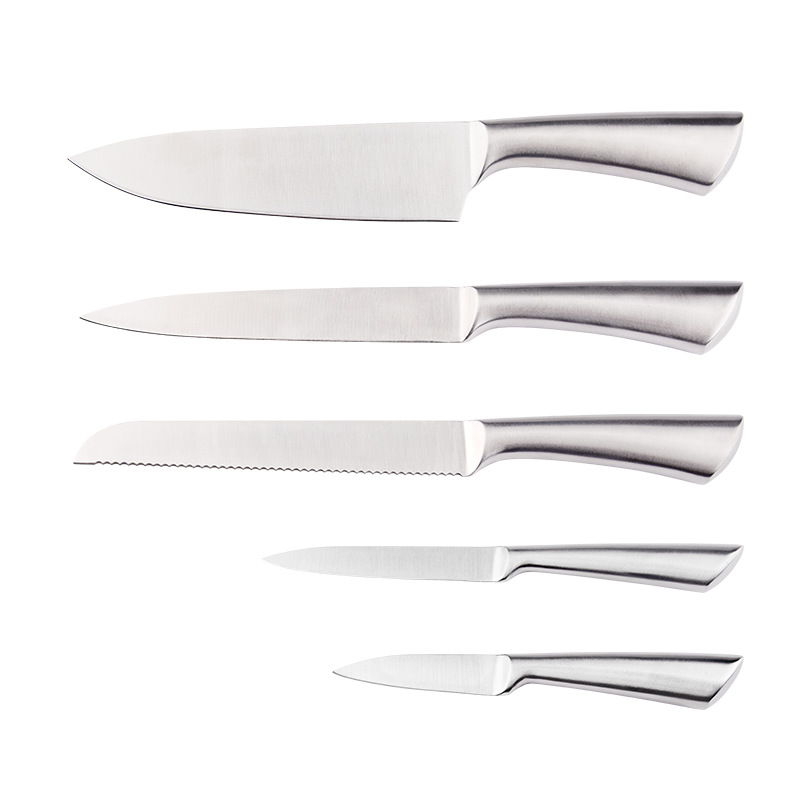
A bread knife is a specialized kitchen tool designed primarily for slicing bread. It features a long, serrated blade that allows it to cut through crusty loaves without crushing the soft interior. The serrations on the blade act like tiny saw teeth, making it easier to slice through tough crusts.
- Serrated Blade: The most defining feature of a bread knife is its serrated edge, which helps grip and slice through crusty surfaces.
- Length: Bread knives typically range from 8 to 10 inches in length, providing enough reach to cut through larger loaves.
- Design: The blade is often slightly curved, allowing for a smooth sawing motion when cutting.
Bread knives are not limited to just slicing bread. They can also be used for:
- Cutting Cakes: The serrated edge allows for clean cuts through layered cakes without damaging the structure.
- Slicing Tomatoes: The sharp serrations make it easy to cut through the skin of tomatoes without squishing the flesh.
- Handling Pastries: Bread knives can slice through delicate pastries without tearing them apart.
A chef's knife is a versatile kitchen tool that can handle a wide range of tasks. It typically features a broad, straight blade that tapers to a point, allowing for a rocking motion when chopping.
- Straight Edge: Unlike the serrated edge of a bread knife, a chef's knife has a smooth, straight blade that is ideal for chopping and slicing.
- Length: Chef's knives usually range from 6 to 12 inches, with 8 inches being the most common size.
- Versatility: This knife can be used for a variety of tasks, including chopping vegetables, slicing meat, and mincing herbs.
Chef's knives are incredibly versatile and can be used for:
- Chopping Vegetables: The broad blade allows for efficient chopping and dicing of various vegetables.
- Slicing Meat: A chef's knife can easily slice through cooked meats, making it a staple for meal preparation.
- Mincing Herbs: The sharp edge is perfect for finely chopping herbs and garlic.
The most significant difference between a bread knife and a chef's knife is their design. The bread knife's serrated blade is specifically designed for cutting through crusty surfaces, while the chef's knife's straight edge is meant for chopping and slicing.
- Bread Knife: Best for slicing bread, cakes, and soft fruits. The serrated edge allows for a sawing motion that minimizes pressure on the food.
- Chef's Knife: Ideal for a wide range of kitchen tasks, including chopping, slicing, and dicing. The straight edge allows for precise cuts and a rocking motion.
Using a bread knife requires a different technique than using a chef's knife. When using a bread knife, you should employ a gentle sawing motion, allowing the serrations to do the work. In contrast, a chef's knife is used with a rocking motion, where the tip of the knife remains in contact with the cutting board while the handle moves up and down.
If you frequently bake bread or enjoy crusty loaves, a bread knife is an essential tool. It is also useful for anyone who enjoys baking cakes or working with soft fruits and vegetables.
A chef's knife is a must-have for any kitchen. Its versatility makes it suitable for a wide range of tasks, from chopping vegetables to slicing meat. If you can only invest in one knife, a chef's knife is the best choice.
- Cleaning: Hand wash your bread knife with warm, soapy water and dry it immediately to prevent rust.
- Sharpening: Bread knives do not require frequent sharpening, but you can use a honing steel to maintain the edge.
- Cleaning: Similar to a bread knife, hand wash your chef's knife and dry it immediately.
- Sharpening: Chef's knives should be sharpened regularly to maintain their cutting performance. Use a whetstone or professional sharpening service as needed.
Both the bread knife and the chef's knife are essential tools in the kitchen, each serving unique purposes. Understanding their differences will help you choose the right knife for your cooking needs. Whether you're slicing a crusty loaf of bread or chopping vegetables, having the right knife can make all the difference in your culinary experience.
1. Can I use a chef's knife to cut bread?
While you can use a chef's knife to cut bread, it may crush the loaf. A bread knife is specifically designed for this task.
2. What is the best length for a bread knife?
A bread knife typically ranges from 8 to 10 inches, which is ideal for slicing most loaves of bread.
3. How do I maintain my bread knife?
Hand wash your bread knife and dry it immediately. Use a honing steel to maintain the edge.
4. Is a chef's knife necessary if I have a bread knife?
Yes, a chef's knife is versatile and can handle a variety of tasks that a bread knife cannot.
5. What types of food can I cut with a bread knife?
In addition to bread, you can use a bread knife to slice cakes, tomatoes, and other soft fruits and vegetables.


