

Views: 290 Author: Site Editor Publish Time: 2026-01-06 Origin: Site


Content Menu
>> The Purpose of a Steak Knife
>>> Straight-Edged Steak Knives
● Key Features of a Good Steak Knife
When it comes to enjoying a perfectly cooked steak, having the right tools is essential. A good steak knife can enhance your dining experience by making it easier to cut through meat without tearing or shredding. In this article, we will explore the key features that make a steak knife exceptional, including blade material, design, handle comfort, and maintenance. We will also provide tips on how to choose the best steak knife for your needs.
A steak knife is specifically designed to cut through meat with ease. Unlike regular table knives, steak knives have sharper blades and are often serrated or straight-edged, allowing for clean cuts without damaging the meat's texture. The right steak knife can make a significant difference in how enjoyable your meal is.
There are two main types of steak knives: serrated and straight-edged. Each type has its advantages and is suited for different cutting styles.
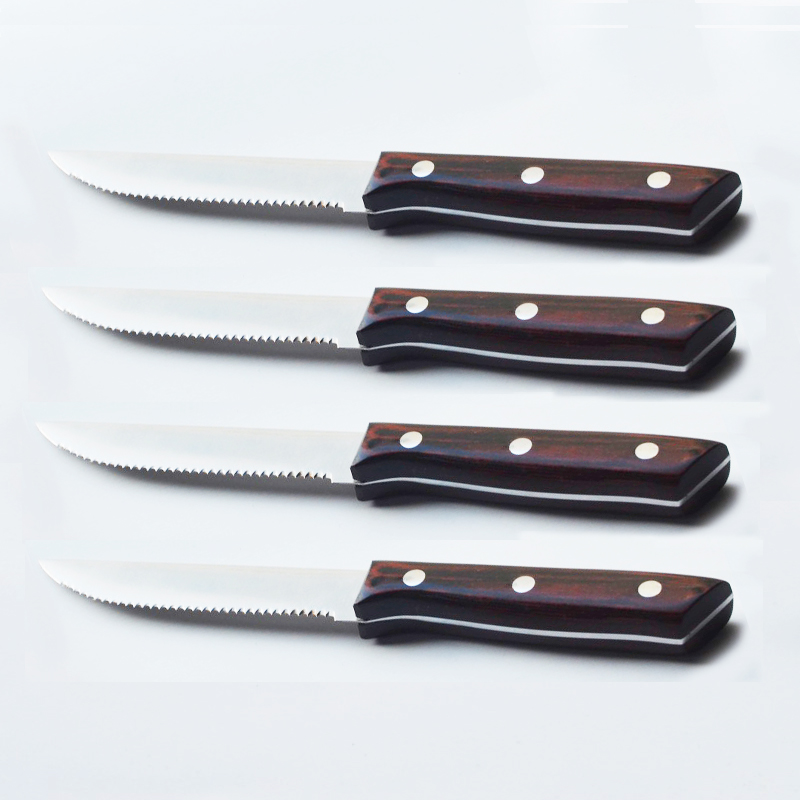
Serrated knives feature a saw-like edge that allows them to cut through tougher meats with minimal effort. They are particularly useful for cutting through the crust of a steak without applying too much pressure, which can lead to tearing.
Straight-edged knives provide a clean cut and are often preferred for their precision. They require regular sharpening but can offer a more refined cutting experience, especially for tender cuts of meat.
The material of the blade is one of the most critical factors to consider. Common materials include:
- Stainless Steel: Known for its durability and resistance to rust, stainless steel is a popular choice for steak knives. High-carbon stainless steel is particularly favored for its ability to maintain a sharp edge.
- Carbon Steel: While carbon steel blades can achieve a sharper edge, they require more maintenance to prevent rusting. They are often favored by chefs for their performance.
- Ceramic: Ceramic blades are lightweight and maintain their sharpness longer than metal blades. However, they can be more fragile and are not suitable for cutting through bones.
The design of the blade can impact its performance. Consider the following:
- Serration: A well-designed serration can enhance cutting efficiency, especially for tougher meats.
- Thickness: Thicker blades can provide more stability, while thinner blades may offer more precision.
- Length: The length of the blade should be appropriate for the type of meat you typically serve. Longer blades can be beneficial for larger cuts, while shorter blades may be more manageable for smaller portions.
The handle material affects both the comfort and aesthetics of the knife. Common handle materials include:
- Wood: Wooden handles offer a classic look and a comfortable grip. However, they require more care to maintain their appearance and prevent damage.
- Plastic: Plastic handles are lightweight and easy to clean, making them a practical choice for everyday use.
- Composite Materials: Handles made from composite materials can provide the best of both worlds, offering durability and a comfortable grip.
A good steak knife should feel comfortable in your hand. Look for knives with ergonomic designs that fit well in your grip. The handle should allow for a secure hold, enabling you to cut with precision and control.
A well-balanced knife feels comfortable in your hand and allows for better control while cutting. When choosing a steak knife, consider the following:
- Weight: The knife should feel substantial but not too heavy. A medium weight is often ideal for comfort and control.
- Balance: The knife should be balanced between the blade and the handle. A well-balanced knife will feel like an extension of your hand, making it easier to cut through meat.
The appearance of your steak knives can enhance your table setting. Consider the following:
- Design: Choose a design that complements your dinnerware and overall dining theme. Classic designs may suit formal settings, while modern designs can enhance casual dining experiences.
- Color: The color of the knife should also harmonize with your tableware. Neutral colors tend to blend well with various table settings, while bold colors can make a statement.
Proper care is essential for maintaining the performance and appearance of your steak knives. Here are some tips:
- Hand Wash: Always hand wash your steak knives with mild soap and water. Avoid using a dishwasher, as the heat and moisture can damage the handles and blades.
- Dry Immediately: After washing, dry the knives immediately to prevent water spots and rust.
- Sharpen Regularly: Keep your knives sharp by honing them regularly. A sharp knife is safer and more effective for cutting.
A good steak knife is an essential tool for any meat lover. By considering factors such as blade material, handle design, comfort, and maintenance, you can choose the perfect steak knife that enhances your dining experience. Remember to care for your knives properly to ensure they last for years to come.
1. What is the best material for steak knife blades?
- High-carbon stainless steel is often considered the best material for its durability and ability to maintain a sharp edge.
2. How often should I sharpen my steak knives?
- It is recommended to sharpen your steak knives regularly, depending on usage. A good rule of thumb is to hone them before each use.
3. Can I put my steak knives in the dishwasher?
- No, it is best to hand wash steak knives to prevent damage to the blades and handles.
4. What is the difference between serrated and straight-edged steak knives?
- Serrated knives are better for cutting through tougher meats, while straight-edged knives provide a cleaner cut and are preferred for tender cuts.
5. How should I care for wooden handle steak knives?
- Hand wash them, dry immediately, and occasionally apply food-safe mineral oil to maintain the wood's appearance.


