

Views: 280 Author: Site Editor Publish Time: 2026-04-30 Origin: Site


Content Menu
>> Straight Edges for Precision
● Material Construction Breakdown
● Size and Weight Considerations
>> Ribeye and Serrated Mastery
● Top Brands Showcasing Differences
● Professional Chef Perspectives
● Storage and Organization Tips
● Customizing for Personal Use
● Upgrading from Dinner Knives
● Recipes Highlighting Superiority
● Budget Versus Premium Choices
● Innovative Features Emerging
● Artistic Plating Enhancements
● FAQs
Steak knives stand out as specialized tools that transform how we enjoy meat at the table, offering precision where a regular dinner knife falls short. Their design prioritizes clean cuts through cooked proteins, enhancing every dining moment with effortless control.
Steak knives feature shorter blades, typically four to five inches long, perfect for maneuvering at the dinner table without overwhelming the plate. Regular dinner knives stretch longer, around six to eight inches, built for broader tasks like buttering bread or slicing vegetables.
The blade shape on steak knives points sharper and narrower, allowing targeted slices into meat fibers. Dinner knives have rounded or less pointed tips to spread and cut softer foods safely.
These distinctions ensure steak knives handle tough exteriors while preserving juicy interiors, unlike the versatile but less aggressive dinner knife.
Serrated edges mimic tiny saw teeth, gripping seared crusts on ribeyes or pork chops without slipping. This sawing action tears less into tender meat below the surface.
Regular dinner knives rarely serrate, relying on smooth edges for even spreads across toast or cheese. Serrations make steak knives forgiving on overcooked cuts.
Users saw through gristle effortlessly, turning challenging bites into smooth experiences.
Straight-edged steak knives deliver razor-like slices ideal for filet mignon or tenderloins. One firm press yields paper-thin portions without ragged edges.
Dinner knives with straight edges blunt faster on meats, designed more for light scraping than deep penetration. Straight steak blades sharpen to surgical keenness.
Both edge types serve distinct cuts, but steak knives excel where dinner knives struggle.
A hand wields a steak knife through a sizzling ribeye, juices pooling beside golden fries, capturing the tool's grip in real action.
High-carbon stainless steel dominates steak knife blades for rust resistance and long-lasting sharpness. This alloy balances hardness with flexibility under table pressure.
Dinner knives often use softer stainless grades, prioritizing affordability over repeated meat-cutting endurance. Steak knives forge thicker spines to withstand bone proximity.
Full tang construction runs blade metal into handles, providing steak knives unmatched balance and durability. Dinner knives frequently stamp blades, lighter but prone to wobble.
Steak knife handles swell ergonomically, fitting palms for controlled downward pressure on steaks. Materials like pakkawood or micarta absorb moisture without slipping.
Dinner knife handles stay slim and neutral, suiting quick passes over pastries or fruits. Heavier steak handles anchor cuts through fat caps.
Textured rivets secure grips during extended meals, reducing hand strain compared to smooth dinner knife shafts.
Compact steak knives weigh medium, around two to three ounces each, nimble for precise table work. Dinner knives lighten up for all-day casual use.
Shorter lengths prevent awkward reaches across crowded plates. This portability shines during family barbecues or intimate dinners.
Balance centers near the bolster on steak knives, feeling like natural hand extensions.
Steak knives target cooked meats exclusively, slicing against the grain to unlock flavors locked in fibers. Dinner knives multitask across salads, roasts, and desserts.
At steakhouses, servers place steak knives right of plates for immediate access. Dinner knives rest further out, signaling general utility.
Versatility limits dinner knives on prime cuts, where steak knives preserve texture and moisture.
Medieval diners carried personal daggers resembling early steak knives for shared trenchers. Modern steak knives refined in the twentieth century for home tables.
Dinner knives emerged from butter knives, evolving broader for colonial spreads. Steak knives specialized post-World War II with rising beef consumption.
Today, global influences blend Japanese straight edges with European serrations.
Serrated steak knives self-sharpen partially, needing hones less often than straight ones. Dinner knives dull uniformly, requiring frequent steels.
Hand-wash steak knives to protect edges; dishwashers chip serrations over time. Dry immediately to avert spots on premium steels.
Store steak knives in blocks or sheaths, isolating from dinner sets to prevent nicks.
Ribeye's marbled fat yields to serrated grips, preventing slides on griddled surfaces. Straight dinner knives mash rather than section.
Even bites emerge uniform, maximizing char and juice harmony.
Tender filets demand straight steak knife finesse for fan-like plating. Dinner knives tear silken textures unnecessarily.
Clean edges highlight subtle seasonings without distraction.
Wusthof crafts steak knives with bolstered full tangs, far sturdier than their dinner counterparts. Shun's damascus layers gleam sharper for meats.
Laguiole's bee emblems grace serrated sets, elegant beyond plain dinner blades. Messermeister offers pakkawood heft absent in basic flatware.
These marques elevate steak knives to heirlooms, outshining utilitarian dinner tools.
Position steak knives parallel to plate edges, blade inward for right-handers. Dinner knives angle outward for passing.
Switch seamlessly during multi-course meals, signaling course transitions. Guests appreciate the specialized touch on meat nights.
Pre-slice tough sections tableside with steak knives for accessibility.
Blunted steak knife tips protect young users while mimicking adult performance. Dinner knives already round, but lack meat-cutting power.
Color-coded handles engage children safely. Scale sizes fit small grips perfectly.
Chefs stock steak knives for plating demos, sharper than service dinner knives. Serrated versions speed prep without tearing.
Full tangs endure high-volume service, unlike stamped dinner flats.
Magnetic blocks cradle steak knife edges safely apart. Drawer trays segregate from dinner knives to avoid dulling.
Travel cases with slots protect sets for picnics. Acrylic stands display differences visually.
Soak steak knives briefly in warm suds, scrub serrations with brushes. Dinner knives rinse quicker, less residue buildup.
Vinegar dips polish blades post-meal. Pat dry to maintain factory sheen.
Engrave steak knife handles with initials, personalizing beyond generic dinner sets. Replace worn grips on heirloom blades.
Mix serrated and straight in collections for varied proteins.
French Laguiole curves favor straight edges for finesse dining. American serrated dominate barbecues, gripping burgers too.
Japanese nakiri influences blend into hybrid steak designs. German solingen forges indestructible spines.
Transition with four-piece steak sets for couples. Expand to eight for gatherings.
Pair with carving boards for full meat experiences. Notice immediate cut quality leaps.
Sear post-oven for crust; serrated steak knives conquer effortlessly. Dinner knives falter here.
Season simply, rest ample, slice against grain.
Pan-roast tender cores; straight edges fan elegantly. Avoid dinner knife raggedness.
Baste in compound butters for finale.
Impress with matched steak knife sets at grill parties. Place settings unify themes.
Kids' blunt versions keep flows smooth. Guests savor precision unavailable from dinner knives.
Entry steak knives outperform high-end dinner flats on meats. Invest mid-range for longevity.
Luxury damascus rewards frequent users with heirloom appeal.
Hollow edges reduce sticking on fatty cuts. Titanium coatings resist juices better.
Ergonomic bolsters evolve for arthritis ease. Modular handles swap for moods.
Compact steak knife sets pack flat for camping. Sheaths prevent baggage snags.
Rugged cases endure outdoor feasts. Lighter than full dinner services.
Recycled stainless forms durable steak blades. Bamboo handles renew sustainably.
Longevity trumps disposables, cutting waste over dinner knife churn.
Antique silver steak knives polish to mirrors, sharper than modern dinner replicas. Collect for display dinners.
Restore edges professionally for revival.
Rotate steak knives into weeknight rotations for chops. Elevate roasts beyond dinner knife basics.
Family sets foster traditions around clean cuts.
Portion steaks accurately with precise blades. Track macros via thin slices.
Serrated grips handle lean flank effortlessly.
Steak knives enable mosaic slices for visual feasts. Dinner knives limit creativity.
Layer with garnishes for Instagram appeal.
Pair steak knives with meat thermometers for doneness. Garnet sharpeners maintain edges weekly.
Full sets include sheaths for completeness.
Argentine parrillas deploy hefty serrated for asados. Japanese shabu-shabu favors straight finesse.
Tex-Mex fajitas grip via teeth, beyond dinner flats.
Anchor with steak knives, add dinner for versatility. Seasonal rotations keep fresh.
Trade extras for variety smartly.
Symmetric steak knife designs suit all. Custom bevels sharpen reversely.
Most outpace handed dinner knives anyway.
Smart sensors signal dullness via apps. Nano-coatings self-heal micro-chips.
Graphene edges promise eternal sharpness.
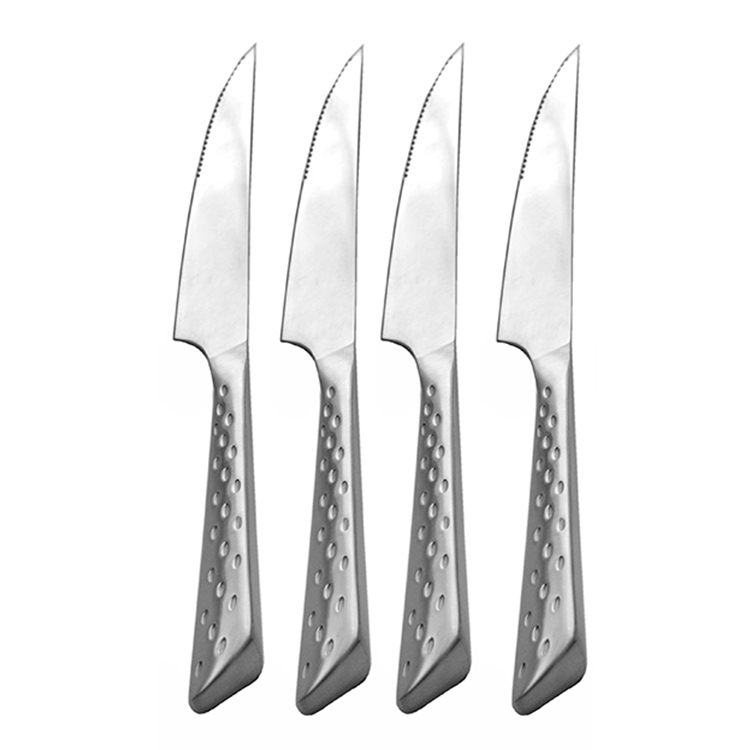
Why do steak knives often have serrated edges?
Serrated edges grip and saw through tough meat crusts without slipping, preserving tender interiors better than smooth dinner knife edges.
Can I use a steak knife for tasks other than meat?
Yes, they slice cheeses, fruits, or sandwiches cleanly, outperforming duller dinner knives on firmer foods.
How do I sharpen serrated steak knives?
Use tapered hones matching teeth gaps, or professional services, as standard sharpeners skip serrations effectively.
Are steak knives dishwasher safe?
Many are, but hand-washing preserves edges and wooden handles longer than harsh dishwasher cycles.
What handle material lasts longest on steak knives?
Micarta or pakkawood resists moisture and impacts best, staying grippy unlike basic plastic dinner handles.
Should I buy steak knives in sets or singles?
Sets ensure uniformity for tables, with storage included, ideal over mismatched dinner knife accumulations.


