

Views: 270 Author: Site Editor Publish Time: 2026-04-16 Origin: Site


Content Menu
● Core Advantages of Stainless Steel
● Comparison to Other Materials
● Cost-Effectiveness Over Time
● Manufacturing Quality Indicators
● Environmental Considerations
● Innovations in Stainless Tech
● Related Questions and Answers
>> 1. Is stainless steel sharper than carbon steel?
>> 2. Can stainless steak knives rust?
>> 3. How long do stainless steak knives last?
>> 4. Are they dishwasher safe?
>> 5. What's the best stainless grade for knives?
>> 6. Do they work on tough meats?
Stainless steel stands out as the top material for steak knives due to its unbeatable combination of durability, rust resistance, and low maintenance. It ensures clean cuts through meat while staying sharp and attractive over years of use, making it ideal for both daily dinners and special occasions.
Stainless steel contains chromium, which creates a protective layer that prevents rust and corrosion even after exposure to moisture or acidic foods. This makes it far superior to carbon steel, which can develop patina or spots without constant care.
The material balances hardness and flexibility, allowing blades to hold an edge during repeated slicing without becoming brittle. Home cooks appreciate how it maintains a polished look without frequent polishing.
Chromium in stainless steel forms an invisible barrier that repels water and stains. Even in humid kitchens or after dishwasher runs, high-quality grades like 18/10 stay spotless.
Lower grades might show minor pitting, but premium alloys excel in real-world conditions.
A close-up of a stainless steel blade repelling water droplets effortlessly.
Carbon steel offers razor sharpness but rusts quickly without oiling and drying. Ceramic blades are lightweight and stay sharp but chip easily on bones or hard surfaces.
Stainless steel hits the sweet spot, providing reliable performance without the hassles.
Carbon steel demands meticulous maintenance, including immediate drying and occasional seasoning. It excels in edge retention but fails in busy households where time is short.
Stainless steel forgives minor neglect, keeping its shine through everyday use.
Watch stainless steel outperform carbon in a moisture test side by side.
Forged stainless steel steak knives withstand table banging and frequent washing better than stamped alternatives. Full-tang construction adds balance and longevity.
They slice through ribeye, tenderloin, or flank steak smoothly, enhancing the dining experience.
High-carbon stainless variants like 440C or VG-10 hold sharpness longer than basic alloys. Serrated versions need even less honing.
Users report years of service with minimal touch-ups.
Sliced steak on a plate, showcasing clean cuts from a stainless blade.
Wipe clean with a cloth or toss in the dishwasher for most sets. No need for special oils or stones like with reactive steels.
This simplicity appeals to families and entertainers alike.
Hand wash preserves the finish best, but machine cycles rarely cause issues. Dry promptly to avoid water marks in hard water areas.
Polished stainless reflects light beautifully, elevating table settings. Matte finishes offer a modern vibe without fingerprints.
Sets with ergonomic handles in matching steel create cohesive flatware looks.
From minimalist Japanese styles to ornate European patterns, stainless adapts to any decor. Wooden or resin handles pair seamlessly.
Elegant stainless steak knives arranged on a dinner table.
Initial investment pays off through longevity. A quality set outlasts cheaper plastics or low-grade metals by decades.
Replacement costs stay low since edges rarely need professional sharpening.
Entry-level sets under $50 perform well; premiums over $100 add superior balance. Both deliver better returns than disposable options.
Unboxing and testing a mid-range stainless steel set in action.
Non-porous surfaces resist bacteria buildup better than wood or untreated metals. Smooth edges reduce injury risk during use.
Food-safe alloys ensure no metallic taste transfer.
Regular washing keeps them sanitary. Unlike carbon steel, no patina hides residues.
Serrated stainless grips seared crusts; straight edges deliver paper-thin slices. Versatile for steaks, roasts, or even vegetables.
Temperature stability prevents warping in hot meals.
Knife slicing through a perfectly grilled porterhouse.
Pointed tips pierce easily; broader bellies rock-cut fibrous meats. Optimized for table-side precision.
Look for triple-riveted handles and forged blades for pro-level feel. Ice-tempered steel boosts hardness.
German and Japanese makers lead with precise heat treatments.
Forged knives taper gradually for better food release. Stamped options suit budgets without sacrificing core benefits.
Behind-the-scenes forging process for stainless steak knives.
Recyclable and long-lasting, stainless reduces waste. Production uses less water than ceramics.
Sustainable sourcing grows common in reputable brands.
Matches stainless pans and tools for uniform care. Complements cast iron grills without reactions.
Full table setting with matching stainless cutlery.
Magnetic strips or blocks keep blades safe. Drawer trays prevent dulling.
Timeless appeal makes sets perfect for weddings or housewarmings. Presentation boxes add luxury.
Personalization options like engravings enhance sentiment.
Gift unwrapping a premium stainless steel collection.
Damascus patterns layer stainless for stunning aesthetics and strength. Cryo-quenching improves toughness.
Nano-coatings repel stains further.
Self-sharpening edges and ergonomic evolutions continue. Eco-alloys gain traction.
Modern Damascus stainless steak knife detail.
Chefs favor stainless for service pieces due to reliability. Home testers praise consistency across meals.
Barbecues demand rust-proof blades; holidays showcase shine. All-year performers.
Outdoor grill session with stainless knives.
Handle inlays or blade etches personalize. Sets scale from 4 to 12 pieces.
No constant oiling needed. Simple habits suffice.
Before-and-after polish on used stainless blades.
Europeans love forged heavies; Americans prefer lightweight serrated. Universal choice.
$20 sets for basics; $100+ for heirlooms. Quality scales predictably.
Budget vs premium cutting demo.
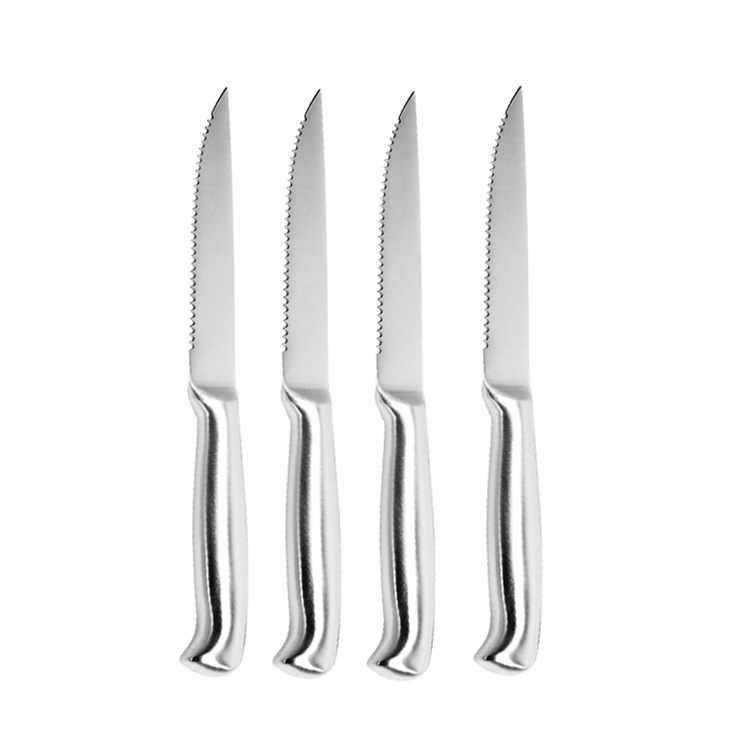
Stainless offers ample sharpness with less upkeep; carbon edges keenest but rust-prone.
High grades resist excellently; cheap ones may spot if neglected.
Decades with basic care; edges hold years.
Most yes, but hand wash extends life.
18/10 or 440C balances all traits ideally.
Yes, serrated grips well; straight for tender.


