


Views: 247 Author: HELLOKNIFE LTD Publish Time: 2026-11-09 Origin: Site


Content Menu
● Cheese Tool Sets vs Cheese Boards: What Does the Growth Data Show?
>> Why Category Definitions Can Change the Answer
● Why Cheese Boards Have a Stronger Published Growth Signal
>> Cheese Boards Can Serve Multiple Buying Occasions
>> Presentation Creates Room for Differentiation
● Why Cheese Tool Sets Still Deserve OEM Investment
>> Build Around Functions, Not Piece Counts
>> Evaluate Tool Sets as a Separate Commercial Proposition
● Market Growth vs Product Profitability: Use a Better Buying Scorecard
● A Three-Product Test for Private-Label Buyers
>> 1. Develop Three Distinct Offers
>> 2. Create Clear Product Pages
>> 3. Measure Commercial Results Before Expanding
● Turn Customer Feedback Into Better OEM Specifications
● What to Include in Your Cheese Board and Tool Set OEM Brief
● Develop Your OEM Collection With HELLOKNIFE LTD
>> 1. Do Cheese Boards Grow Faster Than Cheese Tool Sets?
>> 2. Which Category Should a New Private-Label Brand Launch First?
>> 3. Are Board-and-Tool Bundles the Best Option?
>> 4. How Many Pieces Should a Cheese Tool Set Include?
>> 5. What Information Should Buyers Send an OEM Manufacturer?
>> 6. Can HELLOKNIFE Develop a Coordinated Collection?
At HELLOKNIFE LTD, we help international brands, wholesalers, and manufacturers develop OEM cheese knives, cheese boards, and steak knives. When buyers ask, "Cheese Tool Sets vs Cheese Boards: Which Category Grows Faster?" our answer starts with an important distinction: cheese boards show the stronger published growth forecast, but the available figures do not establish a definitive growth ranking against complete cheese tool sets.
For private-label buyers, that distinction matters. A faster-growing category does not automatically deliver better margins, lower inventory risk, or stronger repeat orders. The right choice depends on your customers, distribution model, and product economics.
This guide explains what the market estimates actually indicate—and how to turn that information into a practical OEM sourcing strategy.

Public summaries from market research publisher Dataintelo suggest a directional advantage for cheese boards.
| Comparison point | Cheese boards | Cheese knives: a proxy for tool sets |
|---|---|---|
| Published market estimate | USD 1.47 billion in 2024 | USD 1.2 billion in 2023 |
| Published projected market value | USD 2.51 billion by 2033 | Approximately USD 1.8 billion by 2032 |
| Reported compound annual growth rate | 6.1% for 2025–2033 | 5.1% through 2032 |
| Main comparison limitation | May include boards with integrated accessories | Does not isolate complete cheese tool sets |
The reported growth-rate gap is one percentage point in favor of boards. However, the studies use different base years and forecast periods, while their product definitions do not match exactly.
These are third-party forecasts, not audited retail sales or HELLOKNIFE sales figures. They support a cautious conclusion: boards have the stronger published growth signal in this comparison, while standalone cheese tool set growth remains insufficiently established. [dataintelo]
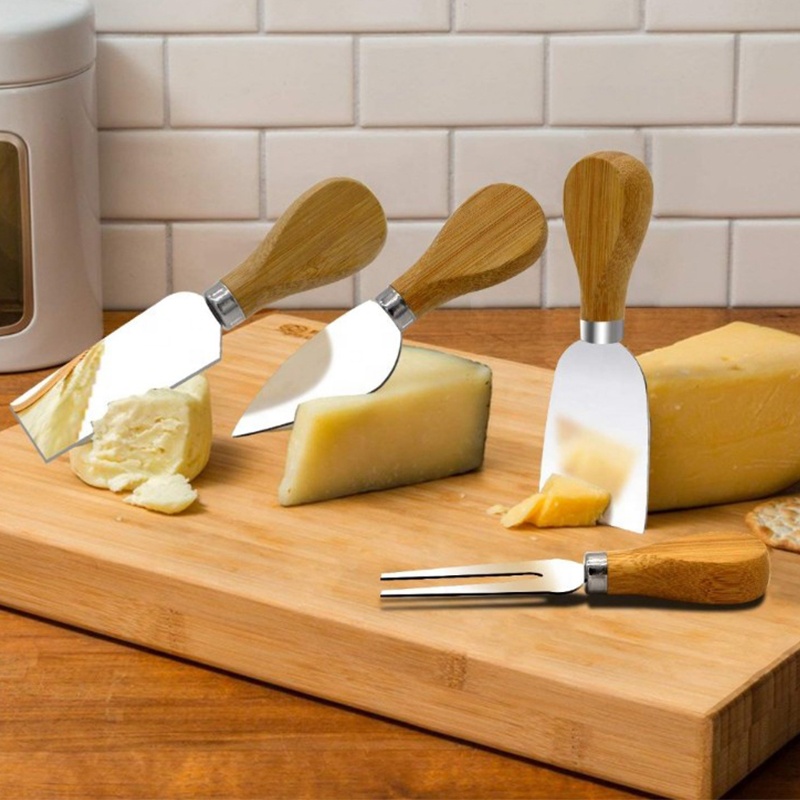
A cheese tool set might contain knives, spreaders, forks, or a cheese plane. A cheese board set may combine a serving surface with several of those same tools.
That creates potential overlap. If a board-and-knife gift set is counted entirely under cheese boards, its sales also reflect demand for tools.
Before using market figures in an investment presentation, ask:
- Does the category include individual products, sets, or both?
- Are bundled accessories included in the board's selling price?
- Is growth measured by revenue or units?
- Does the research cover your target country and sales channel?
Without those answers, a precise-looking comparison can still lead to an unreliable buying decision.
Dataintelo identifies home entertaining, attractive food presentation, hospitality demand, and customization as drivers of cheese board demand. It also discusses boards with integrated cutlery and compartments, illustrating how the category extends beyond a simple serving surface.
For an OEM buyer, those drivers suggest several product-development opportunities.
A board can be positioned around entertaining, gifting, food presentation, or a coordinated tabletop collection.
Our recommendation is to choose one primary occasion before developing the design. A compact housewarming gift and a restaurant serving board should not automatically share the same dimensions, packaging, or accessory selection.
For example, a gift-focused brief might prioritize presentation and personalization. A hospitality brief should instead define handling, storage, cleaning requirements, and service conditions.
The opportunity is not simply to add features. It is to make the product fit a specific customer task.
Boards offer visible design choices: shape, material, usable serving area, compartments, and branding placement.
However, decoration should not compromise usability. A large logo may reduce serving space. A complicated compartment layout may make cleaning harder. An oversized format may create packaging and storage problems.
For private-label cheese boards, we recommend evaluating the complete experience:
1. How does the customer unpack it?
2. Is the serving area large enough for its intended use?
3. Are included tools easy to remove and replace?
4. Are care instructions understandable?
5. Can the product be stored conveniently?
A lower published forecast for the broader cheese knife category does not make tool sets an inferior commercial choice.
At HELLOKNIFE LTD, our published range includes three-, four-, and six-piece cheese knife sets, alongside steak knives and other kitchen tools. That provides a starting point for discussing different assortment sizes and coordinated collections. [helloknife]
For buyers, the key question is whether each tool adds a clear function.
We recommend defining the intended serving tasks before deciding how many pieces belong in a set.
A product brief should explain:
- Which cheese textures the collection is intended to handle.
- Which pieces cut, spread, or serve.
- How customers distinguish the tools.
- Whether the handles remain comfortable during actual use.
- How blades and tips are protected in packaging.
A smaller, clearly explained collection may be a better proposal than a larger assortment with overlapping functions. Treat that as a design hypothesis to test, not a universal consumer preference.
Do not assume tools are automatically more profitable because their packaging appears smaller.
Compare actual quotations, packed dimensions, freight charges, inspection requirements, and fulfillment fees. Then examine whether a standalone tool set can reach a suitable retail price without requiring a board to justify the purchase.
A functional product deserves functional selling content: close-up photographs, size information, and demonstrations of each piece.
The most useful addition to a category-growth discussion is a SKU-level financial model.
Before choosing wholesale cheese boards or private-label cheese tool sets, compare them using the same assumptions.
| Decision factor | What to measure |
|---|---|
| Net revenue | Selling price after discounts and expected refunds |
| Landed cost | Product, packaging, freight, duty, and relevant import charges |
| Contribution | Net revenue minus applicable variable costs |
| Inventory exposure | Cash committed before the next replenishment |
| Quality risk | Inspection findings, damage, defects, and returns |
| Commercial demand | Sell-through, conversion, and reorder performance |
A practical contribution calculation is:
Contribution per unit = net sales revenue − landed cost − variable selling, fulfillment, and expected return costs.
Keep definitions consistent and avoid counting freight or handling twice.
Then compare contribution relative to the cash tied up in inventory. A product with a higher selling price can still be less attractive if it requires more working capital or sells slowly.
This is our recommended decision framework, not a claim that one category always outperforms the other.
Rather than committing to a broad collection immediately, consider a controlled comparison.
Start with:
- A standalone cheese tool set.
- A standalone cheese board.
- A coordinated board-and-tool gift set.
Keep the target audience and intended quality level as comparable as practical. Document differences in price, packaging, and functionality so the results remain interpretable.
For each offer, show dimensions, included components, materials, care instructions, and packaging.
Avoid vague promises such as "perfect for every occasion." Explain the actual use case.
For the bundle, show exactly what is included. For tools, identify each piece. For the board, distinguish overall dimensions from usable serving space.
Agree on the test period and decision criteria before launch.
Track:
- Units sold and net revenue.
- Contribution per order.
- Conversion rate within the relevant channel.
- Damage and return reasons.
- Inventory remaining.
- Wholesale reorder requests, where applicable.
Control promotional activity where possible. A heavily discounted bundle should not be treated as proof that bundles naturally outperform individual products.
The objective is to identify which offer works for your business—not to reproduce a global forecast.
No verified customer reviews were supplied for this article. We therefore do not attribute opinions to HELLOKNIFE customers or invent testimonial quotations.
For future product development, we recommend translating authentic feedback into measurable requirements:
| Feedback theme to investigate | OEM requirement to define |
|---|---|
| Uncomfortable handles | Handle dimensions and a documented user evaluation |
| Difficult cleaning | Accessible geometry and verified care instructions |
| Confusing tools | Clear component labels and an illustrated guide |
| Transit damage | Protective packaging and an agreed transport test |
| Disappointing gift presentation | Approved packaging samples and presentation photographs |
These are proposed review-analysis categories, not documented complaints about our products.
Keep the original review text, product version, purchase context, and permission records where relevant. This helps distinguish a recurring design issue from an isolated comment.
A detailed brief makes competing proposals easier to compare.
For cheese tool sets, specify:
- Intended functions and component count.
- Material specifications and finish.
- Handle design and branding position.
- Packaging layout and blade protection.
- Inspection criteria and destination-market documentation.
For cheese boards, specify:
- Intended use and target dimensions.
- Material, construction, and finish.
- Accessory storage and removable components.
- Packaging protection.
- Care instructions and required testing.
For bundles, add fit requirements between the board, tools, inserts, and retail packaging.
Avoid treating "food-safe," "dishwasher-safe," or "sustainable" as self-explanatory specifications. Define the exact claim, supporting evidence, product configuration, and destination-market requirements before approving packaging.
HELLOKNIFE LTD is a China-based manufacturer serving international OEM and ODM buyers. Our company website identifies our establishment in 1999 and presents cheese knife sets, steak knives, and related kitchen tools within our product range. [helloknife]
Our recommended starting point is a clear commercial brief: who will buy the product, where it will sell, what it must do, and what economics it must achieve.
For brands, wholesalers, and manufacturers comparing these categories, we suggest requesting matched proposals for a tool set, a board, and a coordinated bundle.
Send HELLOKNIFE LTD your target market, intended retail price, estimated order quantity, preferred materials, and packaging requirements. Ask for an itemized quotation and sample-development proposal so you can compare the options on a consistent basis.
Contact: sales@helloknife.com. [helloknife]
The published forecasts reviewed here favor boards: 6.1% CAGR versus 5.1% for the broader cheese knife market. However, knife-market data is not a direct measure of complete tool sets, so the comparison is directional rather than definitive.
We recommend starting with the product that best fits a defined customer need and workable unit economics. Compare samples, landed costs, contribution, and inventory exposure before committing. Do not select a category solely because its global forecast is higher.
They are worth testing, not automatically superior. A bundle must justify its additional components, packaging, and price. Compare its contribution and sell-through against standalone products while accounting for promotions and channel differences.
Choose the piece count after defining the intended tasks. Each component should have a recognizable purpose. We recommend testing the proposed assortment for usability rather than assuming that more pieces create greater customer value.
Provide the target country, customer segment, sales channel, estimated quantity, target price, materials, dimensions, branding, and packaging requirements. Include required documentation and inspection criteria. These details make quotations more comparable and reduce avoidable development revisions.
HELLOKNIFE presents OEM/ODM services and cheese knife and steak knife product ranges on its website. Buyers can discuss a coordinated cheese board and tool collection, then confirm specific designs, materials, testing, quantities, and production terms through a project quotation. [helloknife]
- Dataintelo — Cheese Board Market Research Report 2033. Public report overview covering market estimates, forecast growth, segmentation, and stated demand drivers. Website: dataintelo.com; page: `/report/cheese-board-market`. Figures are publisher estimates, not independently audited sales. [dataintelo]
- Dataintelo — Cheese Knife Market Research Report 2032. Public search listing reports the 2023 estimate, 2032 projection, and 5.1% CAGR. The retrieved page body did not expose the underlying analysis; this limits verification. Website: dataintelo.com; page: `/report/global-cheese-knife-market`. [dataintelo]
- HELLOKNIFE LTD — Official company homepage. Source for company background, OEM/ODM positioning, listed products, and contact information. Company statements are self-reported. Website: helloknife.com. [helloknife]
- HELLOKNIFE LTD — "Your Premier OEM Manufacturer for Cheese Knives, Cheese Boards, and Steak Knives." Source for the company's stated cheese board OEM positioning. Website: helloknife.com; article title as listed above. [helloknife]
- Editorial analysis — Procurement scorecard, controlled test plan, review-to-specification framework, and visual suggestions were developed for this article. They are recommendations, not measured HELLOKNIFE performance results.
Hot Tags: China, Global, OEM, private label, manufacturers, factory, suppliers, manufacturing company


