

Views: 249 Author: HELLOKNIFE LTD Publish Time: 2026-08-11 Origin: Site


Content Menu
● Quick Answer: Which Cheese Slicer Is Better?
● What Is a Manual Cheese Slicer?
>> Why Manual Cheese Slicers Feel Easy
>> Limitations of Manual Cheese Slicers
● What Is an Adjustable Cheese Slicer?
>> Why Adjustable Slicers Feel More Versatile
>> Where Adjustable Slicers Can Fail
● Manual vs Adjustable: The Cheese Texture Test
● Safety and Cleaning Are Part of User Experience
● OEM Product Development: What Matters Most
>> OEM Checklist for Manual Cheese Slicers
>> OEM Checklist for Adjustable Cheese Slicers
● A Better Selection Process for Brands
● Final Verdict: Which Offers Better User Experience?
● FAQ
>> 1. What is the main difference between a manual and adjustable cheese slicer?
>> 2. Is an adjustable cheese slicer always better for hard cheese?
>> 3. Which cheese slicer is easier to clean?
>> 4. Why do cheese-slicer wires break?
>> 5. Can a manual cheese slicer create thick slices?
>> 6. How can brands reduce cheese slicer returns?
>> 7. Can HELLOKNIFE LTD customize cheese slicers for private-label brands?
At HELLOKNIFE LTD, we develop OEM cheese knives, cheese boards, steak knives, and cheese-serving tools for overseas brands, wholesalers, and manufacturers. When comparing a manual cheese slicer vs adjustable cheese slicer, the real question is not simply which one cuts cheese—it is which design gives users a smoother, safer, more satisfying experience from the first slice to cleaning and storage.
A manual slicer usually offers simplicity, speed, and low maintenance. An adjustable cheese slicer provides more thickness control and versatility. The right choice depends on the cheese type, serving occasion, user expectations, and how reliably the product performs over time.
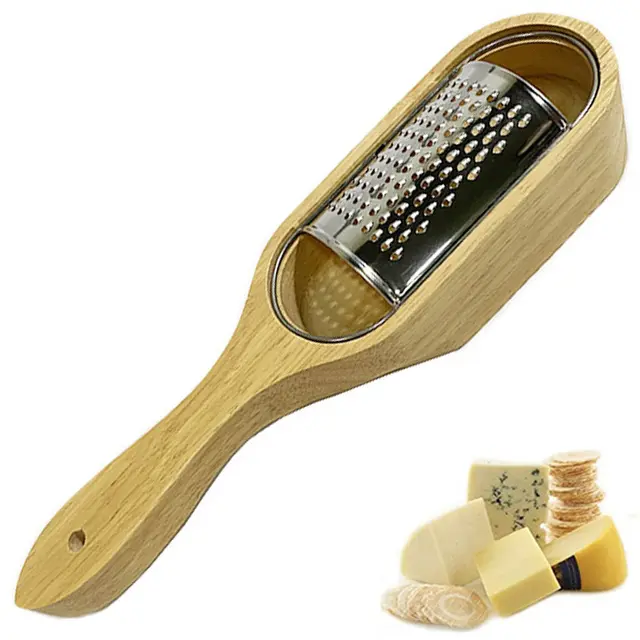
For everyday users who mainly want thin, elegant slices of semi-hard cheese, a manual cheese slicer often provides the better first-use experience. It is intuitive, compact, and easy to clean.
For consumers who want thin sandwich slices, medium slices for cheese boards, and thicker cuts for snacks or cooking, an adjustable cheese slicer usually provides better long-term versatility. However, its moving components must be designed and manufactured carefully to prevent loose wires, unstable settings, and cleaning problems.
| User Experience Factor | Manual Cheese Slicer | Adjustable Cheese Slicer |
|---|---|---|
| Learning curve | Very low | Low to moderate |
| Thickness control | Depends on angle and pressure | Controlled by a dial, roller, or adjustment system |
| Cleaning | Usually easier | More parts and crevices to clean |
| Durability risks | Blade edge, handle connection | Wire tension, dial, roller, fasteners |
| Best for | Thin slices and everyday use | Multiple serving styles and portion control |
| OEM selling point | Simplicity, finish, ergonomic feel | Functional flexibility and premium positioning |
Recommendation: A manual cheese slicer is best for simplicity. An adjustable cheese slicer is best for flexibility—if the adjustment mechanism is genuinely stable and easy to use.
A manual cheese slicer is typically a fixed cheese plane or a basic wire slicer. The user controls slice thickness through hand angle, pressure, and movement.
The best manual slicers create a direct connection between the user and the cheese. Pick up the tool, place it against the cheese block, and pull smoothly. There is no dial to set, no wire tension system to inspect, and no complex instruction guide required.
Manual cheese planes are especially effective for medium-hard cheeses. They can create thin, even slices for sandwiches, crackers, burgers, and cheese boards. Specialty cheese slicers also help reduce common knife-related problems, including cheese sticking to the blade and uneven slice thickness. [bonappetit](https://www.bonappetit.com/story/cheese-slicer)
A well-designed manual cheese slicer delivers an immediate and natural experience:
- Fast start: Users can begin slicing without setup.
- Simple control: Slice thickness changes naturally through angle.
- Compact form: Easy to store in a kitchen drawer or cheese board set.
- Fewer parts: Less chance of mechanical failure.
- Quick cleaning: Fewer grooves, joints, and moving parts.
For private-label brands, this makes the manual cheese slicer a strong entry-level or everyday SKU. It is easy to explain in packaging, easy to demonstrate in product videos, and suitable for a wide range of consumers.
The same simplicity also creates limitations. Thickness consistency depends on the user's hand movement. A skilled user can produce delicate shavings or slightly thicker slices, but a beginner may create inconsistent results.
Manual slicers should not be marketed as universal tools for every cheese. Very hard, brittle, crumbly, or overly soft cheeses may need a different cheese knife, cheese plane, or specialty serving tool.
An adjustable cheese slicer uses a movable wire, blade, roller, dial, or screw system to set a desired slice thickness before cutting. Instead of relying entirely on hand angle, the mechanism helps establish a more repeatable cut.
This format appeals to users who want one tool for several occasions: thin slices for sandwiches, medium slices for a cheese platter, and thicker portions for cooking or casual snacking.
Many adjustable wire slicers work especially well with semi-hard cheeses such as Gouda, Emmental, and Cheddar. They can offer clean cuts with relatively low effort when the wire tension and roller system are properly engineered. [cheeseslicing](https://www.cheeseslicing.com/post/choosing-cheese-slicer-guide-selecting-the-perfect-cheese-slicer-for-your-needs)
The strongest advantage is choice. Users can see a setting, select a preferred thickness, and expect relatively consistent results across multiple slices.
This makes an adjustable cheese slicer especially useful for:
- Cheese-board presentation.
- Foodservice portion control.
- Sandwich preparation.
- Mixed cheese serving.
- Gift sets positioned as premium kitchen tools.
- Consumers who enjoy different cheese textures and serving styles.
For brands, adjustability creates a clearer premium product story. It can justify stronger visual merchandising, upgraded packaging, and a "good-better" product range beside a simpler manual cheese slicer.
Adjustability only improves user experience when it works consistently. A vague dial, loose roller, weak wire anchor, or unstable setting can quickly turn a premium feature into a negative review.
Public consumer discussions often praise cheese slicers for even cuts, solid construction, and compact design. At the same time, common complaints include wires becoming loose or breaking, weak performance on very hard cheese, and products that fail after repeated use. [reddit](https://www.reddit.com/r/BuyItForLife/comments/18kxpvt/bifl_cheese_slicer_suggestion/)
For this reason, OEM buyers should treat adjustability as a complete engineering system—not a decorative product feature.
*[Suggested image: Detailed close-up infographic labeling the cutting wire, roller, adjustment dial, wire anchor, handle, and replacement-wire attachment point.]*
The best cheese slicer experience depends heavily on cheese texture, temperature, and shape. Brands should not choose a slicer format before understanding what consumers will actually cut.
| Cheese Type | Manual Cheese Slicer | Adjustable Cheese Slicer | Best Practice |
|---|---|---|---|
| Semi-soft cheese | Can work, but may smear | Can work when cheese is chilled | Use gentle pressure |
| Semi-hard cheese | Excellent for thin slices | Excellent for variable thickness | Ideal category for both |
| Hard cheese | Good for shaving if designed correctly | Wire may face more resistance | Avoid forcing the tool |
| Aged or crumbly cheese | May crack or crumble | Wire can break under stress | Use a cheese knife or breaker |
| Blue cheese or soft-ripened cheese | Usually not ideal | Usually not ideal | Use a soft cheese knife |
Slightly chilled cheese generally slices more cleanly than cheese that has become too warm. Users should also work on a stable board, apply even pressure, and avoid forcing a wire through a difficult block. [cheeseslicing](https://www.cheeseslicing.com/post/choosing-cheese-slicer-guide-selecting-the-perfect-cheese-slicer-for-your-needs)
A cheese slicer does not provide a good user experience if it is enjoyable to use but unpleasant to clean. This is where manual designs naturally have an advantage.
A fixed cheese plane has fewer parts where cheese residue can build up. Adjustable wire slicers have more areas to inspect, including rollers, wire anchors, adjustment screws, and handle connections.
For food-contact kitchenware, HELLOKNIFE LTD recommends defining cleaning requirements, material specifications, edge treatment, and inspection standards before mass production. Foodservice and retail operators should also follow the food-safety requirements applicable in their market. In the United States, the FDA Food Code serves as a model for safe food handling practices in retail and foodservice settings. [fda](https://www.fda.gov/food/retail-food-protection/fda-food-code)
- Keep fingers behind the cutting path.
- Place cheese on a stable board or countertop.
- Do not force a wire slicer when it stops moving.
- Clean residue after each use.
- Store slicers where cutting edges and wires are protected.
- Include clear wire-replacement instructions for adjustable models.
At HELLOKNIFE LTD, we advise brands to define the desired user experience before selecting materials, colors, handles, or packaging. A visually attractive slicer can still fail if its performance does not match the promise printed on the box.
For a manual slicer, focus on:
- Food-contact-safe material selection.
- Smooth, burr-free slicing openings.
- Strong handle-to-head construction.
- Comfortable grip shape.
- Balanced weight.
- Corrosion-resistant finish.
- Easy-clean surface design.
The product story should be clear: thin, elegant slices with minimal effort.
For an adjustable cheese slicer, brands should additionally evaluate:
- Measurable slice-thickness range.
- Stability of the selected setting.
- Wire material and diameter.
- Wire anchoring method.
- Roller alignment.
- Tension retention after repeated use.
- Access for cleaning.
- Availability of replacement wires.
- Clear setting marks and user instructions.
A product sample should be tested beyond its first few cuts. Brands should evaluate repeated slicing, cleaning cycles, storage, wire tension, handle stability, and performance across the intended cheese range.
Before launching a cheese slicer collection, use this six-step product strategy:
1. Define the serving occasion: Sandwiches, cheese boards, gifts, foodservice, or kitchen-tool collections.
2. Identify target cheeses: Test real cheese blocks from the destination market.
3. Set the slice promise: Thin shavings, adjustable portions, or universal convenience.
4. Prototype with real users: Include left- and right-handed users, different grip strengths, and different cheese temperatures.
5. Test the ownership cycle: Include slicing, cleaning, storage, replacement parts, and repeated-use durability.
6. Build honest product education: Explain which cheeses the slicer is designed to handle.
This process reduces product returns because it aligns customer expectations with real performance.
A manual cheese slicer offers the better experience for users who value speed, simple cleaning, compact storage, and thin everyday slices. It is the best choice for minimalist cheese board sets and consumers who want an intuitive tool with fewer potential failure points.
An adjustable cheese slicer offers the better experience for users who value thickness choice, portion consistency, and versatility across multiple serving occasions. It is the stronger premium product—but only when the wire, roller, adjustment system, and cleaning access are engineered for real use.
For many private-label brands, the strongest strategy is to offer both: a dependable manual cheese slicer as the accessible everyday option and a well-engineered adjustable cheese slicer as the premium flexible option.
HELLOKNIFE LTD provides OEM support for cheese knives, cheese slicers, cheese boards, steak knives, and related kitchenware for global brands, wholesalers, and manufacturers.
If you are developing a cheese-serving collection, share your target market, product positioning, cheese types, packaging goals, and quality requirements with our team. We can help transform your intended user experience into a product specification, sampling plan, and production-ready OEM solution.
A manual slicer depends mostly on the user's angle and pressure. An adjustable slicer uses a mechanism to set slice thickness more consistently.
No. Very hard or brittle cheese can crack or place high stress on a fine wire. A cheese knife or shaving plane may be more suitable.
A manual cheese plane is usually easier to clean because it has fewer moving parts and less residue-trapping space.
Wires may break because of excessive cutting force, very hard cheese, poor tension, repeated bending, weak anchors, corrosion, or forcing the slicer when it gets stuck.
It can create somewhat thicker slices through angle and pressure, but it will not provide the same repeatability as an adjustable model.
Brands should match the product to intended cheese types, provide clear usage instructions, test production samples under repeated use, and avoid claiming that one slicer works perfectly for every cheese texture.
Yes. HELLOKNIFE LTD can support OEM development for cheese slicers, cheese knives, cheese boards, steak knives, coordinated gift sets, materials, handle styles, packaging, and production specifications.
1. Bon Appétit. "[I Always Thought a Cheese Slicer Was Unnecessary—Until I Tried One](https://www.bonappetit.com/story/cheese-slicer)." Discussion of how cheese slicers can create thin, even slices and reduce sticking compared with ordinary knives. [bonappetit](https://www.bonappetit.com/story/cheese-slicer)
2. CheeseSlicing.com. "[Selecting the Perfect Cheese Slicer for Your Needs](https://www.cheeseslicing.com/post/choosing-cheese-slicer-guide-selecting-the-perfect-cheese-slicer-for-your-needs)." Overview of plane-style, wire, and adjustable cheese slicers, including cheese texture, cleaning, and use considerations. [cheeseslicing](https://www.cheeseslicing.com/post/choosing-cheese-slicer-guide-selecting-the-perfect-cheese-slicer-for-your-needs)
3. Reddit, r/BuyItForLife. "[BIFL Cheese Slicer Suggestion](https://www.reddit.com/r/BuyItForLife/comments/18kxpvt/bifl_cheese_slicer_suggestion/)." Public user discussion identifying perceived strengths such as even slicing and common concerns including wire durability. [reddit](https://www.reddit.com/r/BuyItForLife/comments/18kxpvt/bifl_cheese_slicer_suggestion/)
4. U.S. Food and Drug Administration. "[FDA Food Code](https://www.fda.gov/food/retail-food-protection/fda-food-code)." FDA overview of the Food Code as a model for retail and foodservice food-safety practices. [fda](https://www.fda.gov/food/retail-food-protection/fda-food-code)
5. DVO / Cook'n. "[Cheese Slicers: Is One Better Than the Other?](https://www.dvo.com/newsletter/weekly/2023/12-29-220/cooknart7.html)." Product-type comparison discussing wire slicers and adjustable slice thickness. [dvo](https://www.dvo.com/newsletter/weekly/2023/12-29-220/cooknart7.html)
Hot Tags: China, Global, OEM, private label, manufacturers, factory, suppliers, manufacturing company


