

Views: 270 Author: Site Editor Publish Time: 2026-08-11 Origin: Site


A charcuterie board combines cheese, cured meats, fruit, crackers, bread, nuts, pickles, spreads, and other small foods in one shared presentation. Its success depends not only on the ingredients but also on how easily guests can cut, spread, lift, and serve each item. Cheese knives are therefore more than decorative accessories: they help control portions, protect textures, separate flavors, and make the board safer and more comfortable to use.
The right knife can preserve the creamy center of Brie, break aged Parmesan into attractive shards, slice firm Gouda cleanly, and spread pâté or soft goat cheese across a cracker. The wrong knife may crush delicate cheese, drag through sticky food, transfer strong aromas, or create an awkward serving experience.
A well-planned board does not require a separate knife for every ingredient. It does require a thoughtful combination of tools, sensible placement, good hygiene, and an understanding of how different blade styles interact with different foods.

A charcuterie board is designed for relaxed, shared eating, but relaxed does not mean unplanned. Guests need to understand which tool belongs to which cheese and how to transfer food without touching items directly.
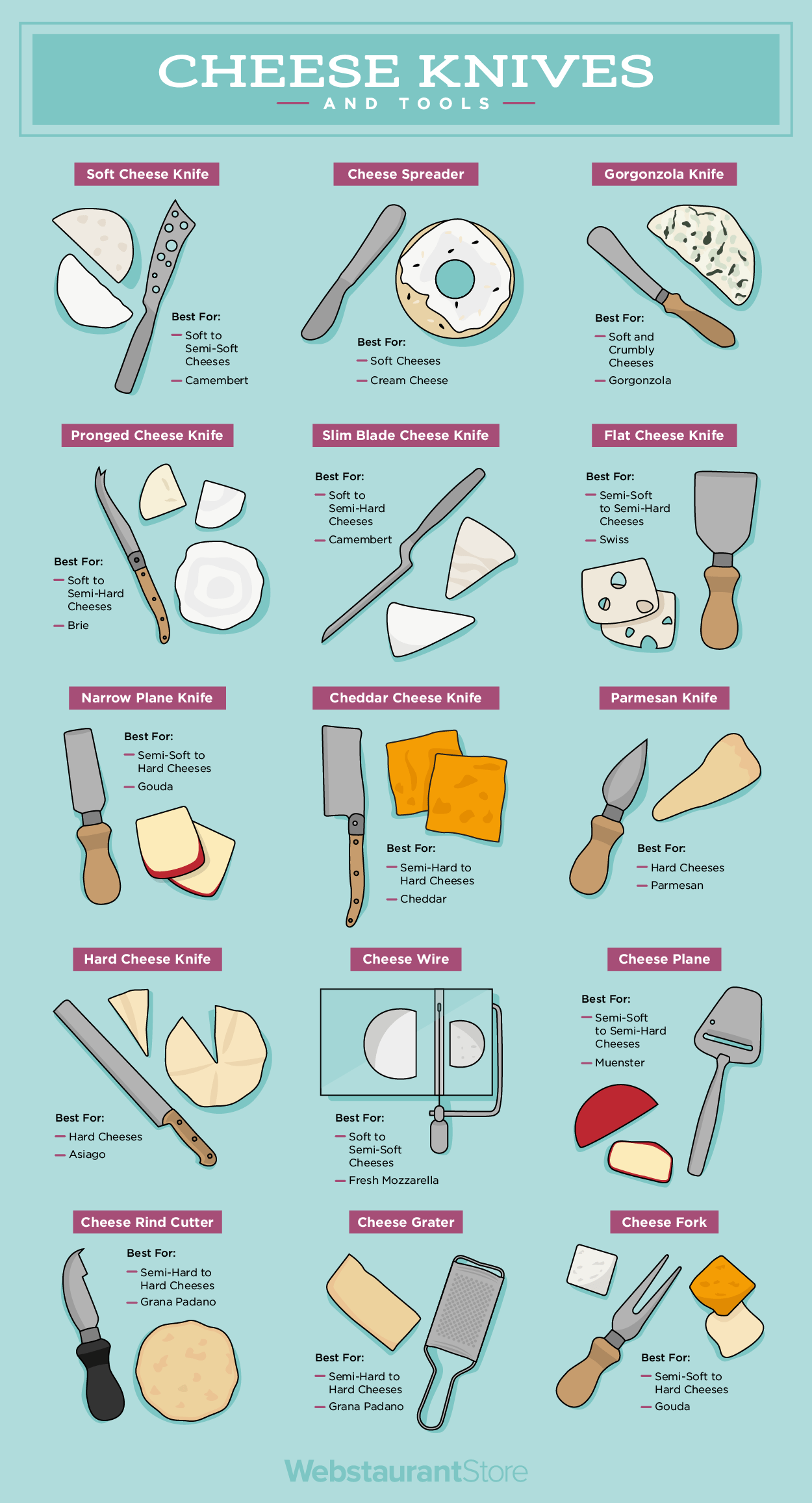
Different cheeses require different movements. Soft cheese needs a thin or perforated blade, hard cheese needs a strong pointed tool, and spreadable cheese needs a blunt spreader. A useful guide to cheese knives distinguishes tools according to the texture and structure of the cheese being served.
A knife helps guests take an appropriate amount rather than pulling apart a whole wheel or cutting an oversized piece. This is particularly important when serving expensive aged cheese, small specialty cheeses, or a board intended for many people.
Portion control also improves the appearance of the board. Clean wedges and even slices create a more organized presentation, while irregular pieces can be arranged to look rustic rather than accidental.
Soft cheese is easily compressed. If guests use a heavy chef’s knife, the rind may collapse and the interior may spread across the board. A suitable cheese knife reduces pressure and creates a more attractive portion.
Hard cheese presents the opposite problem. A fragile blade may bend or slip when pushed into an aged block. A strong Parmesan knife or cheese chisel allows the user to break the cheese naturally into shards.
Strong cheeses can leave noticeable aromas and oils on a blade. Blue cheese, washed-rind cheese, smoked cheese, and truffle cheese may influence the flavor of milder varieties if the same knife is used repeatedly.
Providing several tools helps preserve the individuality of each cheese. For a small board, the knives do not need to be expensive or elaborate; they simply need to be clean, functional, and sensibly assigned.
Understanding the basic knife styles makes it easier to build a practical charcuterie setup.
A soft cheese knife often includes holes, slots, or a narrow blade. The openings reduce contact between the metal and the cheese, which can reduce sticking.
This knife works well with:
Brie
Camembert
Taleggio
Soft goat cheese
Robiola
Fresh bloomy-rind cheese
Soft blue cheese
Many soft cheese knives have a forked tip. After cutting, the user can spear the portion and place it on a plate or cracker.
Use a soft cheese knife with steady downward pressure. Avoid vigorous sawing, which can tear the rind and smear the paste.
A hard cheese knife has a short, thick, durable blade. Some designs are pointed, while others resemble miniature cleavers.
It is suitable for:
Aged Cheddar
Parmesan
Pecorino
Aged Gouda
Manchego
Comté
Grana Padano
Hard cheese is often more attractive when broken into rough shards than when sliced into perfect rectangles. Insert the tip and twist gently, allowing the cheese to fracture along its natural structure.
A spreader has a broad blade and a relatively blunt edge. It is used for:
Cream cheese
Whipped cheese
Pâté
Hummus
Fruit preserves
Honey
Butter
Soft goat cheese
A spreader should be placed beside foods that guests are expected to apply to crackers or bread. Do not use it to cut hard cheese or raw vegetables.
A cheese plane produces thin, consistent slices from firm or semi-hard cheese. It is especially useful for:
Gouda
Havarti
Swiss cheese
Mild Cheddar
Jarlsberg
Edam
Pre-slicing some firm cheese makes the board easier to use. Guests can pick up the prepared pieces without handling a large block.
A cheese cleaver has a broad, strong blade that can divide large blocks. It is useful for firm cheese and can also help cut dense foods on a serving board.
Because the cleaver is heavier than most cheese knives, it should be placed where guests have enough space to use it safely. It should not be positioned beside delicate fruit or crowded small bowls.
A cheese wire creates very clean cuts through soft or semi-soft cheese. It is particularly useful for large wheels, sticky cheese, and visually important presentation.
A wire tool can make a dramatic centerpiece when dividing a wheel of Brie or a large blue cheese. It requires a stable surface and deliberate handling.
A professional cheese-cutting demonstration often shows narrow blades, perforated knives, and wire tools being selected according to cheese texture.
The knives should be chosen after deciding what cheeses the board will contain. A board with three cheeses needs fewer tools than a large tasting arrangement with six or more styles.
A balanced selection may include:
One fresh or spreadable cheese
One soft-ripened cheese
One semi-hard cheese
One aged hard cheese
One blue cheese
Texture variety determines knife variety. Soft cheese benefits from a perforated knife, firm cheese works well with a plane or general-purpose knife, and hard cheese needs a sturdy breaker.
Include mild, nutty, tangy, salty, creamy, and intense flavors when possible. This gives guests a progression rather than several cheeses that taste nearly identical.
Place mild cheeses near delicate accompaniments such as grapes, sliced pear, and plain crackers. Strong cheeses can be paired with honey, fig preserves, walnuts, dark bread, or pickled vegetables.
For a small gathering, three cheeses may be enough. For a larger board, five or six varieties create more choice, but only if there is enough space for comfortable serving.
A vegetarian board can use the same knife principles. Large cheeses may be pre-sliced, while soft or crumbly varieties may need individual knives.
Use a thin, sharp knife or a soft cheese knife with holes. Cut wedges from the wheel and try to give each portion a balanced amount of rind and interior paste.
If the cheese is very ripe, chill it briefly before cutting. This can make the paste easier to control without sacrificing its flavor.
Avoid pressing down too quickly. Let the blade pass through the cheese with minimal compression.
Fresh goat cheese may be creamy, crumbly, or log-shaped. A narrow knife works well for slices, while a spreader is better for very soft portions.
If the cheese is wrapped in a log, make clean crosswise cuts. Wipe the blade after each slice if the cheese begins to collect along the edge.
Use a general-purpose cheese knife or cheese plane. If guests are serving themselves, pre-cut several slices or sticks and leave a portion uncut for visual appeal.
A knife with holes can also be helpful when the cheese is moist or slightly sticky.
A strong cheese knife can divide aged Cheddar into small wedges or rough chunks. A cheese plane is useful if you want uniform slices.
Avoid using a delicate soft-cheese knife on very firm Cheddar. The blade may not provide enough strength.
Use a Parmesan knife, chisel, or pointed hard-cheese tool. Break the cheese into natural shards and place them near nuts, fruit preserves, or balsamic-style accompaniments.
The irregular shape of hard cheese can add visual interest. There is no need to make every piece identical.
Blue cheese can range from crumbly to creamy. Use a thin blade, blue cheese knife, or perforated knife depending on its texture.
Cut modest portions because blue cheese is often intense. A forked tip can make serving easier, especially when the cheese is soft.
The knife should be cleaned before moving to mild cheese. Strong blue aromas can linger even after a quick wipe.
The board itself affects how safely and comfortably the knives can be used.
Wooden boards provide warmth and visual contrast. Hardwood varieties are generally durable, but the board should be food-safe and maintained according to the manufacturer’s instructions.
Deep cuts and grooves can trap food residue. Replace or refinish a board when the surface becomes difficult to clean.
Slate creates an elegant dark background that highlights pale cheeses and colorful fruit. It can also be written on with food-safe chalk.
However, slate may be harder on knife edges if guests cut directly against it. Place pre-cut foods on the board or use small wooden inserts where possible.
Marble stays cool, which can help with soft cheese and chocolate. It is attractive for formal presentations but can be heavy and vulnerable to staining.
These can be easy to clean and offer consistent surfaces. Confirm that the material is intended for food service and avoid using knives aggressively against hard surfaces.
A sturdy, food-safe board made from wood, marble, slate, or ceramic is commonly recommended for charcuterie presentation.

Knife placement should be intuitive. Guests should not need to search across the board for a tool or reach over food.
Soft and crumbly cheeses are difficult to share cleanly without a dedicated tool. Give each such cheese its own knife whenever possible.
For a small board, one knife may serve two mild firm cheeses, but strong or sticky varieties should have separate utensils.
Place handles toward the board’s edge so guests can pick them up easily. Keep sharp tips and blades directed away from crowded serving areas.
Avoid placing handles underneath crackers, fruit, or decorative greenery. Hidden handles create confusion and can make guests reach awkwardly.
Each knife needs a clear working area. Do not surround a soft cheese with bowls or place a cleaver beside a tall glass.
Arrange large cheeses and bowls first, then add knives and smaller accompaniments around them. This approach helps preserve movement space.
Small labels can identify unfamiliar cheeses and suggest pairings. Labels may also show which knife belongs to each cheese.
For a casual gathering, labels are optional. For a tasting event, they improve organization and help guests understand the progression of flavors.
Remove cheese from packaging and allow suitable varieties to rest at room temperature. Keep highly perishable foods chilled until close to serving.
Slice firm cheeses in advance, portion large cured meats, wash fruit, and place wet foods such as olives or pickles in small bowls.
Place large cheese wedges, wheels, bowls, or folded meat portions first. These items define the layout and prevent the smaller ingredients from appearing scattered.
A large wheel of Brie can become a visual center, while a bowl of olives can anchor one side.
Position the knife beside the cheese it serves. Check that each handle is accessible and that the blade has sufficient space.
Avoid burying knives beneath food. A beautiful board is not successful if guests cannot use it comfortably.
Fold salami into ribbons, arrange prosciutto in loose waves, and place firmer cured meats in overlapping slices. Keep meat visually separate from spreads and very soft cheese when possible.
Create small clusters rather than one large pile. This gives guests several access points and reduces congestion around the board.
Place bread near soft cheese and spreads. Keep delicate crackers away from wet ingredients.
Add grapes, berries, dried fruit, nuts, cornichons, olives, and small sweets. Use color and texture to create balance.
Do not overfill every gap. Some empty space makes the board easier to navigate.
Before serving, verify that:
Knives are clean and dry
Handles are accessible
Cutting surfaces are stable
Raw foods are separated
No blade is damaged
Bowls are secure
Perishable items will remain at safe temperatures
Cured meats and cheese are natural companions, but their oils, salt, and aromas can affect one another.
Smoked meats, spicy sausage, blue cheese, and washed-rind cheese should not dominate the entire board. Give each item enough space and pair it with contrasting ingredients.
A meat fork or small tongs can prevent guests from using a cheese knife on oily charcuterie. A dedicated spreader should remain near pâté or mustard.
Do not place raw meat anywhere on a ready-to-eat charcuterie board. Raw meat requires separate handling, cutting surfaces, and cleaning procedures.
Ready-to-eat ingredients should be protected from contact with raw animal products, and utensils should be cleaned between food categories.
Cheese knives can help with many supporting foods, but the tool should still match the ingredient.
Use a spreader or small spoon for jam, honey, and preserves. A knife can transfer thick preserves, but a spoon is often cleaner for runny ingredients.
If a knife is used, keep it with the preserve rather than moving it between multiple foods.
A hard cheese knife may divide soft nuts or help separate a compact cluster, but it is not intended for chopping large quantities. Use a proper chopping knife for preparation.
On the board, serve nuts whole or roughly broken in advance.
Use cocktail forks, picks, or small tongs. A cheese knife is not the most efficient tool for wet, slippery foods.
If a knife includes a pronged tip, it can sometimes lift a pickle or olive, but a dedicated fork generally provides better control.
A cheese knife may spread toppings onto crackers and cut small pieces of soft bread. For crusty loaves, use a bread knife before assembling the board.
Avoid slicing directly on fragile slate or ceramic surfaces because this can damage the knife edge.
One knife may seem convenient, but it can transfer strong aromas, sticky residues, and oils. Use separate utensils for soft cheese, blue cheese, meat, spreads, and sweets when possible.
A large collection of nearly identical tools can confuse guests. A smaller set with visibly different functions is easier to understand.
Pre-cutting everything can make soft cheese dry out and reduce the visual appeal of the board. Prepare some portions in advance, but leave selected pieces whole.
A sharp edge can scrape or tear bread and create an unnecessary injury risk. Use a blunt spreader for soft toppings.
A spreader may bend or slip when used on firm cheese, hard fruit, or vegetables. Switch to a proper cutting knife.
Cold cheese can be difficult to cut, while warm soft cheese can collapse. Most cheese should be served at a temperature that allows its aroma and texture to develop without becoming unstable.
Crowding creates poor access and increases the likelihood of knocking a knife into another guest’s hand or glass. Leave clear paths around each tool.
Proper maintenance protects both the knife and the food.
Remove cheese, fruit juice, oils, and preserves promptly. Dried residue is more difficult to clean and can create unpleasant odors.
Holes and slots can collect soft cheese and crumbs. Use a soft brush or small cleaning tool to reach these areas.
Wooden handles should not be left soaking in water. Wash them briefly, wipe them carefully, and let them dry completely.
Keep sharp or pointed cheese knives in a block, sheath, drawer organizer, or dedicated board set. Loose tools in a crowded drawer can cause injuries and blade damage.
Harsh pads may scratch stainless steel or remove decorative coatings. Mild soap and a soft sponge are usually sufficient.
For a small board, two or three tools are usually enough: a soft-cheese knife, a general-purpose knife, and a spreader. Larger boards may need additional tools for blue cheese, Parmesan, and hard blocks.
Not always. Mild firm cheeses can sometimes share one clean knife, but soft, crumbly, blue, or strongly flavored cheeses are easier to serve with separate tools.
Place each knife beside the cheese it serves, with the handle facing outward. Leave enough room for guests to grasp the handle and cut without reaching over bowls or other people’s hands.
A thin sharp knife or perforated soft-cheese knife is ideal. A forked tip is useful because it can lift a wedge after cutting.
Use a pointed Parmesan knife, cheese chisel, or sturdy hard-cheese tool. Break the cheese into natural shards rather than forcing a thin blade through the block.
A durable knife can divide small portions of some cured meats, but a dedicated meat knife or serving fork is usually better. Clean the tool thoroughly before using it on cheese or other ready-to-eat food.
You can serve with one, but avoid forceful cutting directly against slate. Pre-cut firm cheese or use a softer cutting surface to protect the knife’s edge.
Choose a perforated or narrow blade, chill very soft cheese briefly, and wipe the knife between cuts. Avoid pressing too hard.
Pre-cut some firm cheese and prepare a few portions of soft cheese, but leave selected pieces whole for appearance and freshness. This provides convenience without making the board look overly processed.
Use separate tools for blue cheese, washed-rind cheese, meats, spreads, and sweets. Wash knives between foods and avoid relying only on a quick wipe.
Using cheese knives on a charcuterie board is about more than matching attractive utensils to an attractive arrangement. Each knife should support a specific action: slicing, breaking, spreading, lifting, or serving. Soft cheese needs gentle handling, hard cheese needs strength, and spreads need broad blunt blades.
A successful board combines thoughtful cheese selection, accessible knife placement, balanced accompaniments, stable surfaces, and careful hygiene. With a small but purposeful collection of tools, guests can serve themselves comfortably while the board remains clean, attractive, and easy to enjoy.


