

Views: 290 Author: Site Editor Publish Time: 2026-08-24 Origin: Site


Content Menu
>> The Traditional Spoon-and-Fork Design
>> Salad Hands and Claw-Shaped Servers
● Why the Right Salad Server Set Matters
>> Better Control Over Delicate Ingredients
>> More Attractive Food Presentation
>> Easier Sharing at the Table
>> Wood
>> Bamboo
>> Silicone
● How to Choose the Correct Size
>> Length
>> Head Shape
>> Handle Shape
● Matching a Salad Server Set to Your Table Style
>> Rustic and Farmhouse Settings
● Understanding Salad Server Styles
>> Nesting Sets
● Using a Salad Server Set Correctly
>> Use the Right Tool for Pasta Salads
>> Serving Fruit and Grain Salads
● Caring for Wooden Salad Servers
● Caring for Stainless-Steel and Silicone Sets
>> Buying for Appearance Alone
>> Choosing Handles That Are Too Short
>> Selecting a Very Narrow Spoon
>> Assuming Every Metal Set Is Identical
● Creating a Complete Salad Serving Station
● Salad Recipes That Pair Well with Different Servers
>> Pasta Salad
>> Fruit Salad
>> What is included in a standard salad server set?
>> Are wooden salad servers better than stainless steel?
>> Can salad servers go in the dishwasher?
>> How long should salad servers be?
>> What shape is best for serving leafy salad?
>> Are salad hands only decorative?
>> How should wooden salad servers be maintained?
>> What is the best salad server set for entertaining?
A well-chosen salad server set can transform an ordinary bowl of greens into an attractive and effortless dining experience. Although salad servers are usually simple utensils, their material, shape, length, grip, and maintenance requirements all affect how comfortably they work at the table.
The classic salad server set normally includes two pieces: a serving spoon and a serving fork. Together, these utensils help diners lift leafy greens, pasta, vegetables, fruit, grains, and other ingredients without crushing delicate textures or spilling dressing. Some modern designs replace the traditional spoon-and-fork combination with connected tongs, claw-shaped "salad hands," or multifunctional serving tools.
This guide explains how to choose a salad server set, which materials are most practical, how different designs perform, how to care for wooden and metal utensils, and how to match a set with different table settings and salad bowls.
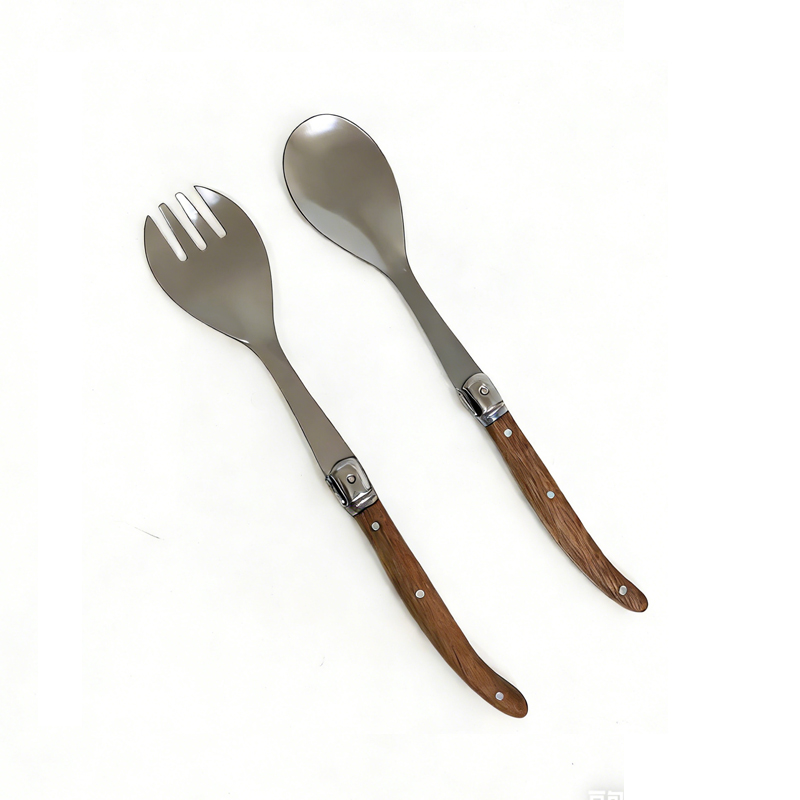
A salad server set is a pair of utensils designed specifically for serving food from a communal bowl. The traditional design includes a spoon with a broad, shallow bowl and a fork with several wide, rounded tines.
The spoon gathers ingredients and dressing, while the fork helps hold leafy vegetables and separate portions. When used together, the two utensils make it easier to lift salad rather than stab it or squeeze it with ordinary kitchen tongs.
The spoon-and-fork format remains popular because it is intuitive and versatile. The spoon can carry chopped vegetables, beans, grains, fruit, and dressing, while the fork catches long leaves and helps guide food onto a plate.
This design is particularly useful for salads with mixed textures. A large green salad may contain lettuce, cucumber, tomatoes, olives, nuts, cheese, and croutons. A well-shaped server set can pick up a balanced mixture rather than collecting only the heaviest ingredients at the bottom of the bowl.
Some wooden salad server sets are shaped like hands or claws. These designs usually have wide, curved ends that grasp salad gently. They can look playful and decorative, but they also offer a practical advantage: their large surfaces distribute pressure across delicate leaves.
Salad hands are especially attractive in rustic kitchens, farmhouse dining rooms, and casual outdoor settings. Acacia, bamboo, teak, walnut, and cherry wood are common choices for this style.
Hinged salad tongs combine a spoon-like end and a fork-like end into a single tool. They are convenient when one-handed serving is important, especially at buffets or casual family meals.
However, hinged tongs may be less flexible than separate servers. A connected design can be harder to maneuver inside a narrow bowl, and some models are difficult to clean around the hinge. Before buying one, check whether the hinge opens widely and whether food can become trapped in the joint.
A salad server set is not merely decorative. Its design affects portion control, food presentation, comfort, hygiene, and durability.
Lettuce leaves, fresh herbs, avocado, soft fruit, and cooked pasta can be damaged by sharp or narrow utensils. Broad spoon and fork heads help lift these foods without crushing them.
A good server should also have smooth edges. Rough wood, unfinished seams, or poorly polished metal can tear leaves and make the utensil uncomfortable to hold.
Serving utensils are visible throughout a meal. A coordinated set can make a simple salad appear more intentional and polished.
For a modern table, brushed stainless steel or matte black utensils may complement white ceramic bowls. For a natural setting, wood servers can echo a wooden salad bowl, linen napkins, or a neutral tablecloth. Decorative resin, ceramic, or colored silicone designs can add personality to a casual gathering.
A large salad bowl often needs utensils with enough length to reach the bottom. Short servers may force diners to place their hands close to the food or scrape the sides repeatedly.
For a large bowl, look for a set approximately ten to thirteen inches long. Smaller bowls can work well with utensils around eight to ten inches long.
The material of a salad server set determines its appearance, weight, maintenance, and expected lifespan. No single material is perfect for every household.
Wooden salad servers are popular because they feel warm and natural. They are lightweight, quiet against ceramic and glass bowls, and gentle on delicate ingredients.
Common woods include bamboo, acacia, teak, walnut, olive wood, and cherry. Each has a different grain pattern and color. Acacia often has dramatic natural variation, while walnut offers a darker appearance. Bamboo is usually light in color and is often selected for its clean, simple look.
Wood does require more care than stainless steel. It should generally be hand-washed, dried promptly, and kept away from prolonged soaking. Periodic application of a food-safe conditioning oil can help reduce drying and cracking.
Bamboo is technically a grass rather than a traditional hardwood, but it is widely used for kitchen utensils. Bamboo salad servers are usually light, affordable, and easy to handle.
Their pale appearance suits bright, casual kitchens. Some bamboo products are laminated from multiple pieces, so buyers should inspect the finish and edges. Poorly bonded layers may separate after repeated exposure to water or heat.
A bamboo set is best for people who appreciate a lightweight utensil and are willing to hand-wash it. It is not the ideal choice for someone who wants every utensil to go into the dishwasher.
Stainless steel is one of the most practical materials for everyday use. It is durable, nonporous, resistant to stains, and often dishwasher safe. High-quality stainless-steel flatware commonly uses an 18/10 composition, in which the nickel content contributes to corrosion resistance and a polished appearance.
Stainless steel servers can feel heavier than wood, but that weight may make them seem more substantial. They are suitable for busy kitchens, large family meals, and regular entertaining.
Look for seamless construction, comfortable handles, and a finish that matches your existing flatware. Mirror-polished steel creates a formal appearance, while brushed steel has a softer, contemporary look.
Silicone salad servers are useful when a bowl may scratch easily or when heat resistance is important. They are flexible, quiet, and available in many colors.
The main issue is firmness. Very soft silicone may bend when lifting a heavy pasta salad or a large portion of greens. A reinforced nylon or stainless-steel core can improve stability.
Silicone is a strong option for families who want easy cleaning and a casual appearance. Choose food-grade silicone and inspect the connection between the silicone head and handle.
Ceramic or porcelain servers are often chosen for decorative reasons. They may coordinate with a patterned bowl or a complete dinnerware collection.
These pieces can look elegant, but they are more fragile than wood, steel, or silicone. They may chip if dropped, and their handles can feel heavier or less ergonomic. They are best used for special occasions rather than rough everyday handling.
Resin salad servers offer almost unlimited color and pattern possibilities. Marbled, translucent, speckled, and brightly colored finishes can make them a focal point on the table.
Their performance depends heavily on manufacturing quality. Examine the surface for bubbles, sharp edges, or visible seams. Resin utensils should not be exposed to unnecessary heat unless the manufacturer specifically approves it.
Length and head size should match the serving bowl and the type of food being served.
A short set is comfortable with a small bowl but may be frustrating in a deep vessel. A long set reaches the bottom of a large bowl while keeping hands away from the food.
Consider these general guidelines:
- Small bowl: Around eight to ten inches.
- Everyday family bowl: Around ten to twelve inches.
- Large entertaining bowl: Around twelve to fourteen inches.
- Deep or extra-large bowl: Choose a longer handle with a broad head.
Longer is not always better. Oversized utensils can feel awkward in a small bowl and may knock against the rim.
A serving spoon should have enough surface area to lift ingredients without allowing them to slide away. A very shallow spoon may be ineffective with pasta or grains, while an extremely deep spoon can collect too much dressing.
The fork should have wide, sturdy tines rather than thin, sharp prongs. Wide tines are better for leafy greens and soft vegetables because they provide support without piercing everything.
A handle should feel secure without requiring excessive grip strength. Rounded handles are comfortable for many users, while flat handles may be easier to rest on the edge of a bowl.
Avoid handles with sharp corners, rough seams, or decorative elements that make the server difficult to hold. A small hanging hole can be useful for storage, but it should be smooth and positioned away from the gripping area.
The best set is one that fits naturally into your dining environment.
Choose simple stainless steel, matte black, or neutral silicone. Clean lines and minimal decoration work well with white ceramics, glass bowls, and monochromatic table linens.
Wooden salad hands or broad acacia servers create a warm, handmade impression. They pair naturally with wooden bowls, stoneware, linen, and woven placemats.
Polished stainless steel, brass-colored finishes, or elegant sculptural designs may suit formal occasions. Make sure the finish is durable and that the utensils coordinate with the rest of the flatware.
For picnics, patios, and barbecues, prioritize lightweight construction and easy cleaning. Silicone, stainless steel, and durable bamboo can all work well. If the set will travel frequently, select a design that nests or comes with a storage pouch.
Beyond material and size, the overall construction influences how a set works.
Separate servers provide the greatest flexibility. You can angle the spoon and fork independently, use one piece alone, or place them on opposite sides of a bowl.
They are also easier to clean because there is no hinge or spring. For most households, this is the most reliable format.
Nesting servers are designed to fit together neatly. They save drawer space and can look tidy beside a serving bowl.
Check whether the pieces separate easily. If the contours are too tight, food and moisture may collect between them.
Two-in-one servers may have a spoon on one side and a fork on the other, connected at the handle. They are compact and convenient for quick meals.
Their limitation is reduced versatility. When the bowl is crowded or deep, a separate spoon and fork usually provide better control.
Handmade salad servers often feature unusual wood grain, carved details, painted surfaces, or sculptural handles. They can make thoughtful housewarming or wedding gifts.
Because handmade construction varies, inspect the finish carefully. Food-contact surfaces should be smooth, sealed appropriately, and free of loose decorative material.
Using salad servers effectively is simple, but a few techniques improve the result.
If dressing has been added, use the spoon and fork together to lift ingredients from the bottom and fold them over the top. Avoid stirring aggressively, which can bruise lettuce and break soft ingredients.
For delicate salads, use a gentle lifting motion. Place the spoon beneath a portion, use the fork to guide it, and raise both utensils together.
A good serving motion should collect different ingredients in one portion. Rather than grabbing only lettuce from the top, reach toward the lower part of the bowl and lift slowly.
This is particularly important for composed salads containing cheese, nuts, fruit, or grains, because heavier ingredients tend to settle.
Overloaded servers can spill dressing and create an uneven plate. Take a moderate portion first, then return for more. This also keeps the serving bowl cleaner and reduces dripping on the table.
Pasta salad is heavier and more compact than leafy salad. Choose sturdy servers with broad heads and strong handles. A flexible spoon may bend, while narrow forks may fail to hold slippery pasta.
Fruit salads benefit from smooth edges that will not bruise berries or cut soft melon. Grain salads require a spoon with enough depth to carry quinoa, rice, couscous, or lentils.
A stainless-steel or hardwood set is generally more stable for dense mixtures.
Wooden utensils can last many years when cared for properly.
Wash wood with warm water, mild dish soap, and a soft sponge. Do not leave the servers submerged in a sink. Prolonged soaking can cause swelling, roughness, separation, or cracking.
After washing, wipe the set immediately and allow it to air-dry fully before storing it. Avoid placing wet wood in a closed drawer.
Dishwasher heat, strong detergent, and extended exposure to water can damage wooden servers. Even if a seller describes a wood product as dishwasher safe, hand-washing is usually gentler and may extend its life.
If the wood looks dull, pale, or dry, apply a small amount of food-safe mineral oil or a suitable board conditioner. Spread a thin layer across the surface, allow it to absorb, and wipe away excess oil.
Do not use cooking oils that can become rancid. Always follow the care instructions supplied with the product.
Stainless steel is usually easier to maintain than wood. Many stainless-steel salad server sets are dishwasher safe, though care instructions should always be checked.
To preserve the appearance of polished steel, avoid abrasive scouring pads and harsh chlorine-based products. Drying the utensils after washing can reduce water spots.
Silicone servers can generally be washed with warm soapy water or placed in the dishwasher if approved by the manufacturer. Pay close attention to seams and joints, where oils and dressing may collect.
A salad server set touches ready-to-eat food, so cleanliness matters.
Wash the set before its first use and after every meal. If the utensils have contacted raw meat, seafood, or eggs, clean and sanitize them according to the material's instructions before using them with salad.
Nonporous stainless steel and smooth silicone are generally easy to clean thoroughly. Wood is naturally attractive but requires more attention because scratches and cracks can retain moisture and food residue.
Replace a set if it develops deep cracks, splinters, peeling layers, loose components, or permanent odors.
Many disappointing purchases result from overlooking basic details.
A beautiful set may be uncomfortable, too short, fragile, or difficult to clean. Evaluate grip, balance, length, and construction before focusing on color.
Short handles may work in a shallow bowl but become inconvenient in a deep serving dish. Measure the bowl you use most often before purchasing.
Hinged tongs can collect food in the joint. If the hinge cannot be opened or cleaned easily, the design may become frustrating over time.
A narrow spoon may look elegant but fail to lift enough salad. Broad, slightly curved heads are usually more practical for family serving.
The label "stainless steel" does not describe every aspect of quality. Thickness, balance, finish, welding, and handle construction all matter.
A salad server set is a useful gift because it is compact, practical, and easy to coordinate with other kitchen items.
For a housewarming gift, pair wooden servers with a matching salad bowl and a bottle of olive oil. For a wedding or anniversary, select polished stainless steel or a handcrafted hardwood design.
For someone who entertains outdoors, choose a lightweight, durable set that travels well. For a design-conscious recipient, consider sculptural metal, colorful resin, or a coordinated bowl-and-server collection.
Personalized engraving can make a wooden set more meaningful, but ensure the engraving is placed on the handle rather than the food-contact surface.
A salad server set works best as part of a thoughtfully arranged serving area.
Place the bowl near the front of the table with the servers resting on a small utensil rest. Keep dressing, toppings, and serving plates nearby but avoid crowding the bowl.
For a buffet, place the servers on the same side as the bowl so guests do not need to reach across other dishes. If multiple salads are offered, give each bowl its own serving utensil to avoid mixing flavors and allergens.
A small tray can keep the area organized and catch occasional drops of dressing. Wooden or ceramic rests also protect the table from scratches and stains.
A classic salad of lettuce, cucumber, tomato, carrot, and vinaigrette works with almost any server. Wood offers a natural visual match, while stainless steel provides a clean modern contrast.
Use a strong spoon-and-fork set with a comfortable grip. Stainless steel or thick hardwood is preferable when the salad contains dense pasta, beans, or cheese.
Choose smooth, rounded surfaces. Avoid sharp edges that may bruise strawberries, peaches, or ripe pears.
Quinoa, couscous, farro, and rice salads require sturdy, broad utensils. A deeper spoon helps gather small grains while a fork guides larger ingredients.
A long-handled set is helpful for reaching through multiple layers. Use a gentle motion to preserve the visual structure before serving.

Most standard sets include one serving spoon and one serving fork. Some products include connected tongs, claw-shaped servers, a storage stand, or a matching salad bowl.
Neither material is universally better. Wood is lightweight, quiet, attractive, and gentle on bowls, but it usually requires hand-washing. Stainless steel is highly durable, nonporous, and often dishwasher safe, making it more convenient for daily use.
Stainless-steel and many silicone sets can usually go in the dishwasher when the manufacturer permits it. Wooden, bamboo, porcelain, and some resin designs are safer with hand-washing.
For most household salad bowls, ten to twelve inches is a practical range. Choose longer handles for deep or extra-large bowls and shorter handles for compact serving dishes.
A broad spoon paired with a wide-tined fork is usually the most versatile choice. Claw-shaped wooden servers can also work well because they lift leaves gently and distribute pressure across a larger area.
No. Salad hands can be highly functional. Their curved, broad surfaces help grasp and lift leafy ingredients, although some users may prefer traditional spoon-and-fork servers for dense foods.
Hand-wash them promptly with mild soap, dry them thoroughly, avoid soaking and dishwashers, and apply food-safe mineral oil occasionally if the wood becomes dry.
A long, sturdy set with a comfortable grip is ideal for entertaining. Stainless steel is convenient for frequent use, while attractive wood or decorative resin can create a stronger visual impression.
Before purchasing a salad server set, consider the following points:
- Material: Choose wood for warmth, stainless steel for durability, silicone for flexibility, or decorative materials for visual impact.
- Length: Match the handle to the depth and size of your primary serving bowl.
- Head shape: Look for a broad spoon and supportive fork tines.
- Grip: Make sure the handle feels secure and comfortable.
- Cleaning: Confirm whether the set is dishwasher safe.
- Construction: Avoid rough seams, loose parts, cracks, and unstable hinges.
- Style: Coordinate the servers with your bowl, flatware, and dining environment.
- Frequency of use: Select easy-care stainless steel for daily convenience or handcrafted wood for a warmer presentation.
- Storage: Consider nesting pieces, hanging holes, or a small stand if drawer space is limited.
- Safety: Replace utensils that split, splinter, peel, or develop deep scratches.
A salad server set is a small kitchen accessory, but it combines practical performance with table design. The best choice depends on how often you serve salad, what ingredients you prepare, how large your bowl is, and how much maintenance you are willing to provide. Wood delivers natural character, stainless steel offers dependable convenience, and silicone or decorative materials provide additional flexibility in style and function.


