

Views: 290 Author: Site Editor Publish Time: 2026-02-06 Origin: Site


Content Menu
● H2: Key Differences Between Steak Knives and Dinner Knives
● H2: Choosing the Right Knife for Your Meal
>> H3: When to Use a Steak Knife
>> H3: When to Use a Dinner Knife
● H2: Best Practices for Knife Care
● H2: Frequently Asked Questions
>> H3: 1. Can I use a dinner knife to cut steak?
>> H3: 2. Are steak knives necessary for every meal?
>> H3: 3. How do I sharpen a serrated steak knife?
>> H3: 4. What is the best way to clean my knives?
>> H3: 5. Can I put my knives in the dishwasher?
When it comes to dining, the type of knife you use can significantly impact your experience. Two common types of knives found on dining tables are steak knives and dinner knives. While they may seem similar at first glance, they serve different purposes and are designed for specific tasks. In this article, we will explore the differences between steak knives and dinner knives, their designs, uses, and the best practices for each.
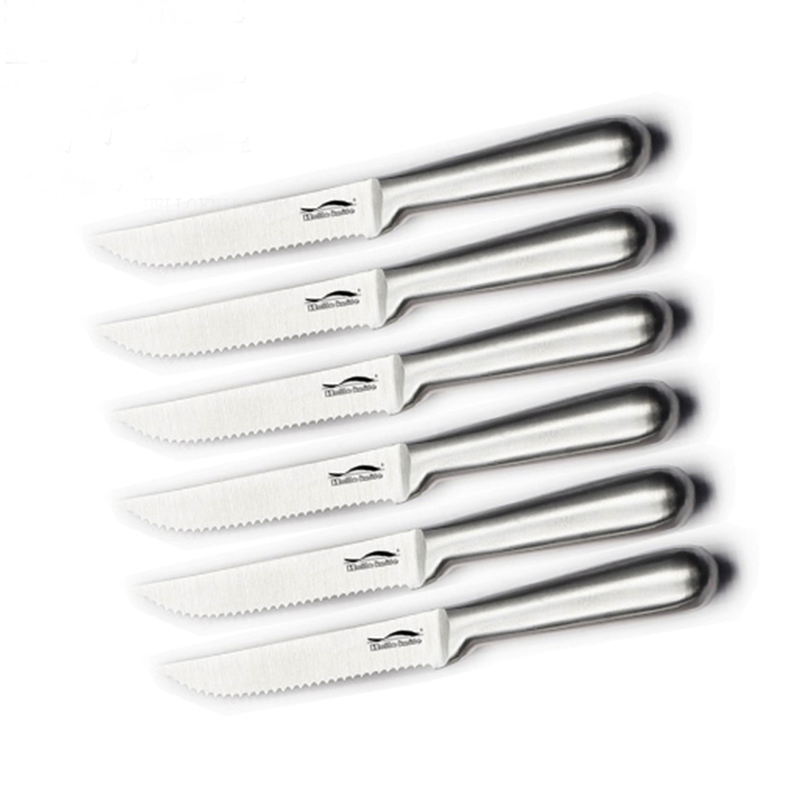
A steak knife is specifically designed for cutting through meat, particularly steak. The most notable feature of a steak knife is its serrated edge, which allows for easy slicing through tougher cuts of meat without tearing. The blade is typically thicker and sharper than that of a dinner knife, providing the necessary strength to cut through fibers in meat.
Steak knives come in various styles, including:
- Serrated Steak Knives: These have a jagged edge that grips the meat, making it easier to cut without applying excessive force.
- Non-Serrated Steak Knives: These have a straight edge and are often preferred by those who enjoy a cleaner cut. They can be sharpened more easily than serrated knives.
A dinner knife is a versatile utensil found in most cutlery sets. Unlike steak knives, dinner knives have a straight edge, making them suitable for a variety of tasks, such as cutting softer foods, spreading butter, or slicing through cooked vegetables. The blade is generally less sharp than that of a steak knife, as it is not intended for heavy-duty cutting.
Dinner knives can vary in size and design, including:
- Standard Dinner Knives: These are the most common and are used for general dining purposes.
- Butter Knives: These have a blunt edge and are specifically designed for spreading butter or soft cheeses.
The primary difference between steak knives and dinner knives lies in their blade design. Steak knives feature a serrated edge, which is ideal for cutting through meat, while dinner knives have a straight edge, making them more versatile for various dining tasks.
- Steak Knives: Best suited for cutting meat, steak knives are often used in settings where meat is the main course. They provide a clean cut and enhance the dining experience by making it easier to enjoy tougher cuts of meat.
- Dinner Knives: These knives are more versatile and can be used for a variety of foods, including vegetables, bread, and spreads. They are a staple in any dining setting, whether formal or informal.
Both types of knives are designed for comfort, but steak knives often have heavier handles to provide balance when cutting through meat. Dinner knives, on the other hand, have lighter handles, making them easier to maneuver for tasks like spreading or cutting softer foods.
If you are serving a meal that includes steak or other tough cuts of meat, a steak knife is essential. It allows diners to cut through the meat easily, enhancing their overall dining experience.
Dinner knives are suitable for a wide range of foods, making them ideal for multi-course meals. They can be used for cutting vegetables, spreading butter, or even slicing through softer meats.
To maintain the effectiveness of your knives, regular sharpening is essential. Steak knives can be sharpened using a serrated knife sharpener or by a professional. Dinner knives, with their straight edges, can be sharpened more easily at home.
Proper cleaning and storage of your knives can extend their lifespan. Always wash knives by hand and avoid placing them in the dishwasher, as this can dull the blades. Store them in a knife block or on a magnetic strip to keep them safe and accessible.
In summary, while steak knives and dinner knives may appear similar, they serve distinct purposes in the dining experience. Understanding the differences between these two types of knives can enhance your meals and ensure that you are using the right tool for the job. Whether you are enjoying a juicy steak or a delicate vegetable dish, having the appropriate knife can make all the difference.
Yes, you can use a dinner knife to cut steak, but it may require more effort compared to a steak knife, which is specifically designed for that purpose.
Steak knives are not necessary for every meal, but they are recommended when serving tougher cuts of meat to enhance the dining experience.
You can sharpen a serrated steak knife using a specialized serrated knife sharpener or by taking it to a professional knife sharpener.
The best way to clean your knives is by hand washing them with mild soap and water, then drying them immediately to prevent rust.
It is not recommended to put knives in the dishwasher, as the heat and movement can dull the blades and damage the handles.


