

Views: 290 Author: Site Editor Publish Time: 2026-06-06 Origin: Site


Content Menu
>> Decoding the Anatomy of Fine Flatware
>> The Historical Context of Table Settings
>> Identifying the Salad Fork: Features and Utility
>> The Luncheon Fork: A Versatile Middle Ground
>> Practical Tips for Table Placement
>> Conclusion
In the sophisticated world of formal dining, the table setting is a silent language. It speaks of tradition, attention to detail, and a respect for the culinary journey about to unfold. Among the various pieces of flatware that adorn a dining table, the nuances between different types of forks can often be confusing even to seasoned hosts. Two items that frequently cause such confusion are the salad fork and the luncheon fork. While they may appear remarkably similar at a glance, understanding their unique purposes, historical context, and design variations is essential for mastering the etiquette of fine dining.
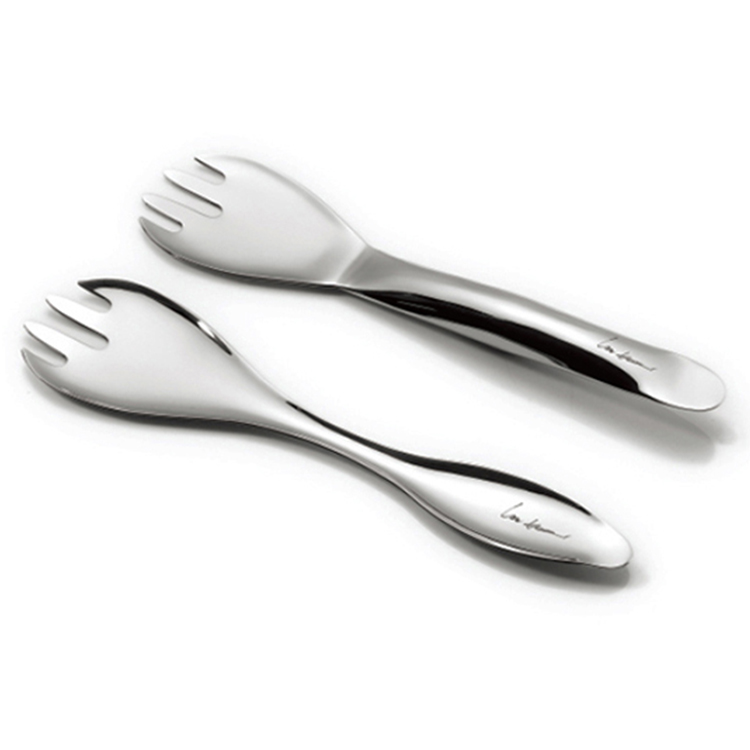
To truly appreciate the differences, we must first look at their physical forms. Flatware is not merely functional; it is engineered for specific tactile experiences. The salad fork is typically the smaller of the two, usually measuring between six and seven inches in length. Its design is often characterized by a broader, flatter profile and sometimes a reinforced outer tine, which provides the necessary strength to cut through crisp greens and crunchy vegetables without requiring a knife in the other hand.
On the other hand, the luncheon fork, which is sometimes referred to as a "place fork" or a "small fork," is slightly larger. It is designed to bridge the gap between the compact salad fork and the substantial dinner fork. Luncheon forks are often used for light mid-day meals where the main course is not as heavy or as difficult to manage as a formal dinner entrée, yet requires more substance than a simple salad.
The evolution of these forks is deeply rooted in the history of social dining. In centuries past, table settings were far more utilitarian. As dining became more ritualized, particularly in the Victorian era, the variety of utensils expanded to accommodate increasingly complex menus. The invention of the salad fork, for example, followed the rise of serving salads as a distinct course, often following the main meal to cleanse the palate.
The luncheon fork, meanwhile, emerged as the centerpiece of the "luncheon," a social meal that demanded elegance but lacked the rigid, multi-course structure of a formal dinner. Understanding this historical progression helps us see that these utensils were never intended to be identical; they were tailored to the specific social and culinary requirements of their time.
The salad fork is the workhorse of the salad course. Because salads can range from delicate bibb lettuce to hearty radicchio and chunky vegetable additions, the fork must be versatile. Its slightly shorter tines and broader base allow the diner to spear ingredients efficiently. In many American table settings, the salad fork is positioned to the left of the dinner fork, which is the position closest to the dinner plate.
The aesthetic of a salad fork also tends to be lighter. Because it is used for a course that is often refreshing and light, manufacturers often design these forks with more delicate patterns or slender handles to reflect the nature of the dish being consumed.
The luncheon fork serves as an incredibly useful hybrid. If you are hosting a casual brunch or a light lunch where the primary dish is a quiche, a pasta salad, or a protein-based dish that doesn't require a massive dinner fork, the luncheon fork is your best friend. Its size makes it comfortable to hold for extended periods, and it possesses enough structural integrity to handle slightly heavier foods than a salad fork would comfortably manage.
In many modern households, the distinction has become blurred. As formal dining habits have evolved toward minimalism, many people opt to use a single "mid-sized" fork that serves both as a salad and a luncheon fork. However, for those who value the classic, formal arrangement, keeping these two distinct is a mark of a well-curated dining experience.
When setting a table, placement is determined by the order of the menu. If your meal begins with a salad, the salad fork must be on the outermost side. If you are serving a luncheon where the main course is served with a luncheon fork, that fork takes the place of the dinner fork in the setting.
Consider the flow of your meal. If you have guests who are sticklers for tradition, following the "outside-in" rule for all utensils will communicate that you have put thought into their comfort. If you have any doubts, a quick glance at a standard etiquette diagram can save you from an awkward table arrangement.
Ultimately, the difference between a salad fork and a luncheon fork lies in their intended culinary role and their precise dimensions. The salad fork is a compact, specialized tool for light courses, while the luncheon fork provides a balanced, versatile solution for mid-sized meals. While the lines between them may feel thin in our modern, fast-paced world, recognizing their differences allows you to appreciate the finer details of dining, ensuring that every course is enjoyed with the appropriate tool for the job.
1. Can I use a luncheon fork for a salad course?
Yes, in a pinch, a luncheon fork can certainly serve as a salad fork, though it may be slightly larger than the traditional salad fork designed for that purpose.
2. Is there a difference in tine length between the two?
Generally, yes. The salad fork typically has shorter, broader tines, whereas the luncheon fork features longer, more traditional tines similar to a dinner fork.
3. Which fork should be placed closest to the plate?
The dinner fork or the luncheon fork, depending on the meal, should be placed closest to the plate, as it is used for the main course.
4. Why do some salad forks have a wider left tine?
The wider or reinforced left tine is designed to act as a cutting edge, allowing the diner to press down through soft vegetables or lettuce leaves with ease.
5. Do I need to have both types of forks in my home collection?
It depends on how often you host formal events. For everyday dining, a basic set is sufficient, but collectors and formal hosts often prefer having both to ensure the correct etiquette is maintained.


