

Views: 290 Author: Site Editor Publish Time: 2026-01-05 Origin: Site


Content Menu
● Why Invest in Quality Steak Knives?
>> The Importance of Sharpness
>> Durability
>> Blade Length
>> Aesthetics
>> Cleaning
>> Sharpening
>> Storage
When it comes to enjoying a perfectly cooked steak, the right tools can make all the difference. A quality steak knife not only enhances your dining experience but also adds a touch of elegance to your table setting. In this article, we will explore the essential features to consider when buying steak knives, ensuring you make an informed decision that suits your culinary needs.
A sharp knife is essential for cutting through meat cleanly without tearing it. Dull knives can ruin the texture of your steak and make the dining experience less enjoyable. Quality steak knives are designed to maintain their sharpness over time, ensuring that each cut is effortless.
A well-designed steak knife set can enhance the presentation of your meal. Whether you are hosting a dinner party or enjoying a family meal, the right knives can add a sophisticated touch to your table.
Investing in a high-quality steak knife set means you are purchasing a product that will last for years. Cheaper knives may save you money upfront, but they often need to be replaced more frequently.
The material of the blade significantly affects its performance. Common materials include:
- Stainless Steel: Known for its resistance to rust and corrosion, stainless steel is a popular choice for steak knives. It is durable and easy to maintain.
- Carbon Steel: Offers superior sharpness and edge retention but requires more maintenance to prevent rust.
- Ceramic: Lightweight and resistant to staining, ceramic blades can be very sharp but are more fragile.
The handle should be comfortable to hold and provide a good grip. Common materials include:
- Wood: Offers a classic look and feel but may require more maintenance.
- Plastic: Lightweight and easy to clean, but may not provide the same aesthetic appeal.
- Metal: Durable and modern, metal handles can be very stylish.
When choosing a handle, consider the ergonomics. A well-designed handle will reduce fatigue during use and enhance control.
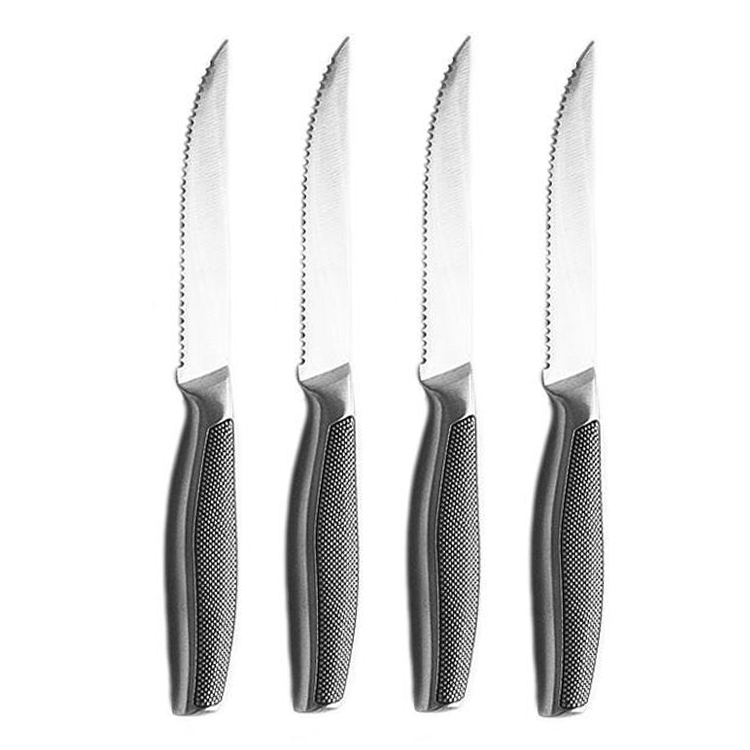
Steak knives typically come with either serrated or straight edges:
- Serrated Blades: Ideal for cutting through tougher meats, serrated blades can grip the surface of the steak better.
- Straight Blades: Provide a clean cut and are easier to sharpen, making them a favorite among many chefs.
The length of the blade can also impact performance. A longer blade is suitable for larger cuts of meat, while a shorter blade works well for smaller steaks. Consider the thickness of the steaks you typically enjoy when selecting the blade length.
The weight of the knife can affect how it feels in your hand. Lighter knives may be easier to maneuver, while heavier ones can provide more cutting force. The ideal weight often comes down to personal preference and the type of steak you typically enjoy.
While functionality is crucial, the appearance of your steak knives can also enhance your dining experience. Consider the design, color, and overall craftsmanship of the knives. A beautiful set can elevate the presentation of your meals.
Most steak knives should be hand-washed to maintain their sharpness and prevent damage. Avoid putting them in the dishwasher, as the heat and moisture can dull the blades and damage the handles.
Regularly sharpening your knives will keep them performing at their best. Use a whetstone or a professional sharpening service to maintain the edge.
Store your steak knives in a block or a drawer with a knife guard to protect the blades and prevent accidents.
Choosing the best steak knife set involves considering your personal preferences, budget, and how often you will use them. Whether you opt for a high-end set or a budget-friendly option, having a quality steak knife can enhance your dining experience significantly.
1. What is the best material for steak knife blades?
- Stainless steel is the most common choice due to its durability and resistance to rust.
2. Are serrated knives better for steak?
- Serrated knives can grip the meat better, making them ideal for tougher cuts.
3. How often should I sharpen my steak knives?
- It depends on usage, but generally, you should sharpen them every few months.
4. Can I put my steak knives in the dishwasher?
- It's best to hand wash them to maintain their sharpness and prevent damage.
5. What is the average price for a good steak knife set?
- Prices can range from $25 for budget sets to over $300 for high-end options.


