

Views: 290 Author: Site Editor Publish Time: 2026-01-05 Origin: Site


Content Menu
● Understanding Serrated Knives
>> Advantages of Serrated Knives
>> Disadvantages of Serrated Knives
● Comparing Serrated and Straight-Edge Knives
>> When to Use Serrated Knives
>> When to Use Straight-Edge Knives
● Choosing the Right Knife for Your Steak
● Caring for Your Steak Knives
>> Cleaning
>> Sharpening
>> Storage
When it comes to enjoying a perfectly cooked steak, the type of knife you use can significantly impact your dining experience. Serrated knives, often favored for their ability to cut through tough surfaces, are a popular choice among steak lovers. But are they truly better for steak? In this article, we will explore the advantages and disadvantages of serrated knives, compare them to straight-edge knives, and help you determine which type is best for your steak-cutting needs.
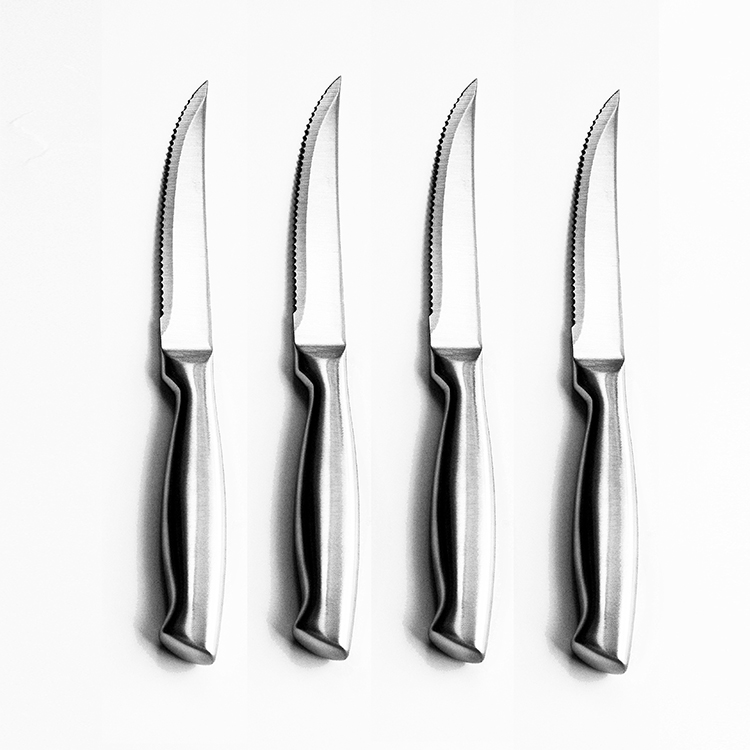
Serrated knives feature a blade with a series of small, jagged teeth along the edge. This design allows them to grip and cut through tougher materials, making them ideal for slicing bread, tomatoes, and, of course, steak. The serrations create multiple points of contact with the surface of the meat, which can help in cutting through the crust while preserving the juices inside.
1. Effortless Cutting: The design of serrated knives allows for a sawing motion, which can make cutting through tougher cuts of meat easier. This is particularly beneficial for steaks with a firm crust or fibrous texture.
2. Juice Retention: Serrated knives can help retain the juices of the meat better than straight-edge knives. The sawing action minimizes the tearing of meat fibers, which can lead to juice loss.
3. Versatility: While primarily used for steak, serrated knives are also excellent for slicing bread, fruits, and vegetables. Their ability to handle a variety of foods makes them a versatile tool in the kitchen.
1. Difficult to Sharpen: One of the main drawbacks of serrated knives is that they can be challenging to sharpen. The jagged edge requires specialized sharpening tools, and many people find it easier to replace a dull serrated knife than to sharpen it.
2. Less Precision: While serrated knives excel at cutting through tough surfaces, they may not provide the same level of precision as straight-edge knives. This can be a disadvantage when you want clean, thin slices of meat.
3. Tearing: The serrated edge can sometimes tear the meat rather than slice it cleanly, especially if the knife is not sharp enough. This can lead to a less enjoyable eating experience.
Serrated knives are best suited for:
- Tough Cuts of Meat: If you are dealing with a steak that has a firm crust or fibrous texture, a serrated knife can make cutting easier.
- Crusty Breads: They excel at slicing through crusty loaves without crushing the soft interior.
- Fruits and Vegetables: Serrated knives are great for slicing through tough-skinned fruits like tomatoes and citrus.
Straight-edge knives are ideal for:
- Tender Cuts of Meat: For steaks that are tender and easy to cut, a straight-edge knife can provide cleaner, more precise slices.
- Carving: If you are carving a roast or slicing a large piece of meat, a straight-edge knife can offer better control and precision.
- General Use: Straight-edge knives are versatile and can be used for a variety of kitchen tasks beyond just cutting meat.
Ultimately, the choice between serrated and straight-edge knives comes down to personal preference. Some people prefer the ease of use that serrated knives offer, while others appreciate the precision of straight-edge knives. It's essential to consider how you typically enjoy your steak and what type of knife feels most comfortable in your hand.
Regardless of the type of knife you choose, investing in a high-quality option is crucial. Look for knives made from durable materials, such as high-carbon stainless steel, which will retain their sharpness and withstand regular use. A well-balanced knife with a comfortable handle will enhance your cutting experience, whether you opt for serrated or straight-edge.
Most steak knives should be hand-washed to maintain their sharpness and prevent damage. Avoid putting them in the dishwasher, as the heat and moisture can dull the blades and damage the handles.
Regularly sharpening your knives will keep them performing at their best. For serrated knives, consider using a specialized sharpening tool designed for serrated edges. Straight-edge knives can be sharpened with a whetstone or honing rod.
Store your steak knives in a block or a drawer with a knife guard to protect the blades and prevent accidents.
In conclusion, whether serrated knives are better for steak depends on your personal preferences and the type of steak you are serving. Serrated knives offer advantages in cutting through tough surfaces and retaining juices, while straight-edge knives provide precision and ease of sharpening. Ultimately, having both types of knives in your kitchen can enhance your culinary experience and allow you to tackle any steak with confidence.
1. Are serrated knives better for cutting steak?
- Serrated knives can be better for tougher cuts, while straight-edge knives provide cleaner cuts for tender steaks.
2. How do I sharpen serrated knives?
- Use a specialized serrated knife sharpener or a honing rod designed for serrated edges.
3. Can I use a serrated knife for other foods?
- Yes, serrated knives are versatile and can be used for slicing bread, tomatoes, and other tough-skinned foods.
4. What is the best material for steak knives?
- High-carbon stainless steel is a popular choice for its durability and sharpness.
5. How often should I replace my steak knives?
- If well cared for, quality steak knives can last for many years. Replace them when they become dull or damaged beyond repair.


