

Views: 290 Author: Site Editor Publish Time: 2026-05-25 Origin: Site


Content Menu
>> Blade Geometry and Functionality
Cheese is one of the most beloved culinary delights in the world. From the delicate, creamy spread of a fresh Brie to the robust, crystal-packed crunch of a well-aged Parmesan, each variety demands respect and, more importantly, the right tools to prepare it. Often, home hosts rely on standard kitchen knives or the dull, ineffective set that arrived as a freebie with a wooden serving board. However, understanding the markers of a high-quality cheese knife will fundamentally elevate your hosting experience.
A truly superior cheese knife is not merely a sharp piece of metal; it is a specialized instrument designed with specific physics in mind. When you are searching for high-quality implements, several physical characteristics serve as reliable indicators of their craftsmanship and functionality.
The foundation of any high-quality kitchen tool is its material. Look for knives forged from high-grade stainless steel. This material is paramount because cheese can be acidic or oily; inferior metals may react, leaving a metallic taste or corroding over time. High-quality stainless steel ensures durability, resistance to rust, and ease of maintenance, allowing for a clean cut that preserves the texture of the cheese.
Construction quality is equally vital. A premium knife often features a "full tang" construction, where the blade extends all the way into the handle. This provides superior balance and strength, ensuring the blade will not snap when applying pressure to firm or extra-hard cheeses. Furthermore, inspect the transition between the blade and the handle; in superior craftsmanship, this junction is seamless, leaving no crevices for food particles to hide and bacteria to grow.
Beyond materials, the geometry of the blade defines its purpose. A major error in low-quality sets is the presence of blades that are too thick or completely flat. A high-quality blade will exhibit a purposeful taper from the spine down to the cutting edge. This taper is essential for achieving a clean slice without crumbling delicate cheeses or cracking aged ones.
Furthermore, look for designs that account for friction. Soft cheeses have a tendency to cling to metal blades, resulting in mashed or unsightly pieces. Quality knives often incorporate structural features to combat this, such as:
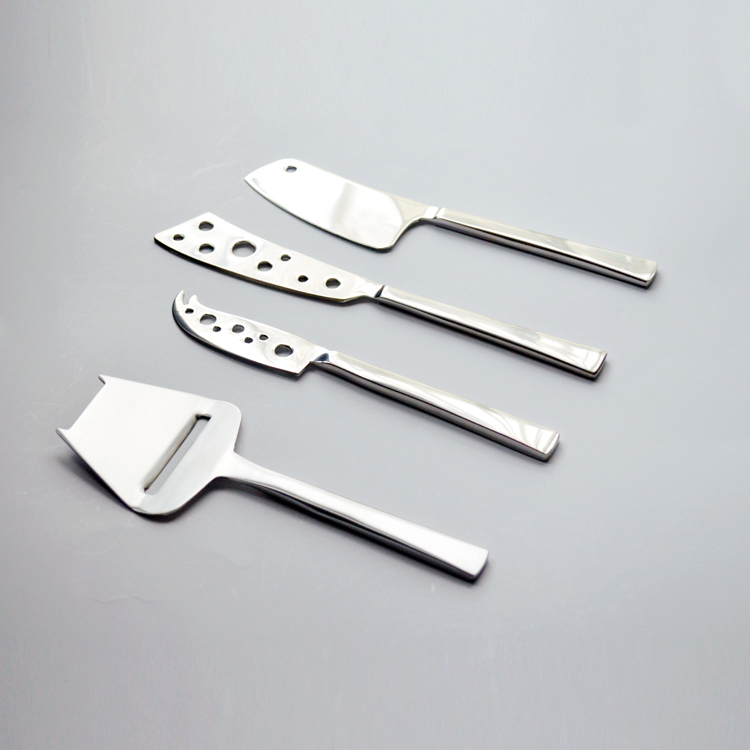
- Skeletal blades: Holes or cutouts in the blade design significantly reduce surface area, preventing soft cheeses from sticking.
- Pockets or dimples: Similar to high-end chef's knives, these features create air pockets between the cheese and the metal.
- Specific shapes: Blades designed specifically for spreading, slicing, or chunking indicate that the manufacturer understands the nuances of cheese handling.
How a knife feels in your hand is perhaps the most immediate test of quality. A balanced knife does not feel "top-heavy" or handle-heavy. When you grip it, it should feel like an extension of your hand, providing control and confidence.
Quality is also found in the finish. A smooth, well-polished blade—even if it is serrated—demonstrates attention to detail. Conversely, rough edges, visible burrs on the metal, or poorly finished handles are classic signs of mass-produced, low-quality items.
To determine if you have a high-quality collection, you must know what you are looking at. While specialized tools like cheese wires, planes, and cleavers exist, a solid, versatile, and well-made knife should be able to handle a variety of tasks if it is designed correctly.
Don't settle for the "standard trio" of dull, mass-produced knives. Invest in pieces where the design matches the application. A cheese cleaver for hard cheese should have a heft and sharpness that allows for clean, controlled breaking of aged wheels. A soft cheese spreader should have the right degree of flexibility to apply cream cheese or goat cheese without tearing the bread or cracker beneath.
Ultimately, identifying a high-quality cheese knife is about looking for deliberate design, superior materials, and functional geometry. By prioritizing these elements, you ensure that your tools do as much justice to your cheese as you do to your guests.
1. Why does my cheese always stick to the blade?
Soft cheeses have high moisture and fat content, causing them to adhere to metal surfaces. A high-quality cheese knife will have a thin blade, holes (a "skeletal" design), or dimples to reduce contact surface area and friction.
2. Can I use a regular chef's knife for cheese?
While you can, it is rarely the best choice. Chef's knives are often too thick, which can lead to cracking, or they lack the specialized tips (like prongs for serving) that cheese-specific knives provide. Using the right tool improves both the aesthetics of your presentation and the ease of service.
3. What is the benefit of a pronged tip on a cheese knife?
The pronged tip, often found on "classic" cheese knives, serves a functional purpose beyond cutting. It allows you to spear or pick up the piece of cheese you have just sliced, making it easy to transfer the cheese directly from the board to your plate without using your fingers.
4. How do I maintain the quality of my cheese knives?
Always hand wash your cheese knives, even if the label claims they are dishwasher safe. Harsh detergents and high heat can dull blades and damage handles, especially those made of wood or specialized resins. Dry them immediately to prevent spotting.
5. Is a cheese wire better than a knife?
For semi-hard and hard cheeses, a cheese wire is an excellent, cost-effective tool. It provides a clean, even slice without the friction issues associated with metal blades. However, it is not suitable for soft, spreadable cheeses. A combination of both is ideal for a well-rounded board.


